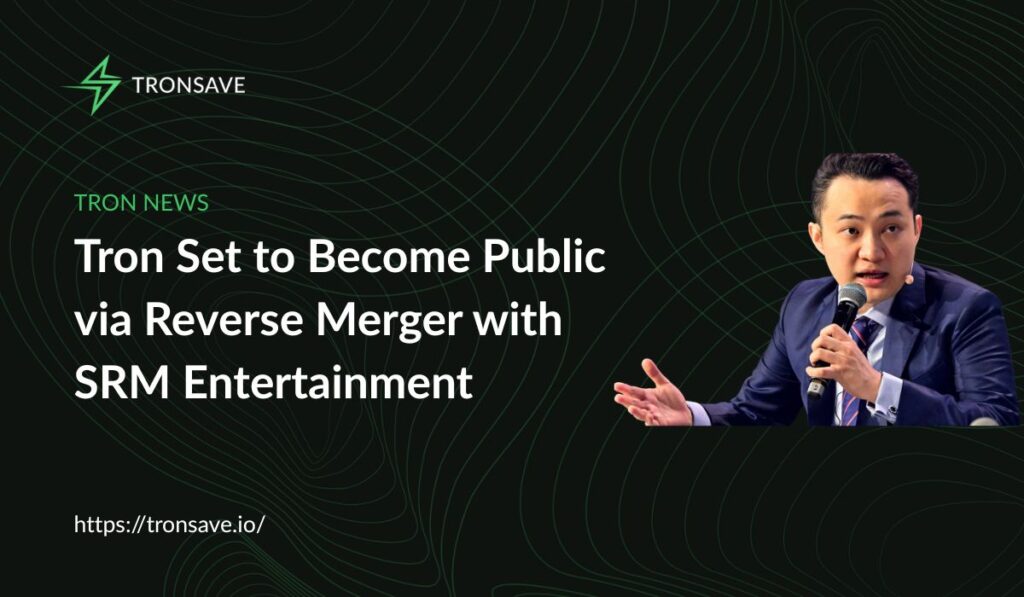
The reverse merger with SRM Entertainment is a deal in which TRON aims to become a publicly traded company by combining with SRM Entertainment, a firm already listed on Nasdaq, rather than running a traditional IPO. The combined entity has been referred to as Tron Inc. (status reported below; verify against primary filings).
Key Takeaways
- A reverse merger with SRM Entertainment lets TRON access public markets via an existing Nasdaq shell instead of a conventional IPO.
- The deal was reported to be facilitated by Dominari Securities; the combined entity has been called Tron Inc.
- Reverse mergers are faster and cheaper than IPOs but carry real risks: limited disclosure, share dilution, and price volatility.
- Several reported figures (share grants, valuations, final status) should be confirmed against SEC filings and primary sources before acting on them.
- Going public does not change how the TRON blockchain itself works for everyday users sending USDT or renting energy.
What is a reverse merger with SRM Entertainment?
A reverse merger is a transaction where a private (or in this case crypto-aligned) company becomes publicly traded by merging with an already-listed shell company. Instead of filing for a fresh initial public offering, the private business takes over the public company’s stock listing.
In this deal, TRON-linked interests reportedly sought to combine with SRM Entertainment, a company already trading on Nasdaq. The reported result is a public vehicle commonly referenced as Tron Inc. Because the listing already exists, this path can be faster and less expensive than a standard IPO — though it also comes with trade-offs that retail investors should understand.
How does the reverse merger with SRM compare to a traditional IPO?
Both routes end with shares trading on a public exchange, but they differ significantly in cost, speed, scrutiny, and risk. The table below summarizes the practical differences for readers trying to make sense of the headlines.
| Factor | Reverse merger (e.g., SRM route) | Traditional IPO |
|---|---|---|
| Speed | Often weeks to months | Frequently 6–12+ months |
| Cost | Generally lower | Typically higher (underwriting, roadshow) |
| Disclosure at launch | Can be more limited initially | Extensive prospectus review |
| Capital raised | May raise little or none upfront | Designed to raise primary capital |
| Dilution risk | Can be significant for existing holders | Disclosed and structured upfront |
None of this guarantees an outcome for any specific stock. Reverse-merger shells have historically ranged from legitimate growth stories to thinly traded, volatile listings, so the structure alone is not a quality signal.
Who is reportedly involved in the deal?
According to reporting circulated at the time, the merger was being orchestrated by Dominari Securities, described as a subsidiary of Dominari Holdings operating out of Trump Tower. Donald Trump Jr. and Eric Trump were linked to Dominari Holdings as advisory board members.
- Each was reportedly allocated about 750,000 shares, valued at roughly $3 million at issuance (reported figures; verify against a primary source such as an SEC filing).
- Of those, 250,000 shares were reportedly granted upfront, with around 500,000 tied to valuation milestones for Dominari Holdings.
- If further benchmarks were met, the Trump brothers and Ron Lieberman, a Trump Organization executive, could reportedly receive an additional 550,000 shares (unverified).
- Eric Trump publicly stated he would not take a role in Tron Inc.
These figures originate from secondary news coverage. Because they are material and tied to named individuals, treat them as unconfirmed until matched against the relevant company filings.
Why does the reverse merger with SRM matter for TRON?
A public listing can raise a network’s visibility with traditional investors and broaden access to capital. For TRON, aligning a corporate vehicle with a Nasdaq listing could attract a different audience than typical crypto buyers — institutions and equity traders who do not hold tokens directly.
That said, the effect on the actual TRX token and the TRON blockchain is indirect and speculative. The on-chain network — used for transfers, smart contracts, and stablecoins like USDT — keeps running the same way regardless of any corporate listing. If you want context on TRON’s fundamentals, see our explainer on whether TRON is a good investment and the broader guide to investing in TRON crypto.
What are the risks for retail readers?
Reverse mergers deserve careful scrutiny. Key considerations include:
- Dilution: large share grants and milestone-based awards can reduce the value of existing holdings.
- Thin disclosure: initial public information may be lighter than an IPO prospectus.
- Volatility: newly merged shells can swing sharply on speculation and headlines.
- Unverified valuations: early “valued at” figures are often estimates, not realized prices.
- Headline risk: high-profile names attract attention but do not guarantee fundamentals.
Anyone evaluating the stock should read the official disclosures and consider how a corporate listing differs from simply holding TRX or using the network.
Update and current status (as of 2026)
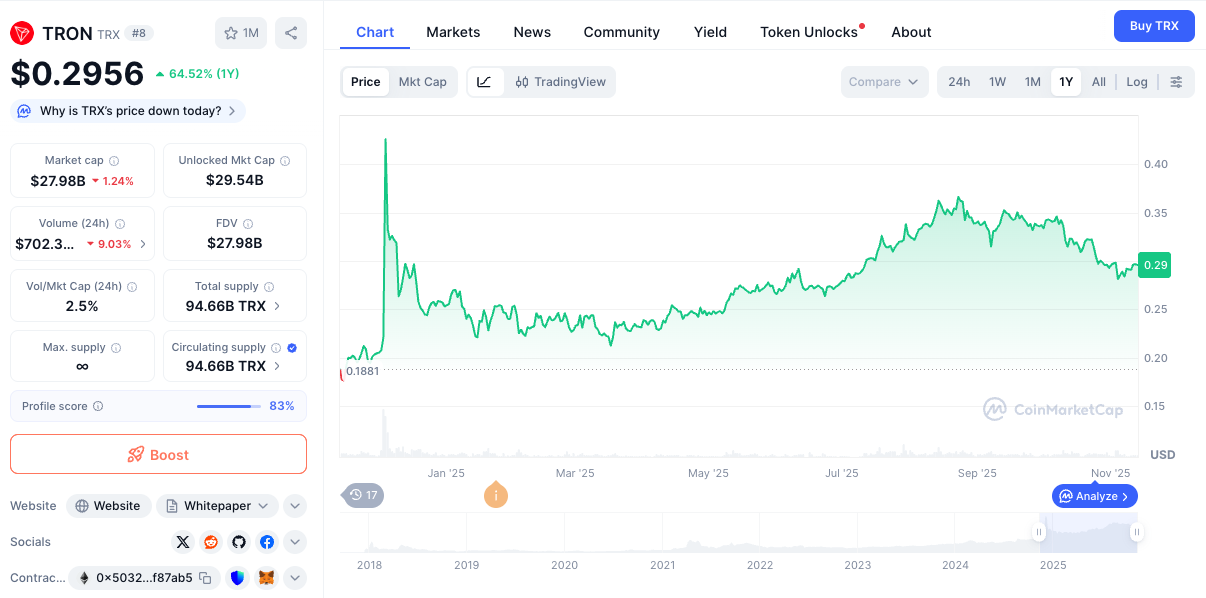
As of 2026, the precise final status of this transaction — whether it fully closed, the resulting ticker, and the current listing details — should be confirmed against primary sources rather than the original 2025 reporting. The U.S. Securities and Exchange Commission’s public database (SEC EDGAR) and TRON’s official resources at tron.network are appropriate places to verify the latest information. We have flagged the unconfirmed figures above for review.
Frequently Asked Questions
What is the reverse merger with SRM Entertainment?
It is a reported deal in which TRON-linked interests sought to become publicly traded by combining with SRM Entertainment, a company already listed on Nasdaq, under a vehicle referred to as Tron Inc.
Is a reverse merger the same as an IPO?
No. A reverse merger uses an existing public shell to gain a listing, which is typically faster and cheaper than an IPO but can offer less initial disclosure and more dilution risk.
Does this change how the TRON blockchain works?
No. Sending USDT, using smart contracts, or renting energy on TRON is unaffected by any corporate listing. The token and the network operate independently of the stock.
Are the share-grant figures confirmed?
The reported figures (about 750,000 shares each, roughly $3 million, milestone-based awards) come from secondary coverage and should be verified against SEC filings before relying on them.
Should I invest based on this news?
This article is informational only and not financial advice. Reverse mergers and crypto are both high-risk. Do your own research and consult a licensed advisor.
Where can I verify the latest status?
Check SEC EDGAR for filings by SRM Entertainment / Tron Inc., and consult reputable financial news outlets and TRON’s official site for current details.
If you are exploring TRON beyond the headlines, our guides on what TRON crypto is and TRON’s long-term outlook cover the fundamentals. For lowering on-chain transfer costs, energy-rental platforms like TronSave are one option alongside self-staking TRX for resources — choose what fits your needs.
Source: Original reporting via Binance News; verify figures and status against SEC EDGAR and primary filings.
⚠️ Not financial advice. This article is for educational and informational purposes only and reflects the author’s opinion at the time of writing. It is not investment, financial, legal, or tax advice. Cryptocurrency is highly volatile and you can lose your entire principal; prices, APYs, and on-chain fees change constantly and may be out of date. Always do your own research (DYOR) and consult a licensed financial advisor before buying, selling, staking, or lending any digital asset.
Disclosure: This is the official TronSave blog. TronSave sells TRON energy/resource (fee-reduction) services and has a commercial interest in the products and topics covered here.