So, what is TRON crypto? TRON is a public, decentralized blockchain launched in 2017 that runs smart contracts and dApps and is widely used for low-cost USDT (TRC-20) transfers. Its native token, TRX (Tronix), pays for network resources, staking, and on-chain governance.
KEY TAKEAWAYS
- TRON is a blockchain for dApps, DeFi, and stablecoin (USDT) transfers, secured by a Delegated Proof-of-Stake (DPoS) model with 27 elected super representatives.
- TRX (Tronix) is the native token used for fees, staking, and freezing TRX to obtain Energy and Bandwidth for cheaper transactions.
- TRON is one of the largest networks for circulating USDT, making it popular for remittances, especially across Asia.
- You can lower TRC-20 transfer costs by staking TRX yourself or renting Energy through platforms like TronSave; compare options before committing funds.
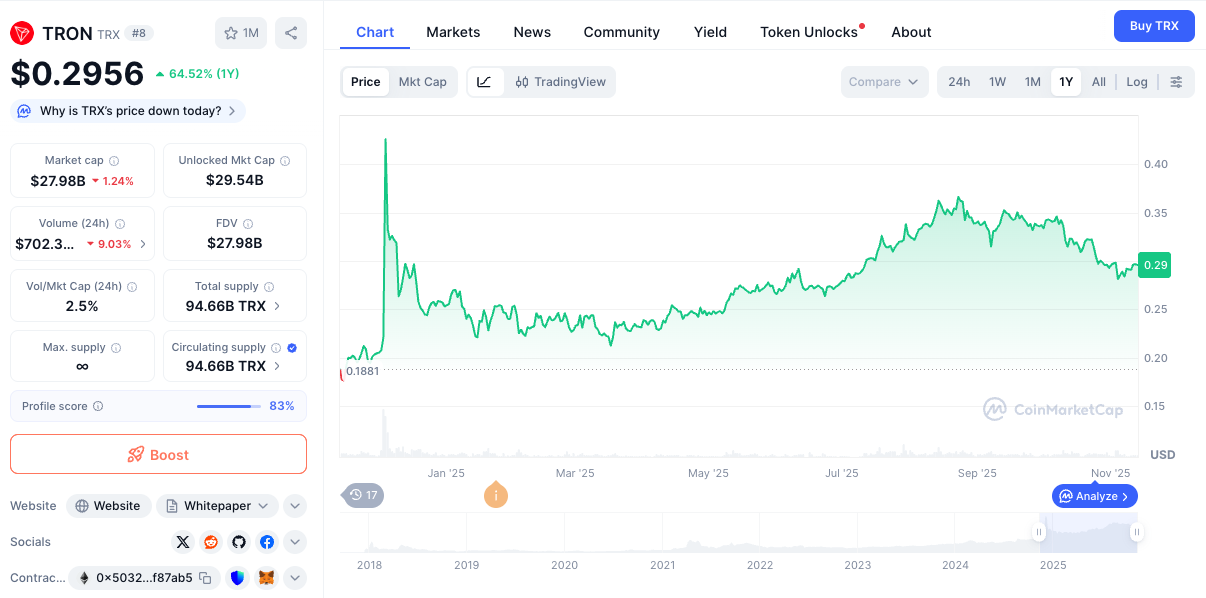
- All market figures below are approximate as of 2026 — verify against a primary source such as TronScan or CoinMarketCap before acting.
What is TRON crypto and how does it work?
To answer what is TRON crypto in practical terms: it is a layer-1 blockchain designed for high throughput and very low fees, built for digital content, decentralized finance (DeFi), and stablecoin payments. Launched in 2017 by Justin Sun, it migrated from the Ethereum network to its own mainnet in 2018.
TRON uses a three-layer architecture — a storage layer for data, a core layer that runs smart contracts through the TRON Virtual Machine (TVM), and an application layer for dApps. Consensus relies on Delegated Proof-of-Stake (DPoS), where TRX holders vote for 27 super representatives that produce and validate blocks.
A defining feature is its resource model. Instead of paying a fee in TRX for every action, users freeze (stake) TRX to gain Bandwidth and Energy. Bandwidth covers basic transactions, while Energy powers smart-contract operations such as USDT transfers. Accounts also receive a small daily free Bandwidth allowance. You can read more in this guide to TRON Energy and Bandwidth.
What is TRX and what is it used for?
TRX (Tronix) is TRON’s native cryptocurrency. It serves several roles:
- Network resources: stake TRX to obtain Energy and Bandwidth, or burn a small amount of TRX to pay directly.
- Governance: TRX is used to vote for super representatives who shape network decisions.
- Value transfer: TRX itself can be sent peer-to-peer quickly and cheaply.
- DeFi collateral: TRX is used across DeFi apps like SunSwap and JustLend for swaps, lending, and yield.
What can you do on the TRON blockchain?
TRON’s low fees and fast settlement make it useful for several real-world activities. Common use cases include:
- Stablecoin transfers: TRON is one of the most-used chains for moving USDT, popular for remittances and cross-border payments.
- DeFi: Protocols such as SunSwap (decentralized exchange) and JustLend (lending) let users swap, lend, and earn yield.
- Gaming and entertainment: Play-to-earn titles and content platforms use smart contracts to reward users with tokens.
- Cross-chain assets: Bridges and integrations let users move assets between TRON and other blockchains.
How does TRON compare to other blockchains in 2026?
Understanding what is TRON crypto also means seeing where it sits among major layer-1 networks. The table below summarizes commonly cited characteristics. Figures are approximate and change constantly — verify each one against a primary source before relying on it.
| Feature | TRON | Ethereum | Solana | BNB Chain |
| Consensus | DPoS (27 SRs) | Proof-of-Stake | PoH + PoS | PoS authority |
| Typical fees | Very low (~cents) | Variable, often higher | Very low | Low |
| Primary strength | USDT transfers | Largest dApp ecosystem | High throughput | Low-cost DeFi |
| Resource model | Stake for Energy/Bandwidth | Gas in ETH | Gas in SOL | Gas in BNB |
No single chain “wins” outright; the right choice depends on your goal. TRON tends to excel at cheap, high-volume stablecoin transfers, while Ethereum leads on ecosystem depth and Solana on raw throughput.
How can you reduce TRON transaction fees?
USDT transfers on TRON consume Energy. You have three main options to cover it:
- Burn TRX: simplest, but the most expensive per transfer.
- Stake (freeze) TRX: earn Energy for free and reclaim your TRX later, subject to an unstaking period.
- Rent Energy: services like TronSave let you rent Energy short-term, which can be cheaper than burning TRX for occasional transfers. Compare current rates first — see how to cut TRC-20 fees with the Energy market.
Is TRX a good investment in 2026?
TRON has an established ecosystem and heavy real-world stablecoin usage, which some investors view as a sign of durable demand. However, crypto assets are volatile and carry real risks. Consider both sides before deciding.
Risk factors include market volatility, regulatory uncertainty (Justin Sun and TRON-related entities have faced legal scrutiny, including a 2023 U.S. SEC complaint), concentration of stablecoin reliance, and the relatively centralized nature of DPoS governance. This article is educational and not financial advice — do your own research and consult a licensed advisor.
Frequently asked questions about TRON crypto
- What is TRON crypto in simple terms? It is a fast, low-fee blockchain for dApps, DeFi, and stablecoin transfers. Its token, TRX, pays for network resources and governance.
- What is TRX used for? Staking for Energy and Bandwidth, paying fees, voting for super representatives, and use across TRON DeFi apps.
- Why is TRON popular for USDT? Transfers settle quickly with very low fees, making it well-suited to remittances and high-frequency payments.
- How do I lower TRON fees? Stake TRX to earn Energy, or rent Energy from a provider like TronSave instead of burning TRX each time. Compare rates first.
- Is TRON safe? The network has operated since 2018 with a large user base, but no crypto asset is risk-free; review security, custody, and regulatory considerations.
- Where can I verify TRON statistics? Use primary sources such as TronScan, the official TRON website, or CoinMarketCap.
⚠️ Not financial advice. This article is for educational and informational purposes only and reflects the author’s opinion at the time of writing. It is not investment, financial, legal, or tax advice. Cryptocurrency is highly volatile and you can lose your entire principal; prices, APYs, and on-chain fees change constantly and may be out of date. Always do your own research (DYOR) and consult a licensed financial advisor before buying, selling, staking, or lending any digital asset.
Disclosure: This is the official TronSave blog. TronSave sells TRON energy/resource (fee-reduction) services and has a commercial interest in the products and topics covered here.