Tron energy and bandwidth are the two on-chain resources that power TRX transfers and smart contracts on the TRON network. Bandwidth covers basic transactions and energy fuels TRC-20 actions like USDT transfers. You earn or stake for them to avoid burning TRX on fees.
KEY TAKEAWAYS
- Tron energy and bandwidth are TRON’s two resources: bandwidth handles TRX and TRC-10 transfers; energy handles smart contracts and TRC-20 tokens like USDT.
- Every account gets 600 free bandwidth points daily, enough for roughly 2 standard TRX transfers; energy has no free daily quota.
- You obtain resources three ways: stake (freeze) TRX, rent energy from a marketplace, or let the network burn TRX as a fallback.
- Staking and renting can both cut TRC-20 transfer costs substantially versus burning TRX. Each option has trade-offs in cost, speed, and lock-up.
What Are Tron Energy and Bandwidth?
Tron energy and bandwidth are the resource units that the TRON network uses instead of a single “gas” fee. TRON’s resource model separates a transaction’s cost into two buckets, which keeps everyday transfers cheap compared with Ethereum-style gas. The official model is documented at developers.tron.network.
TRON is a blockchain built for decentralized apps (dApps). As of 2026 it reports a large account base and multi-billion-dollar TRX market cap (verify current figures against CoinMarketCap or TronScan). The two resources work like this:
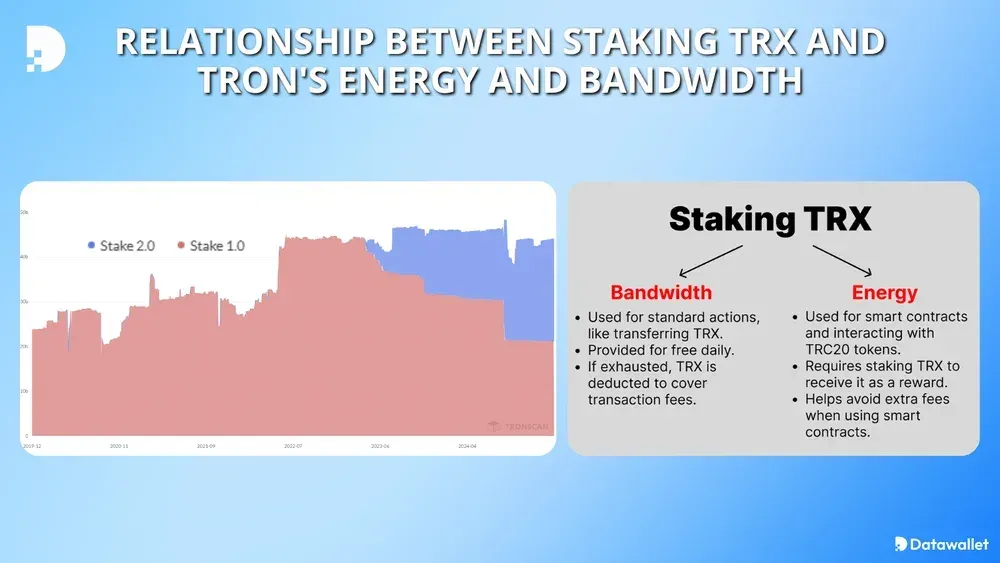
- Bandwidth: Your allowance for basic transactions such as sending TRX or TRC-10 tokens. Every account receives 600 free bandwidth points per day, which covers about 2 standard TRX transfers (a typical transfer consumes roughly 265-270 bandwidth). Out of points, the network deducts a small amount of TRX.
- Energy: The fuel for smart contracts, including TRC-20 token transfers (like USDT) and DeFi interactions. There is no free daily energy quota, so you stake TRX or rent energy to cover it.
Here is how the two resources compare:
| Resource | Used For | Free Daily Quota | How to Get More |
| Bandwidth | TRX, TRC-10 transfers | 600 points | Stake TRX, or burn TRX |
| Energy | TRC-20, smart contracts, dApps | None | Stake TRX, rent, or burn TRX |
Why does this matter? Sending USDT without energy makes the network burn TRX to cover the cost, which can run into tens of TRX per transfer. Understanding Tron energy and bandwidth is the difference between a near-free transfer and an avoidable fee.
Have spare resources? You can sell your surplus TRON energy and bandwidth for APY on TronSave Earn.
How Do Transactions Use Energy and Bandwidth?
Different actions draw on different resources. Knowing the rough requirements helps you plan ahead and keep Tron fees low. The figures below follow TRON’s published resource model; exact energy can vary slightly with contract logic and network parameters.
Typical Transaction Costs
- TRX transfers: Need roughly 265-270 bandwidth points. Your free 600 points cover about 2 sends per day. Out of bandwidth, you pay a fraction of a TRX.
- TRC-20 transfers (e.g., USDT): Require bandwidth plus energy. A USDT transfer needs ~32,000 energy if the recipient already holds USDT, or ~65,000 energy if they do not (a fresh address creates extra storage, common with exchange deposits). These are the commonly cited ranges from TRON’s resource-model docs; verify the live value on TronScan.
- Other smart contracts: DeFi swaps and NFT minting vary widely and can require tens of thousands of energy units each.
What Happens When You Run Out?
If you lack a resource, TRON burns TRX to make up the difference at the current network rate. Because burning is the most expensive path, most active users stake or rent instead. Marketplace rates for renting energy change continuously; check current pricing before you transact.
| Transaction | Bandwidth | Energy | Main Resource Driver |
| TRX transfer | ~265-270 | 0 | Bandwidth |
| USDT (recipient holds USDT) | ~345 | ~32,000 | Energy |
| USDT (recipient holds none) | ~345 | ~65,000 | Energy |
| NFT mint / DeFi swap | varies | tens of thousands | Energy |
How Do You Get Tron Energy and Bandwidth?
There are three practical ways to obtain these resources, whether you are sending TRC-20 tokens or building dApps. Each suits a different usage pattern.
1. Stake (Freeze) TRX
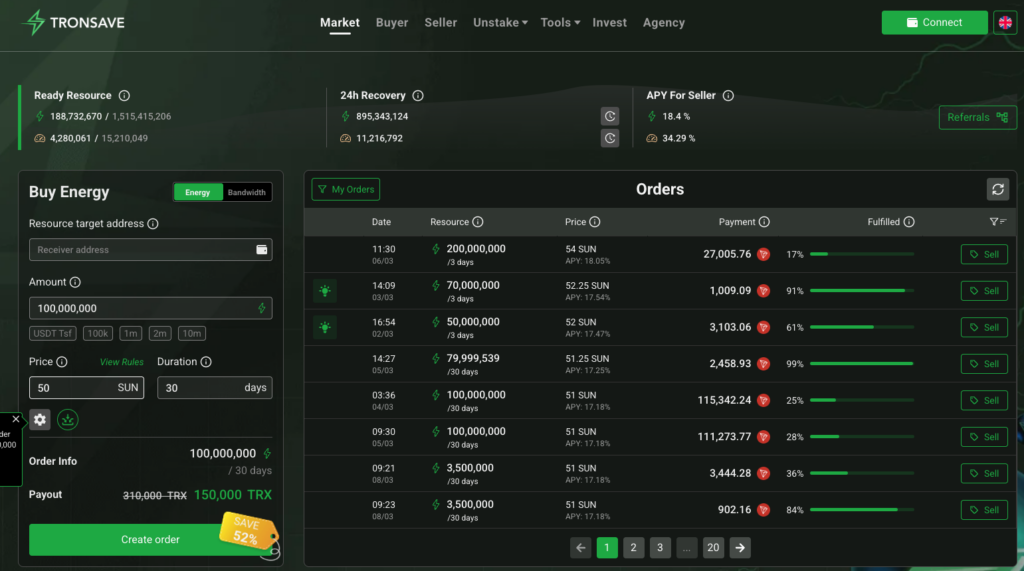
Staking TRX under Stake 2.0 freezes your TRX to generate a daily allotment of energy or bandwidth, and it is well suited to frequent users. Many wallets support it, including TronLink and TronSave. The general flow:
- Open a wallet that supports staking (for example TronLink or TronSave).
- Choose to obtain bandwidth or energy, then enter the TRX amount.
- Confirm the freeze; resources accrue while your TRX stays locked.
- Pros: No per-transfer burn, voting power for Super Representatives, and potential staking rewards. Reward rates vary by validator and over time; staking TRX has historically yielded a low-to-mid single-digit annual rate (verify current APR on TronScan before deciding).
- Cons: Under Stake 2.0 there is a 14-day unstaking (unfreeze) waiting period before your TRX is withdrawable.
2. Rent Energy from a Marketplace
For one-off or bursty smart contract needs, renting energy is faster than staking because there is no lock-up. Energy marketplaces such as TronSave let you rent a set amount for a chosen duration; alternatives and DIY staking exist too. The typical flow is to pick an energy amount and duration, then pay in TRX.
- Pros: Instant and flexible; pay only for what you use.
- Cons: Recurring cost that can add up for very heavy users, and prices fluctuate with demand.
3. Burn TRX (Fallback)
If you hold neither staked nor rented resources, TRON automatically burns TRX. It is instant but the most expensive option per transfer, so it is best reserved for emergencies.
Comparison of the three methods:
| Method | Relative Cost | Speed | Best For |
| Staking | Lowest (no per-tx burn) | 14-day unstake lock | Daily users, dApps |
| Renting | Low, pay-per-use | Instant | One-off transfers |
| Burning TRX | Highest | Instant | Emergencies only |
How Do You Save on Tron Fees?
You do not have to overpay on TRX transactions. A few habits keep your smart contracts and transfers cheap.
For Beginners
- Use your free bandwidth: The daily 600 bandwidth points cover a couple of TRX sends at no cost; check your balance before sending.
- Cover energy before sending USDT: A USDT transfer needs roughly 32,000-65,000 energy, so stake or rent first rather than burning TRX.
For Power Users
- Stake for steady volume: If you send TRC-20 tokens daily, staking removes the per-transfer burn. Compare staking yield against rental cost for your volume.
- Monitor with TronScan: Track energy consumption and resource balances on TronScan and learn more in our guide on whether staking TRX provides energy or bandwidth.
What Should Developers Know About the Resource Model?
Building dApps or running an exchange makes resource planning a real cost line. The same resource rules apply, just at larger scale.
- Estimate energy per action: NFT minting and DeFi swaps are energy-hungry; benchmark each contract call on testnet first.
- Automate resource top-ups: Query
/wallet/getaccountresourceto read live bandwidth and energy, then stake or rent programmatically. Several providers (including TronSave) offer APIs for on-demand energy; self-managed staking is also an option. - Plan for scale: Exchanges handling TRC-20 volume often lease large energy blocks to avoid the burn path. See our walkthrough on how to rent TRON energy for low-cost transfers.
What Are the Limitations to Watch?
Neither staking nor renting is free of trade-offs. Keep these in mind:
- Unstaking lock: Staked TRX is subject to a 14-day waiting period before withdrawal, reducing liquidity.
- Recurring rental cost: Renting is cheap per transfer but adds up if you transact constantly.
- Price and rate volatility: TRX price, staking yields, and rental rates all change; figures here are illustrative, not guarantees.
- Parameter changes: TRON’s energy/bandwidth costs are governed on-chain and can be adjusted, so always confirm current values.
Frequently Asked Questions
- How much energy does a TRC-20 (USDT) transfer need?
Roughly 32,000 energy if the recipient already holds USDT, or about 65,000 if the address holds none. Confirm the live figure on TronScan. - Can I rent energy instead of staking?
Yes. Renting from an energy marketplace is instant and avoids the 14-day staking lock, which suits occasional smart contract use. - How do I avoid high Tron fees?
Use your free bandwidth for TRX sends, and cover energy by staking or renting before TRC-20 transfers so the network does not burn TRX. - What is the difference between bandwidth and energy?
Bandwidth powers TRX and TRC-10 transfers (600 free points daily); energy powers TRC-20 tokens and smart contracts (no free quota). - Does staking TRX give energy or bandwidth?
You choose which resource to stake for. See our detailed guide on staking TRX for energy or bandwidth. - Is renting or staking cheaper?
Staking is usually cheaper for steady daily volume; renting is better for occasional transfers. Compare your own usage against current rental prices and staking yields.
The Bottom Line
Tron energy and bandwidth are the keys to cheap TRX transactions and affordable smart contracts. Use your free bandwidth for TRX, then stake TRX or rent energy to cover TRC-20 transfers and avoid burning TRX. Staking suits steady volume, renting suits one-off needs, and burning is a last resort. Whatever path you choose, confirm current costs on a primary source like TronScan before you transact.
⚠️ Not financial advice. This article is for educational and informational purposes only and reflects the author’s opinion at the time of writing. It is not investment, financial, legal, or tax advice. Cryptocurrency is highly volatile and you can lose your entire principal; prices, APYs, and on-chain fees change constantly and may be out of date. Always do your own research (DYOR) and consult a licensed financial advisor before buying, selling, staking, or lending any digital asset.
Disclosure: This is the official TronSave blog. TronSave sells TRON energy/resource (fee-reduction) services and has a commercial interest in the products and topics covered here.
New wallet? See how to activate a TRON wallet and what the account fee covers before your first USDT send.