A TRON Perp DEX is a decentralized exchange on the TRON blockchain for trading perpetual futures with leverage and on-chain custody. The best-known example is SunPerp, launched in September 2025 as one of the first native perpetual derivatives venues built on TRON.

Key Takeaways
- A TRON Perp DEX lets you trade leveraged perpetual contracts on-chain, keeping custody of your funds in your own wallet.
- SunPerp is the headline example, using TRON’s large USDT supply for stablecoin-margined liquidity.
- Leverage amplifies both gains and losses — positions can be liquidated quickly, and total loss of principal is possible.
- TRON does not charge “gas” like Ethereum; it uses an Energy and Bandwidth resource model paid in TRX unless staked or rented.
- Always verify live TVL, volume, and fee figures against primary sources before trading. This article is educational, not financial advice.
What Is a TRON Perp DEX and Why Does It Matter?
Perpetual contracts let traders speculate on an asset’s price without an expiry date. Positions stay open indefinitely, with periodic funding payments keeping the contract price tethered to the underlying spot price. This differs from dated futures, which settle on a fixed day.
A TRON Perp DEX brings that mechanism on-chain. Instead of depositing into a centralized exchange, you trade directly from your wallet via smart contracts. You keep custody of your collateral, and settlement is transparent and verifiable on the public ledger.
TRON matters here because it carries one of the largest circulating supplies of USDT of any blockchain (verify current figures via tron.network and TronScan). Stablecoin depth is the raw material for margined derivatives, so a network rich in USDT is a natural home for perpetual trading.
What Are the Key Features of SunPerp?
SunPerp aims to combine centralized-exchange performance with the self-custody and transparency of DeFi. Its core characteristics include:
- Low on-chain costs — TRON’s Energy and Bandwidth model keeps transaction costs minimal; you pay in TRX unless you stake or rent resources. Learn the mechanics in this guide to TRON Energy and Bandwidth.
- USDT-based liquidity — Contracts are margined in USDT, drawing on TRON’s deep stablecoin reserves, with cross-chain aggregation from networks such as Ethereum and BNB Chain.
- Leverage on major pairs — Up to 100x on pairs like BTC/USDT and ETH/USDT (confirm current limits on the official site).
- Risk controls — Auto-deleveraging (ADL), an insurance fund, and oracle pricing are designed to reduce — not remove — systemic risk.
- Self-custody — You trade from your own wallet, without surrendering keys to a custodian.
| Feature | What It Provides | Why It Matters |
| Fees | Low Energy/Bandwidth cost plus trading fees | Cheaper to trade actively |
| Liquidity | USDT-margined, cross-chain aggregation | Less slippage on larger orders |
| Custody | Funds held in your wallet | No counterparty holding your keys |
| Risk controls | ADL and insurance fund | Cushions extreme market moves |
| Leverage | Up to 100x (verify) | Amplifies gains and losses alike |
How Does a TRON Perp DEX Compare to Other Chains?
Perpetual DEXs also run on Ethereum, Arbitrum, and Solana. TRON’s pitch is throughput and low resource cost for the frequent position adjustments perpetual trading demands. With a large USDT supply, stablecoin-margined contracts have natural depth.
That said, no single chain “wins” outright. Ethereum-based venues have longer track records and broader composability, while Solana competes on raw speed. The right choice depends on the assets you trade, the liquidity you need, and your tolerance for newer smart-contract risk. For background on how TRON stacks up for stablecoins, see TRON vs Ethereum for USDT.
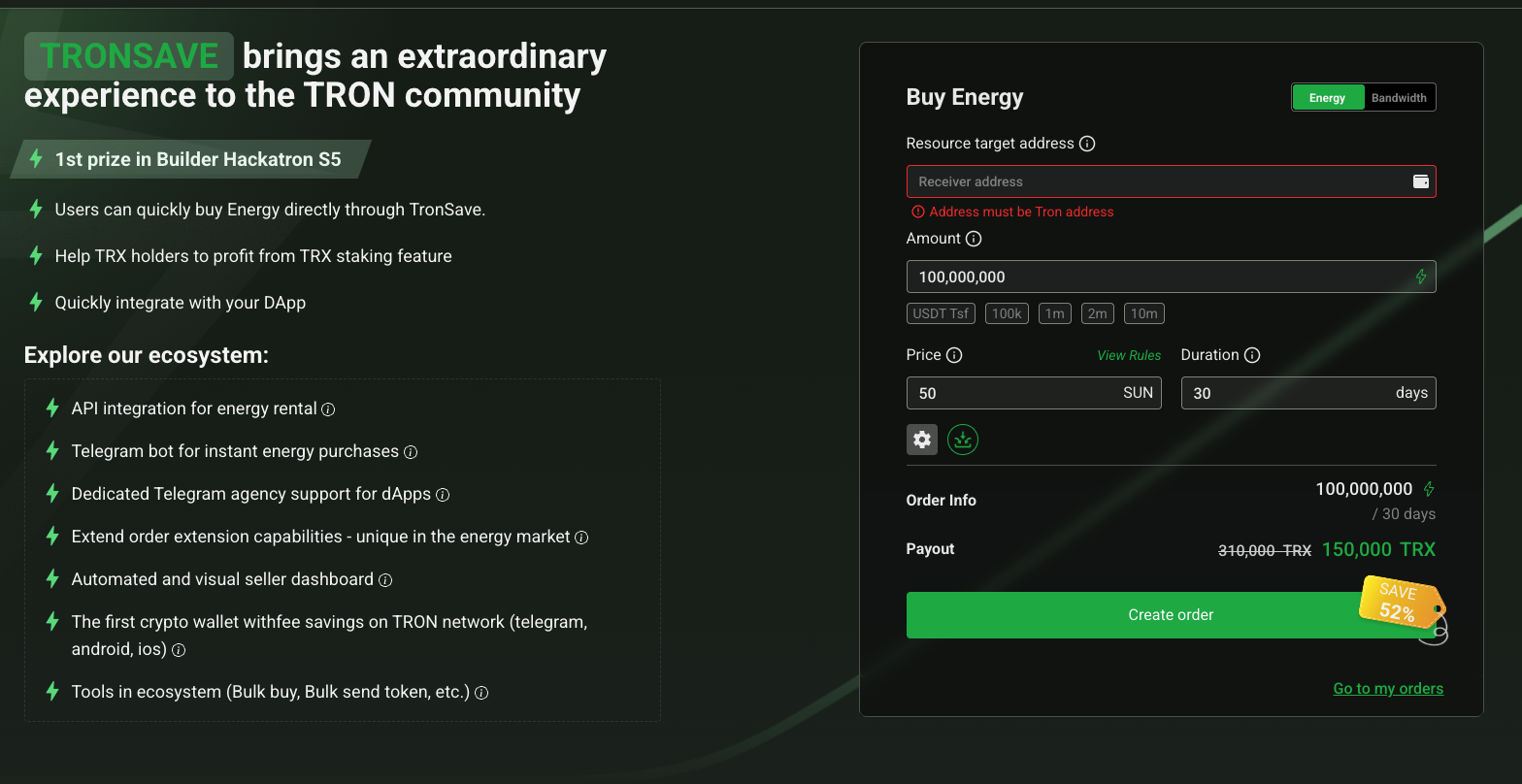
It is also worth separating trading platforms from resource tooling. Self-custody perpetual trading is one activity; reducing the TRX cost of your on-chain transactions is another. Options there include staking TRX for your own Energy or renting it — platforms like TronSave offer rentals, but staking is a valid alternative covered in does staking TRX provide Energy or bandwidth.
How Do You Get Started With SunPerp Safely?
Getting started is straightforward, but treat your first trades as practice rather than profit-seeking:
- Connect a compatible wallet, such as TronLink.
- Deposit USDT or another supported asset.
- Pick a perpetual pair and choose a conservative leverage level.
- Open a long or short position, watching funding rates and your margin.
- Set stop-losses and withdraw to your wallet when you exit.
Start small to learn the interface and risk tools before scaling up. Because TRON transactions consume Energy and Bandwidth, frequent deposits and withdrawals cost TRX unless you stake or rent resources — one practical way to manage that overhead, alongside staking your own TRX.
Disclosure: This is the official TronSave blog, and TronSave sells TRON Energy rental services. We mention it here only where resource costs are genuinely relevant; it is not the only way to trade or to manage fees.
Frequently Asked Questions
What makes SunPerp different from other perp DEXs?
It is built natively on TRON and margins contracts in USDT, drawing on the network’s large stablecoin supply and low on-chain resource costs, with cross-chain liquidity aggregation.
Is trading on a TRON Perp DEX safe?
No leveraged trading is risk-free. You face market risk (leverage can liquidate a position within minutes), smart-contract risk, oracle risk, and counterparty/protocol risk. Insurance funds and ADL reduce but do not eliminate these. Never trade more than you can afford to lose, and do your own research.
What assets can be traded?
Typically major pairs such as BTC, ETH, SOL, XRP, DOGE, and TRX, margined in USDT. Confirm the current listings on the official SunPerp site before depositing.
Does TRON have zero gas fees?
No. TRON uses an Energy and Bandwidth model rather than Ethereum-style gas. Resources are consumed per transaction and paid for in TRX unless you stake TRX or rent Energy. See what is TRON Energy for details.
Can positions be held indefinitely?
Yes — perpetual contracts have no expiry. Funding rates are exchanged periodically between longs and shorts to keep the contract price aligned with spot.
How can I reduce transaction fees on TRON?
Two main routes: stake TRX to generate your own Energy and Bandwidth, or rent Energy from a service such as TronSave. Renting can cut TRC20 transfer costs versus burning TRX (savings vary; verify current rates against a primary source).
Conclusion
A TRON Perp DEX like SunPerp shows how TRON is moving beyond stablecoin transfers into on-chain derivatives, pairing self-custody with USDT-deep liquidity. The opportunity is real, but so are the risks of leverage. Verify live figures, size positions carefully, and treat perpetual trading as high-risk by default.
⚠️ Not financial advice. This article is for educational and informational purposes only and reflects the author’s opinion at the time of writing. It is not investment, financial, legal, or tax advice. Cryptocurrency is highly volatile and you can lose your entire principal; prices, APYs, and on-chain fees change constantly and may be out of date. Always do your own research (DYOR) and consult a licensed financial advisor before buying, selling, staking, or lending any digital asset.
Disclosure: This is the official TronSave blog. TronSave sells TRON energy/resource (fee-reduction) services and has a commercial interest in the products and topics covered here.