Could TRON be the best trade for the next 4 years? For investors weighing a long cycle, TRON stands out for one reason: it settles the majority of on-chain USDT and burns transaction fees continuously. That mix of real usage and tightening supply is the core of the bull case, though it is analysis, not a guarantee.
This is an educational explainer, not financial advice. Below we look at on-chain fundamentals, valuation framing, and the real risks, so you can judge whether TRX fits your own strategy alongside other Layer 1s and stablecoin rails.
Key Takeaways
- TRON is the leading network for USDT settlement, giving TRX demand that is tied to real payment activity rather than pure speculation.
- TRON’s fee-burn model can tighten circulating supply during high-volume periods, though it is not reliably net-negative across all periods.
- Any “best long-term trade” claim is a probability scenario, not a promise. Prices can fall sharply.
- Key risks include regulatory shifts, heavy reliance on USDT, and competition from other stablecoin networks.
- Tools like staking, Super Representative voting, and energy-rental services (e.g. TronSave) can improve efficiency, but none remove market risk.
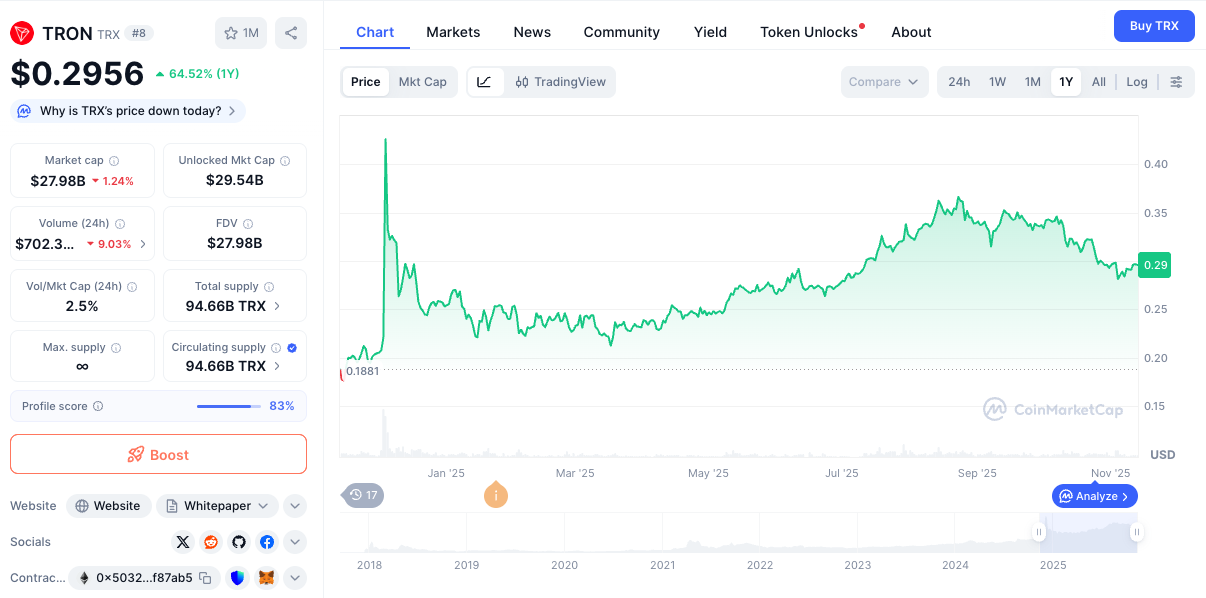
Why do some analysts call TRON the best trade for the next 4 years?
The thesis rests on two measurable pillars: stablecoin dominance and a deflationary fee model. Rather than trusting promises, this section follows on-chain data you can verify yourself on a block explorer.
The first pillar is TRON’s role in global “digital dollar” settlement. The network reportedly hosts a very large share of circulating USDT (figure varies; verify the current amount on TronScan and the Tether transparency page). It acts as a payment rail for remittances and commerce in many emerging economies.
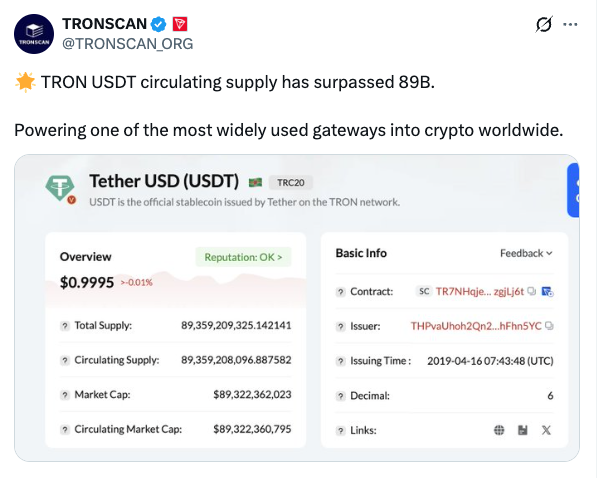
Steady daily transfer volume builds a genuine economic moat. Even when speculative markets shake, the demand to use TRX for moving stablecoins persists. That is the difference between an asset with recurring fee revenue and one living purely on expectations.
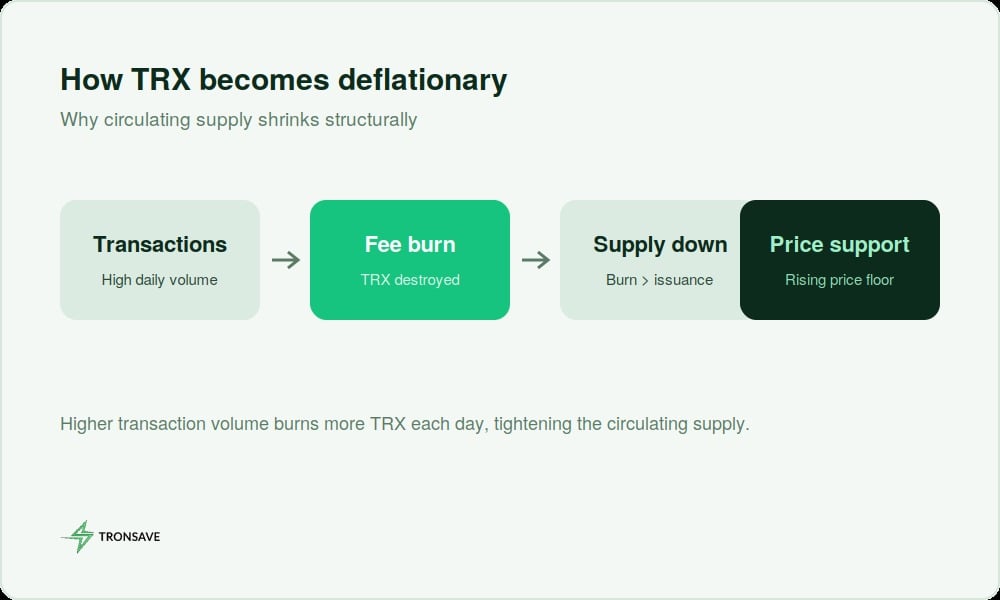
The second pillar is supply pressure from TRON’s fee-burn mechanism, documented in the official TRON developer docs. The mechanics are simple:
- Every transaction consumes Energy and Bandwidth, and the associated fee is burned.
- Higher network volume burns more TRX each day, which can offset new issuance.
- During busy periods, net supply can tighten, which may support price over a full cycle.
What could TRX be worth over the next cycle?
No one can pin down an exact price, and any projection is uncertain. Valuation depends mainly on TRON’s share of stablecoin settlement and the strength of the deflationary effect. Treat every target as a scenario, not a forecast.
Model-based framing usually ties TRON’s market cap to growth in total global stablecoin supply (the base case), then adds the burn effect (the bullish case). For long-term accumulators, historical support and resistance zones often matter more than a single headline number.
What catalysts could shape 2026?
Several structural factors are clearer in 2026 than in earlier cycles:
- Stablecoin regulatory frameworks in major markets are gradually taking shape, which can legitimize USDT rails in institutional eyes.
- Resolved legal uncertainty around parts of the ecosystem reduces perceived risk for cautious capital.
- Deeper integration with mainstream payment fintech expands real-world usage.
None of these guarantee a higher price; they simply shift probabilities. Verify any specific regulatory or partnership claim against a primary source before acting on it.
What are the real risks of treating TRON as a long-term trade?
A balanced view needs a clear bear case. The long-term TRON thesis only makes sense if you also size these risks honestly:
- Regulatory risk: stablecoin rules could restrict USDT flows, directly affecting TRON’s core demand.
- Concentration risk: TRON’s value case leans heavily on a single asset, USDT. A shock to Tether would hit TRON hard.
- Competition: other chains compete aggressively for stablecoin transfers, and issuers can shift volume between networks.
- Volatility: TRX remains a volatile asset; you can lose a large part of your principal.
How does TRX compare with other Layer 1s?
| Factor | TRON (TRX) | Typical large Layer 1 |
|---|---|---|
| Primary demand driver | Stablecoin (USDT) settlement | DeFi, apps, speculation |
| Fee model | Fees burned; supply can tighten | Varies; some inflationary rewards |
| Main risk | USDT concentration | Ecosystem/competition risk |
| Yield option | SR voting / staking | Staking rewards |
TRX behaves a little like a cash-flow asset: real fees, really burned. But concentration in one stablecoin is a genuine vulnerability that diversified chains may avoid.
How can long-term holders manage a TRX position?
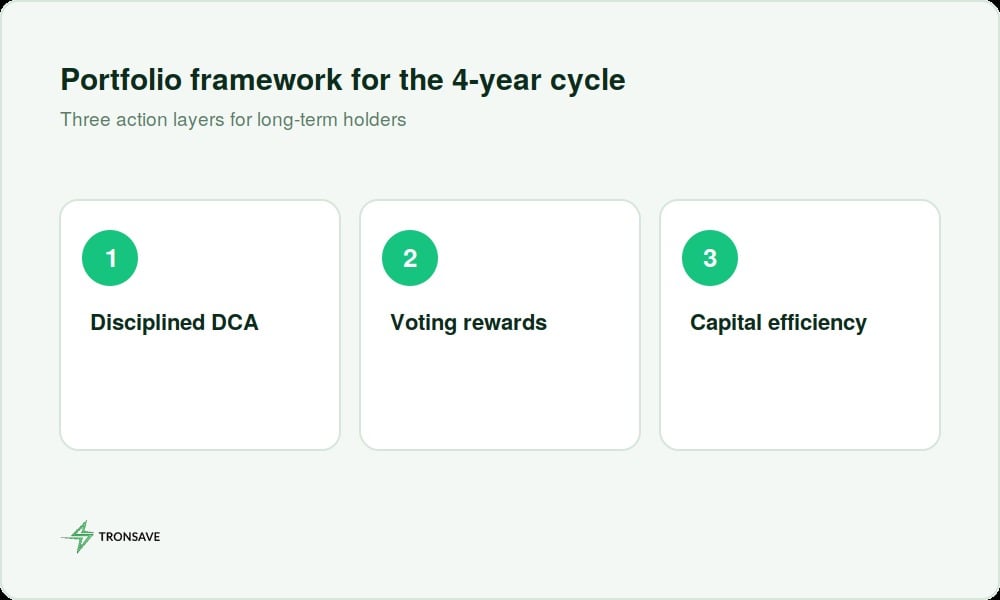
If you decide TRX fits your risk tolerance, structure matters more than timing. A simple framework many long-term holders consider:
- Dollar-cost average: split capital across several entries instead of buying all at once.
- Use native yield: stake and vote for Super Representatives to earn rewards on idle TRX.
- Improve efficiency: for heavy USDT transfers, energy-rental tools such as TronSave can reduce fees versus burning TRX directly. This is one option among several; staking and self-custody resource management also work.
For a deeper look at the underlying fundamentals, see our analysis of whether TRON is a good long-term investment, and if you trade actively, the TRON energy and bandwidth guide explains how fees actually accrue. To trim costs on frequent transfers, you can also reduce TRON gas fees with resource rental.
Frequently Asked Questions
Is TRON really the best trade for the next 4 years?
It is a credible thesis based on stablecoin dominance and fee burns, but it is not a guarantee. Any asset can underperform, and TRX is volatile. Treat it as one scenario and do your own research.
What makes TRX different from other coins?
TRX demand is closely tied to USDT settlement, generating real, recurring transaction fees rather than relying only on speculation. Those fees are burned, which can slow supply growth.
Can TRON’s supply really turn deflationary?
It can during high-activity periods, when burned fees exceed new issuance. However, this is not constant; over quieter stretches supply may still grow. Check current data on TronScan.
What is the biggest risk to the TRON thesis?
Concentration in USDT. Because TRON’s value case leans heavily on a single stablecoin, regulatory action against Tether or a migration of volume to rival chains would be a major blow.
How do TronSave and staking fit in?
Staking and Super Representative voting earn native rewards, while energy-rental services like TronSave cut transfer fees for high-volume users. Neither reduces market risk; they only improve cost efficiency.
Is this article investment advice?
No. It is educational analysis only. Cryptocurrency is high risk, and you should consult a licensed financial advisor before buying, selling, or staking any digital asset.
⚠️ Not financial advice. This article is for educational and informational purposes only and reflects the author’s opinion at the time of writing. It is not investment, financial, legal, or tax advice. Cryptocurrency is highly volatile and you can lose your entire principal; prices, APYs, and on-chain fees change constantly and may be out of date. Always do your own research (DYOR) and consult a licensed financial advisor before buying, selling, staking, or lending any digital asset.
Disclosure: This is the official TronSave blog. TronSave sells TRON energy/resource (fee-reduction) services and has a commercial interest in the products and topics covered here.