The TRON energy market is where users rent or trade energy—the on-chain resource that powers TRC20 transactions like USDT transfers. Instead of burning TRX directly, you rent energy at market rates, which can cut a typical USDT transfer fee by roughly 60–80% (estimates as of 2026; verify against a primary source).
Key Takeaways
- What it is: The TRON energy market connects users who need cheap transfers with stakers who supply energy.
- Why it matters: A standard USDT transfer can burn ~6.4 TRX; renting energy is usually far cheaper.
- How to save: Rent energy, stake TRX for daily energy, send to non-empty wallets, and time transfers during low demand.
- Options: Platforms include TronSave, Netts.io, TronZap and others—compare rates and reputation.
- Risk note: Energy prices and staking APYs vary and are not guaranteed. This is not financial advice.
👉 Try it free: use the USDT Fee Savings Calculator to see exactly how much you’d save by renting TRON energy instead of burning TRX.
What Is the TRON Energy Market?
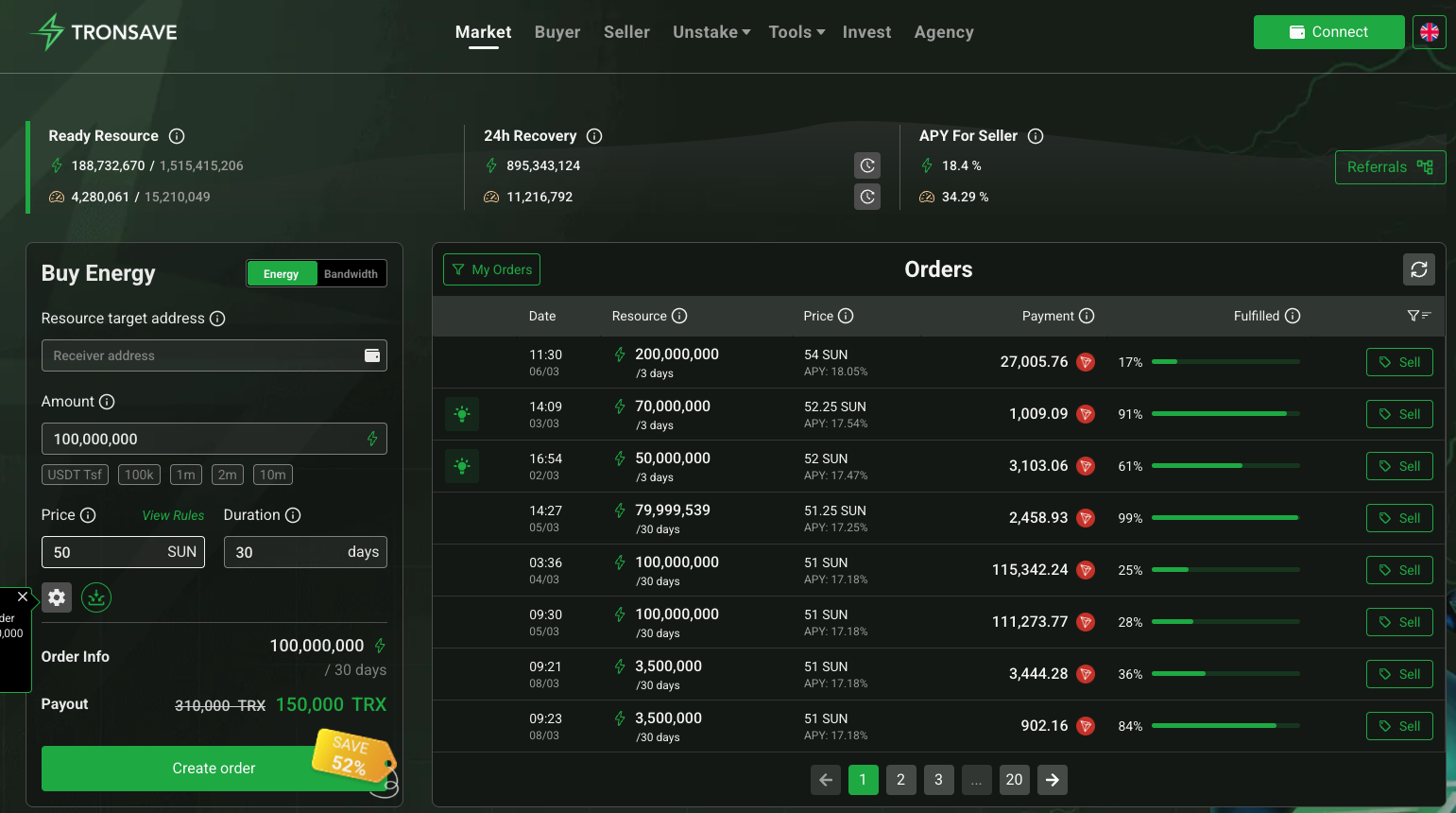
The TRON network uses two resources: bandwidth for simple TRX sends and energy for smart-contract operations such as TRC20 (USDT) transfers. Every account gets a small free bandwidth allowance each day, but energy must be obtained by staking TRX, burning TRX, or renting it.
The energy market is the marketplace layer that lets you rent that energy on demand. Buyers get cheaper transfers; sellers stake TRX to generate energy and lend it out for a yield. You can confirm how energy and bandwidth work in the official TRON developer documentation.
How Does the TRON Energy Market Work?
When you send USDT without enough energy, the network burns TRX to cover the cost. A standard USDT transfer to a wallet that already holds USDT consumes around 64,285 energy units; sending to an empty or new wallet can require roughly 130,000 units. At a TRX price near $0.12 (approximate, as of 2026; verify on CoinMarketCap), burning translates into a few dollars per transfer.
Renting energy avoids most of that burn. You connect a wallet such as TronLink, choose a provider, and pay a market rate quoted in sun (1 TRX = 1,000,000 sun) per energy unit. You can verify actual energy consumption and fees for any transaction on TronScan.
Burning vs. Renting Energy
The table below uses approximate figures to illustrate the difference. Exact costs change with demand, duration, and TRX price, so treat these as estimates to verify before transacting.
| Method | Energy (Units) | Typical Cost (TRX) | Approx. Savings |
| Burn TRX (recipient holds USDT) | ~64,285 | ~6.4 | — |
| Rent energy (same transfer) | ~64,285 | ~2–5 | ~60–80% |
| Burn TRX (empty/new wallet) | ~130,000 | ~13.4 | — |
| Rent energy (same transfer) | ~130,000 | ~4–10 | ~60–80% |
Note: rental pricing is often hourly and varies by provider and network demand.
Which Platforms Operate in the TRON Energy Market?
There are 20+ energy providers. Rather than chasing the single lowest quote, weigh price against reliability, transparency, and how easily a service connects to your wallet. A short comparison:
| Platform | Energy Cost (~64k units) | Staking/Lending APY | Notes |
| TronSave | ~3–6 TRX | Variable (not guaranteed) | API access, TronLink integration |
| Netts.io / TronZap / others | ~2–5 TRX (market low) | Variable | Often lowest headline rates |
| Native staking (no platform) | Free daily energy after stake | Base network rewards | Requires locking TRX |
- Rental platforms suit occasional senders who want instant energy with no lockup.
- Native staking suits frequent senders willing to freeze TRX for recurring free energy.
- Always check current reviews and a provider’s track record before depositing funds.
How Do You Save on TRC20 Fees with Energy Markets?
There are four practical ways to cut USDT transfer costs:
- Rent energy for a single transfer instead of burning TRX—instant and lockup-free.
- Stake (freeze) TRX to earn free daily energy if you transfer often.
- Send to non-empty wallets where possible, since that roughly halves the energy required.
- Time your transfers for lower-demand periods, which can trim rental rates.
Renting through a marketplace like TronSave is often the simplest option for one-off transfers, while staking can be more cost-effective at high volume.
Can You Earn Passive Income in the Energy Market?
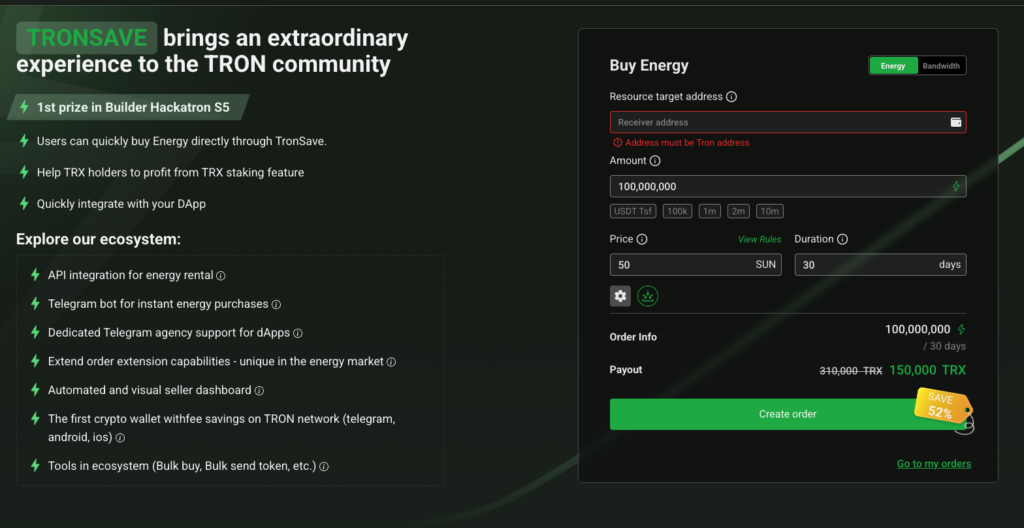
Yes—stakers supply the energy that renters consume. By freezing TRX and delegating energy, holders can earn a yield on otherwise idle TRX. Reported APYs vary widely by platform and demand and are not guaranteed; the closure of some providers in past years is a reminder that returns and counterparties carry real risk.
- Staking typically involves a lock-up period (commonly around 14 days to unfreeze).
- Energy demand fluctuates, so yields can rise or fall over time.
- Spread risk across reputable platforms and never stake funds you cannot afford to lock.
Treat any APY figure as variable and verify it on the provider’s live dashboard before committing.
Frequently Asked Questions
What is the TRON energy market?
It is the marketplace where users rent or trade energy to power TRC20 transactions, lowering the TRX cost of USDT transfers.
How do I get energy on TRON?
You can burn TRX automatically, stake (freeze) TRX for daily free energy, or rent energy from a provider such as TronSave through a wallet like TronLink.
How much can I save by renting energy?
Estimates suggest roughly 60–80% versus burning TRX, though savings depend on the TRX price, demand, and the provider’s rate. Verify current figures on TronScan.
Is renting energy safe?
Reputable platforms connect via wallets like TronLink and never take custody of your USDT. Still, research any provider and confirm transaction details on-chain.
Why is sending USDT to a new wallet more expensive?
Creating a new account record requires more energy (around 130,000 units versus ~64,285), so the fee is higher than sending to a wallet that already holds USDT.
Do I need TronLink to use the energy market?
A TRON-compatible wallet such as TronLink is the common way to connect, sign transactions, and receive rented or delegated energy.
Conclusion
The TRON energy market gives everyday USDT users a clear way to cut TRC20 fees—through renting, staking, or simply timing transfers better. Compare providers like TronSave alongside native staking and other platforms, verify live costs on TronScan, and remember that energy prices and APYs change. For more background, see our guide on TRON energy and bandwidth and why renting TRON energy reduces USDT fees.
⚠️ Not financial advice. This article is for educational and informational purposes only and reflects the author’s opinion at the time of writing. It is not investment, financial, legal, or tax advice. Cryptocurrency is highly volatile and you can lose your entire principal; prices, APYs, and on-chain fees change constantly and may be out of date. Always do your own research (DYOR) and consult a licensed financial advisor before buying, selling, staking, or lending any digital asset.
Disclosure: This is the official TronSave blog. TronSave sells TRON energy/resource (fee-reduction) services and has a commercial interest in the products and topics covered here.