Learning how to invest in TRON crypto means buying TRX through a reputable exchange, then choosing a strategy: long-term holding, staking for passive yield, or DeFi yield farming. Each path carries different risk, return, and effort, so match it to your goals and risk tolerance.
Key takeaways
- TRON (TRX) is a high-throughput blockchain launched in 2017, widely used for low-cost USDT (Tether) transfers.
- The main ways to invest are holding TRX, staking (Delegated Proof of Stake), and DeFi yield farming.
- Native staking yields are modest (roughly 4-6% APY, variable); higher advertised DeFi yields carry materially higher risk.
- Crypto is volatile and you can lose your entire principal — always verify live figures against a primary source and do your own research.
- Spread risk across positions and never invest money you cannot afford to lose.
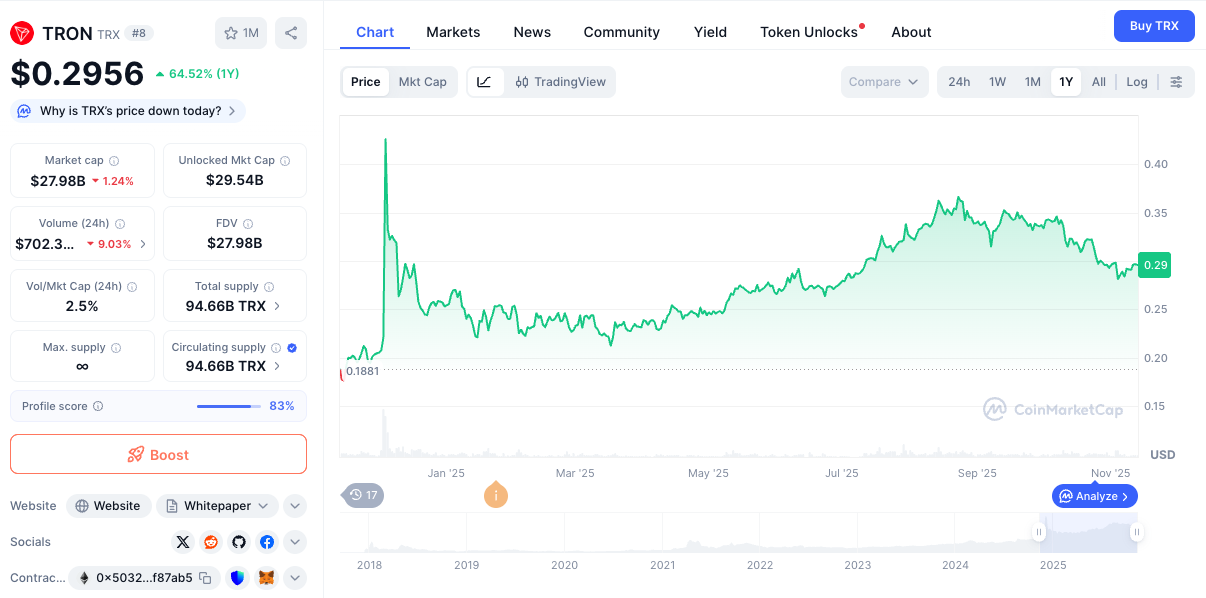
What is TRON and why do people invest in TRX?
TRON is a blockchain platform for decentralized applications (dApps) and content sharing, launched in 2017 by Justin Sun and powered by its native token, TRX. You can review the network’s live activity directly on TronScan, the official block explorer.
Investors are drawn to TRON for a few practical reasons:
- Low fees and fast settlement: transactions are cheap and quick, which is why TRON carries a large share of global USDT (Tether) transfers.
- Large stablecoin footprint: TRON is one of the most-used chains for moving USDT, giving TRX ongoing transactional demand.
- Active ecosystem: projects such as SunSwap, JustLend, and BitTorrent add lending, swapping, and file-sharing use cases.
None of this guarantees returns. TRX is a volatile asset, and ecosystem size is only one factor among many. For broader context, see our overview of the TRON network and its role in blockchain.
How to invest in TRON crypto step by step
If you are figuring out how to invest in TRON crypto for the first time, the process is straightforward but each step deserves care:
- 1. Choose an exchange or wallet. TRX is listed on major exchanges such as Binance, Kraken, and Coinbase. Compare fees, regional availability, and security before signing up.
- 2. Verify your account and fund it. Complete identity verification, then deposit fiat or stablecoins.
- 3. Buy TRX. Use a market or limit order. Start small while you learn — a modest position (for example, 5-10% of your crypto allocation) limits downside.
- 4. Move to self-custody (optional). For long-term holding, transfer TRX to a non-custodial wallet such as TronLink and store your seed phrase offline.
- 5. Decide on a strategy. Hold, stake, or farm yield — covered below.
What are the best strategies for investing in TRON?

There is no single best approach; the right one depends on your time horizon and appetite for risk. The three common strategies are:
Long-term holding
Buying and holding TRX is the simplest strategy. You profit only if the price appreciates, so it suits investors who believe in TRON’s long-term transactional demand. Avoid relying on specific price targets you see online — past forecasts (such as older year-end predictions) have frequently missed, and no price target is guaranteed.
Staking TRX for passive income
TRON uses Delegated Proof of Stake (DPoS): you can freeze TRX to vote for Super Representatives and earn rewards, typically in the range of roughly 4-6% APY (variable; not guaranteed). You can stake directly through wallets like TronLink. Resource-management tools such as TronSave can also help reduce on-chain energy costs, but always treat any advertised “up to” yield as a ceiling, not an expectation, and compare it against simply staking natively.
DeFi yield farming
Protocols such as SunSwap let you provide liquidity (for example a TRX/USDT pool) in exchange for trading-fee rewards. Advertised yields can look high but carry added risks: impermanent loss, smart-contract bugs, and protocol failure. Vet any platform’s audits and track record before committing funds.
| Strategy | Typical Return | Risk Level | Effort |
| Long-term holding | Price-dependent (no fixed yield) | High | Low |
| Staking (DPoS) | ~4-6% APY (variable) | Medium | Low-Medium |
| DeFi yield farming | Variable; can be higher and riskier | High | High |
What risks should TRON investors manage?
Every TRON strategy carries risk. The main ones to plan for:
- Regulatory risk: ongoing legal and regulatory developments around TRON and its founder can affect sentiment and price. Track official channels and reputable news.
- Market volatility: TRX can swing sharply in short periods. Position sizing and (for traders) stop-loss orders help limit damage.
- Smart-contract and platform risk: DeFi and third-party yield products can fail or be exploited, leading to total loss of deposited funds.
- Competition: chains like Ethereum and Solana compete for developers and users, which can shift capital away from TRON.
For a deeper look at the bull and bear case, read our analysis on whether TRON is a good investment.
Frequently asked questions
- Is TRON a good investment? TRON has real utility as a low-cost settlement layer for stablecoins, but it is volatile and exposed to regulatory and competitive risk. It may suit a diversified, risk-aware portfolio — not a guaranteed bet.
- How much should I invest in TRX? Only what you can afford to lose. Many investors keep speculative crypto to a small slice (often single-digit percentages) of their overall portfolio.
- What is the safest way to invest in TRON? Buying on a reputable exchange and holding in self-custody is generally lower-risk than chasing high DeFi yields. Native staking sits in between.
- Can TRX reach a specific price target? No price target is guaranteed. Online forecasts are speculative and frequently wrong; treat them as opinions, not facts, and verify against a primary source.
- What is the best platform for staking TRX? There is no universal “best.” Native staking via TronLink is simple and direct; tools like TronSave can help manage energy costs. Compare yields, fees, and security yourself.
- Where can I check live TRON data? Use the official block explorer TronScan and reputable market sites for prices, supply, and on-chain activity.
Conclusion
Knowing how to invest in TRON crypto comes down to picking the right exchange, buying TRX responsibly, and choosing a strategy — holding, staking, or yield farming — that fits your risk tolerance. Stay diversified, verify every figure against a primary source as of 2026, and never invest more than you can afford to lose.
⚠️ Not financial advice. This article is for educational and informational purposes only and reflects the author’s opinion at the time of writing. It is not investment, financial, legal, or tax advice. Cryptocurrency is highly volatile and you can lose your entire principal; prices, APYs, and on-chain fees change constantly and may be out of date. Always do your own research (DYOR) and consult a licensed financial advisor before buying, selling, staking, or lending any digital asset.
Disclosure: This is the official TronSave blog. TronSave sells TRON energy/resource (fee-reduction) services and has a commercial interest in the products and topics covered here.