The TRON Network is a Layer-1, EVM-compatible blockchain launched in 2018 that specializes in fast, low-cost stablecoin payments. It is one of the most widely used chains for USDT (Tether) transfers, valued for cheap fees, 3-second blocks, and a delegated proof-of-stake design built for high transaction volume.
Key Takeaways
- The TRON Network is an EVM-compatible Layer-1 blockchain focused on stablecoin settlement and peer-to-peer payments.
- It uses Delegated Proof-of-Stake (DPoS) with 27 Super Representatives, supports up to ~2,000 TPS, and produces ~3-second blocks (per official TRON docs).
- Transactions are powered by energy and bandwidth, which users obtain by staking TRX or renting resources.
- TRON is a major rail for USDT transfers, especially small everyday payments in emerging markets.
- Figures such as market share, TVL, and account counts change constantly — always verify against a primary source like TronScan or DefiLlama.
What is the TRON Network?
The TRON Network is a public blockchain designed for high-throughput, low-fee transactions. Because it is compatible with the Ethereum Virtual Machine (EVM), developers can deploy Solidity smart contracts and port Ethereum-based applications with minimal changes. Its core mission centers on financial inclusion: making digital-dollar (stablecoin) transfers cheap and accessible to users worldwide.
Unlike networks that charge a fluctuating gas fee in their native token for every action, TRON separates ordinary transfers from smart-contract execution using a resource model. This keeps the cost of a simple transfer predictable and often near zero when you hold staked resources.
How does the TRON Network handle stablecoins?
TRON is widely cited as one of the leading blockchains for stablecoin activity, particularly Tether (USDT). A large share of on-chain volume comes from small-value transfers — everyday remittances, merchant payments, and savings in regions where access to stable currency matters.
The network’s appeal for stablecoins comes down to three things: low and predictable fees, fast settlement, and deep liquidity across exchanges and wallets. For the latest, verifiable USDT supply and transfer figures, consult the official TRON network site and on-chain explorers rather than secondhand summaries.
- Low cost: A USDT (TRC-20) transfer is inexpensive when funded by staked or rented energy.
- Speed: ~3-second block times mean near-instant confirmation for most transfers.
- Reach: Broad wallet and exchange support makes TRON-based USDT easy to send and receive.
What is the technical architecture of the TRON Network?
TRON’s design prioritizes performance and cost efficiency. The table below summarizes its core technical characteristics as documented by the project (verify current values against official sources).
| Feature | TRON Network | Why it matters |
|---|---|---|
| Consensus | Delegated Proof-of-Stake (DPoS) | 27 Super Representatives produce blocks, enabling high throughput |
| Throughput | Up to ~2,000 TPS | Handles heavy stablecoin and DeFi volume |
| Block time | ~3 seconds | Fast confirmation for payments |
| Fee model | Energy + bandwidth | Predictable, often near-zero cost for funded accounts |
| Smart contracts | EVM-compatible | Easy migration from Ethereum tooling |
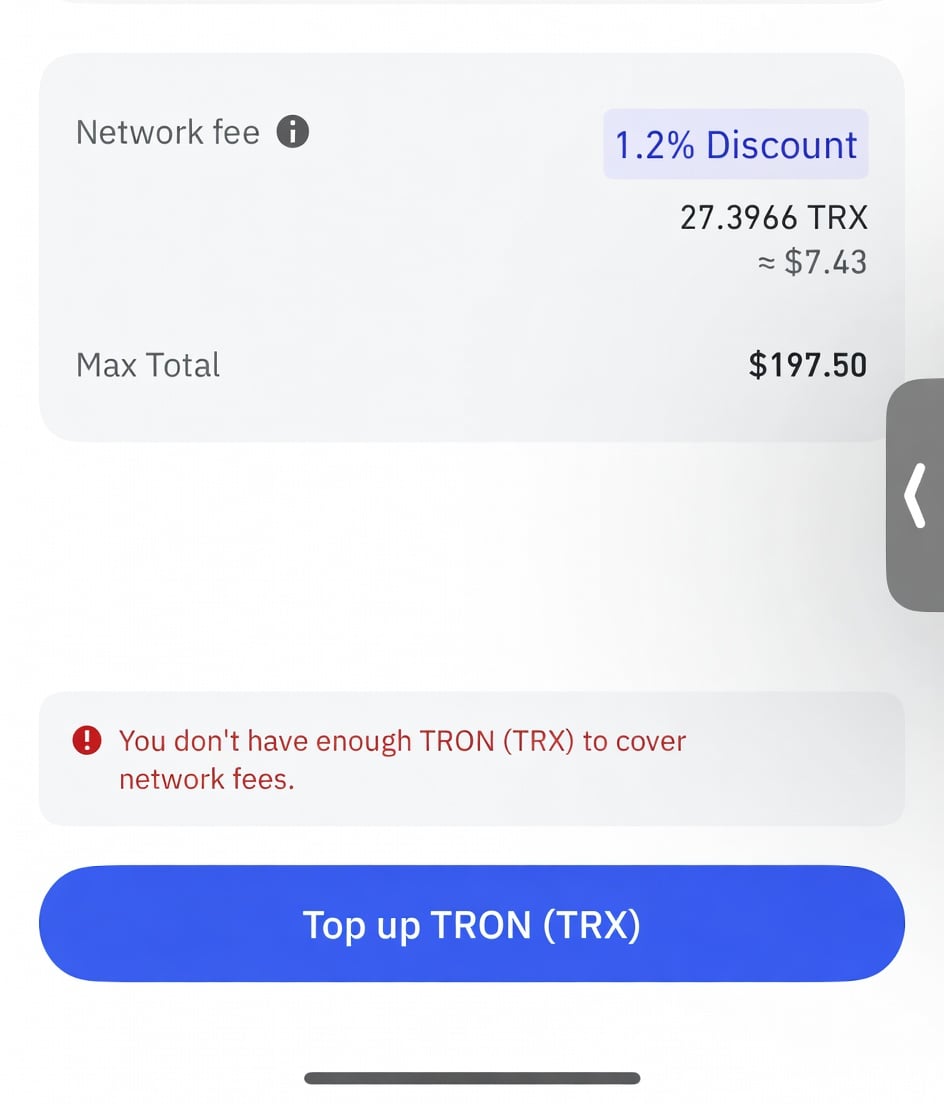
Every TRON account receives a small daily bandwidth allowance for basic transfers. Smart-contract actions such as TRC-20 (USDT) transfers consume energy, which has no free daily quota. Users obtain energy by staking TRX or by renting it. To understand the resource model in depth, see our guide on TRON energy and bandwidth.
How do you pay for transactions on TRON?
There are two main ways to cover the energy a smart-contract transaction needs:
- Staking TRX: Lock TRX to generate a daily allotment of energy or bandwidth. Staking also grants voting power for Super Representatives and can earn staking rewards. The trade-off is a multi-day unstaking delay. See does staking TRX provide energy or bandwidth for a breakdown.
- Renting energy: For occasional or one-off transactions, renting can be cheaper than burning TRX directly. Platforms such as TronSave let you rent energy on demand, while staking and other resource marketplaces serve users who transact frequently.
- Burning TRX: If you have neither staked nor rented resources, the network simply burns TRX to cover the cost — usually the most expensive option for repeated transfers.
Choosing among staking, renting, and burning depends on how often you transact and whether you want passive rewards from locked TRX.
What is the TRON DeFi ecosystem like?
Beyond payments, the TRON Network hosts a decentralized finance (DeFi) ecosystem. Notable applications include JustLend (lending) and SunSwap (a decentralized exchange), which historically account for the majority of the chain’s total value locked (TVL). For current TVL figures, check official TRON resources or DefiLlama, since these numbers shift with market conditions.
The project has also discussed broader initiatives such as Bitcoin Layer-2 interoperability and Real-World Asset (RWA) integrations. Treat roadmap items as forward-looking until they ship and can be independently confirmed.
What are the risks and limitations?
No blockchain is without trade-offs. When evaluating the TRON Network, weigh these factors honestly:
- Stablecoin concentration: Heavy reliance on a single asset type (USDT) ties network activity to Tether’s stability and regulatory standing.
- Centralization concerns: A 27-validator DPoS model is fast but more concentrated than larger proof-of-stake validator sets.
- Competition: Ethereum, Solana, and BNB Chain all compete for stablecoin and DeFi volume with different fee and security trade-offs.
- Regulatory risk: Stablecoin rails face evolving rules across jurisdictions.
Frequently Asked Questions
Is the TRON Network compatible with Ethereum?
Yes. TRON is EVM-compatible, so Solidity smart contracts and many Ethereum tools work on it with minimal changes.
Why are TRON fees so low?
TRON uses an energy-and-bandwidth resource model instead of charging a fluctuating gas fee for every action. When you hold staked or rented resources, simple transfers can cost effectively nothing.
How do I get energy for a USDT transfer?
Stake TRX to generate daily energy, or rent energy from a resource marketplace such as TronSave. If you do neither, the network burns TRX to cover the cost.
How many validators secure the TRON Network?
TRON uses Delegated Proof-of-Stake with 27 Super Representatives that produce blocks, elected by TRX holders’ votes.
What is TRON mainly used for?
Its largest use case is stablecoin transfers, especially low-value USDT payments, alongside a DeFi ecosystem of lending and trading applications.
Where can I verify TRON’s on-chain statistics?
Use primary sources such as TronScan, DefiLlama, and the official TRON documentation rather than secondhand figures.
Note: Market-share, TVL, account-count, and transaction-volume figures change frequently. The data points referenced here should be confirmed against a primary source (TronScan, DefiLlama, or official TRON docs) before relying on them.
⚠️ Not financial advice. This article is for educational and informational purposes only and reflects the author’s opinion at the time of writing. It is not investment, financial, legal, or tax advice. Cryptocurrency is highly volatile and you can lose your entire principal; prices, APYs, and on-chain fees change constantly and may be out of date. Always do your own research (DYOR) and consult a licensed financial advisor before buying, selling, staking, or lending any digital asset.
Disclosure: This is the official TronSave blog. TronSave sells TRON energy/resource (fee-reduction) services and has a commercial interest in the products and topics covered here.