How much TRX is needed to send USDT? On the TRON network (TRC-20), a transfer to an active wallet typically burns about 6.5 TRX, while a first-time transfer to an empty wallet costs roughly 13 TRX. Renting energy can cut that to around 2–5 TRX.
Cut your fees: the cheapest way to move USDT is to rent TRON energy instead of burning TRX — follow the step-by-step guide, or grab live rates on the TRON energy market.
💡 Need less TRX: rent TRON energy on TronSave and send USDT for under $1 instead of burning TRX every transfer.
YMYL note: Fees fluctuate with the TRX price and network energy demand. The USD figures below assume TRX ≈ $0.287 as of March 2026 — check live rates on a primary source before transacting.
Key Takeaways
- USDT TRC-20 transfers are paid in energy, not a fixed gas fee, so the TRX cost is predictable.
- Sending to a non-empty wallet needs ~65,000 energy (~6.5 TRX); an empty wallet needs ~130,000 energy (~13 TRX).
- Bandwidth is usually covered by a free daily allocation, so energy drives almost all of the cost.
- Staking TRX, renting energy, or using gas-free wallets can lower fees substantially.
- Always check the recipient address on Tronscan first — it can roughly halve your cost.
What does it cost to send USDT on TRON?
Here is the direct breakdown, in stable energy units first and USD as a secondary estimate (TRX ≈ $0.287, as of March 2026; verify against a primary source):
- Active recipient (already holds USDT): ~65,000 energy → ~6.5 TRX (~$1.87).
- New/empty recipient (first USDT receipt): ~130,000–131,000 energy → ~13 TRX (~$3.74).
- With rented energy (e.g., TronSave, TronZap, or self-staking): ~2–5 TRX (~$0.57–$1.45), depending on the package and provider.
Costs are quoted in energy because energy requirements are stable, whereas the TRX-to-USD value moves with the market. If you only remember one number, remember 65,000 energy for a normal USDT transfer.
How do TRON fees actually work: bandwidth vs. energy?
Unlike Ethereum’s volatile gas, TRON splits transaction costs into two on-chain resources, which keeps fees predictable:
- Bandwidth — covers basic transfers. Every account gets 600 free bandwidth points daily (enough for one or two TRC-20 transfers). Beyond that, the network burns 0.001 TRX per byte, which is negligible (under 0.3 TRX even with no free points left).
- Energy — required to execute smart contracts, including the USDT TRC-20 contract. There is no free daily energy. You obtain it by freezing (staking) TRX for energy, renting energy from a marketplace, or letting the network burn TRX directly (the most expensive option).
Because USDT is a smart contract token, energy drives roughly 90%+ of the cost. Bandwidth is usually free. For a deeper explanation of these two resources, see our guide on whether staking TRX provides energy or bandwidth.
The energy unit price is set by on-chain governance. Per TRON’s governance committee, Proposal #104 (passed August 29, 2025) lowered the energy unit price to 100 sun (0.0001 TRX per energy unit), reducing direct burn costs by roughly 50–60% (as of mid-2026; verify against a primary source). For the underlying mechanics, the official TRON resource model documentation is the authoritative reference.
Burn fee formula (when you have no energy): Fee in TRX = Energy required × 0.0001 TRX/unit.
- Active recipient: 65,000 × 0.0001 = ~6.5 TRX.
- Empty recipient: 130,000 × 0.0001 = ~13 TRX.
What is the updated 2026 fee comparison for USDT TRC-20 transfers?
| Transaction Type | Energy Required | Bandwidth | Burn Fee (no energy) | USD (~$0.287/TRX) | Rental (TronSave/TronZap) |
| Simple TRX transfer | 0 | ~269 pts | ~0.27 TRX | ~$0.08 | N/A |
| USDT → active wallet | ~65,000 | ~345 pts | ~6.5 TRX | ~$1.87 | 2–4 TRX ($0.57–$1.15) |
| USDT → empty/new wallet | ~130,000 | ~345 pts | ~13 TRX | ~$3.74 | 4–8 TRX ($1.15–$2.30) |
| Gas-free supported transfer | 0 (USDT deducted) | Low | 0 TRX | ~$0–$1 in USDT | N/A |
Last verified: March 2026. Energy values are stable; USD estimates depend on the live TRX price — confirm before transacting.
Why do USDT TRC-20 fees vary?
- Recipient wallet status — the single biggest factor. An empty wallet needs about double the energy on first receipt. Checking the address on Tronscan first can save roughly half your cost.
- TRX price — fees are denominated in TRX, so a lower TRX price means a lower USD cost (e.g., at $0.25/TRX, 6.5 TRX ≈ $1.63).
- Network demand — during busy periods, energy consumption can rise slightly; TRON generally sustains high throughput, so spikes are usually minor.
- Whether you stake or rent — direct burning is the priciest path. Staking or renting energy is where most savings come from.
How can you minimize the TRX needed to send USDT?
These practical methods, ordered roughly by impact, help reduce what you pay:
- Check the recipient first. Confirm USDT activity on Tronscan to avoid the empty-wallet surcharge.
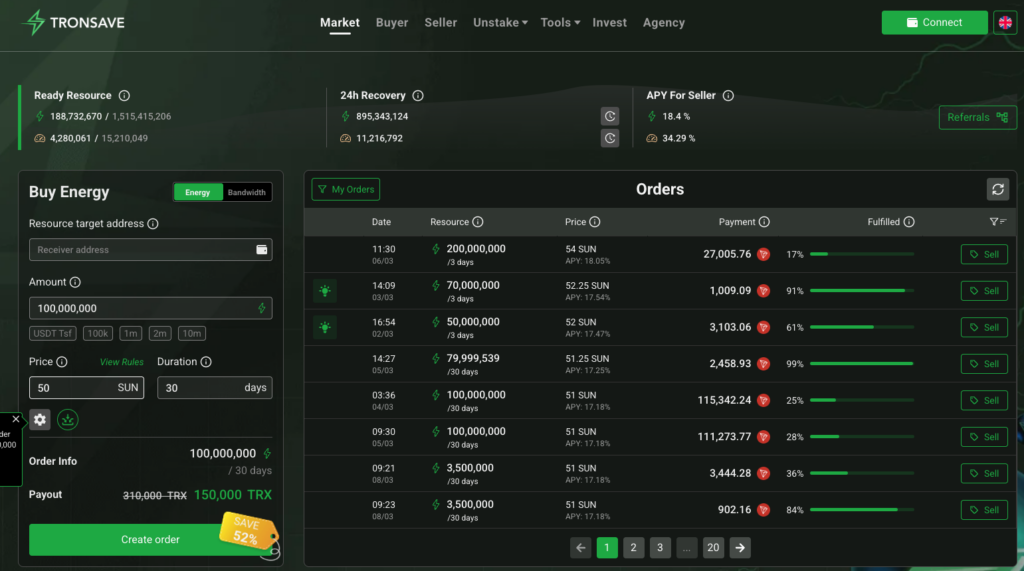
- Rent energy. Marketplaces such as renting TRON energy to reduce USDT fees let you buy roughly the exact energy you need (~65k or ~131k bundles) for a few TRX, instead of burning at full price.
- Stake/freeze TRX. Freezing TRX in TronLink or a supported wallet earns recurring free energy — efficient if you send many transfers per day.
- Use gas-free wallets or exchanges. Some wallets and exchanges deduct the fee directly in USDT, so you do not need a TRX balance at all.
- Time transfers during TRX dips. Since fees are in TRX, sending when TRX is cheaper lowers the USD cost.
- Batch where possible. Developers can batch multiple transfers in one transaction to reduce energy per send.
No single platform is required — staking, renting from TronSave or TronZap, or simply maintaining a small TRX buffer are all valid approaches. Choose what fits how often you transact.
How does TRON compare with other chains for USDT?
| Blockchain | Typical USDT Fee (2026) | Speed | Notes |
| TRON (TRC-20) | ~$0.6–$4 (rental often <$1.5) | Very fast | Highest USDT volume; easy savings via rental/staking |
| Ethereum (ERC-20) | ~$2–$30+ (varies with gas) | Moderate | Higher fees during congestion |
| Polygon | ~$0.01–$0.50 | Moderate | Cheap, but lower USDT liquidity |
| Solana | <$0.01 | Extremely fast | Very low fees; smaller USDT ecosystem |
Fee figures vary by source and conditions (as of mid-2026; verify against a primary source). TRON remains the most-used chain for USDT by transfer volume, but cheaper chains exist for small amounts. For a closer look, see TRON vs. Ethereum for USDT.
FAQ: How much TRX is needed to send USDT?
1. What is the current fee to send USDT TRC-20 on TRON?
About 6.5 TRX (~$1.87) for an active recipient and ~13 TRX (~$3.74) for an empty wallet, assuming TRX ≈ $0.287. Renting energy can bring it under ~$1.50.
2. Can you send USDT on TRON without paying TRX?
Effectively yes — if you have enough staked energy, rent energy in advance, or use a gas-free wallet that deducts the fee in USDT. You still consume the underlying energy resource.
3. Why are fees roughly double for new or empty wallets?
A first USDT receipt must initialize the recipient’s token account, requiring about 130,000 energy versus ~65,000 for an already-active wallet.
4. How do I check whether a wallet is empty for USDT?
Open Tronscan.org, paste the address, and review the TRC-20 tab for existing USDT balance or activity before sending.
5. Which network is cheaper than TRON for USDT?
Solana and Polygon usually have lower per-transfer fees for small amounts, but TRON leads on USDT liquidity, volume, and easy fee optimization via energy rental or staking.
6. Does the TRX price change the energy or TRX required?
The energy requirement stays the same regardless of price. The TRX amount changes only modestly with governance updates; the USD value is what moves most with the market.
Conclusion
Knowing how much TRX is needed to send USDT helps you avoid overpaying. Budget around 6.5 TRX for an active recipient and ~13 TRX for a new wallet at direct-burn rates, or 2–5 TRX if you rent or stake energy. Confirm the recipient on Tronscan and pick the savings method that matches your transfer frequency.
⚠️ Not financial advice. This article is for educational and informational purposes only and reflects the author’s opinion at the time of writing. It is not investment, financial, legal, or tax advice. Cryptocurrency is highly volatile and you can lose your entire principal; prices, APYs, and on-chain fees change constantly and may be out of date. Always do your own research (DYOR) and consult a licensed financial advisor before buying, selling, staking, or lending any digital asset.
Disclosure: This is the official TronSave blog. TronSave sells TRON energy/resource (fee-reduction) services and has a commercial interest in the products and topics covered here.