TRX lend energy means staking TRX to produce daily energy, then delegating your surplus energy to other wallets in exchange for payment. It lets you avoid burning TRX on fees while earning passive income, with returns of roughly 10–18% APY (varies; not guaranteed; as of 2026, verify against a primary source).
Key Takeaways
- You keep custody: delegating energy never transfers ownership of your staked TRX.
- Two income streams: base staking rewards plus payments from renters who need energy.
- Flexible exit: under TRON Stake 2.0 you can unstake after a 14-day waiting window (verify current parameters on official TRON docs).
- Main risk is the platform, not the protocol — vet any service before depositing funds.
- Returns are not guaranteed and depend on live energy demand, which fluctuates.
What Is TRX Lend Energy and How Does It Work?
The TRON network requires energy to run smart contract operations such as USDT (TRC-20) transfers. Instead of paying for each action by burning TRX, you can stake (freeze) TRX to generate a daily allowance of energy that regenerates every 24 hours.
When you produce more energy than you personally use, TRX lend energy lets you delegate that surplus to another address through TRON’s native resource delegation. The borrower gets cheaper transactions; you collect a fee. Throughout this, your principal stays frozen in your own wallet — only the right to use the energy moves.
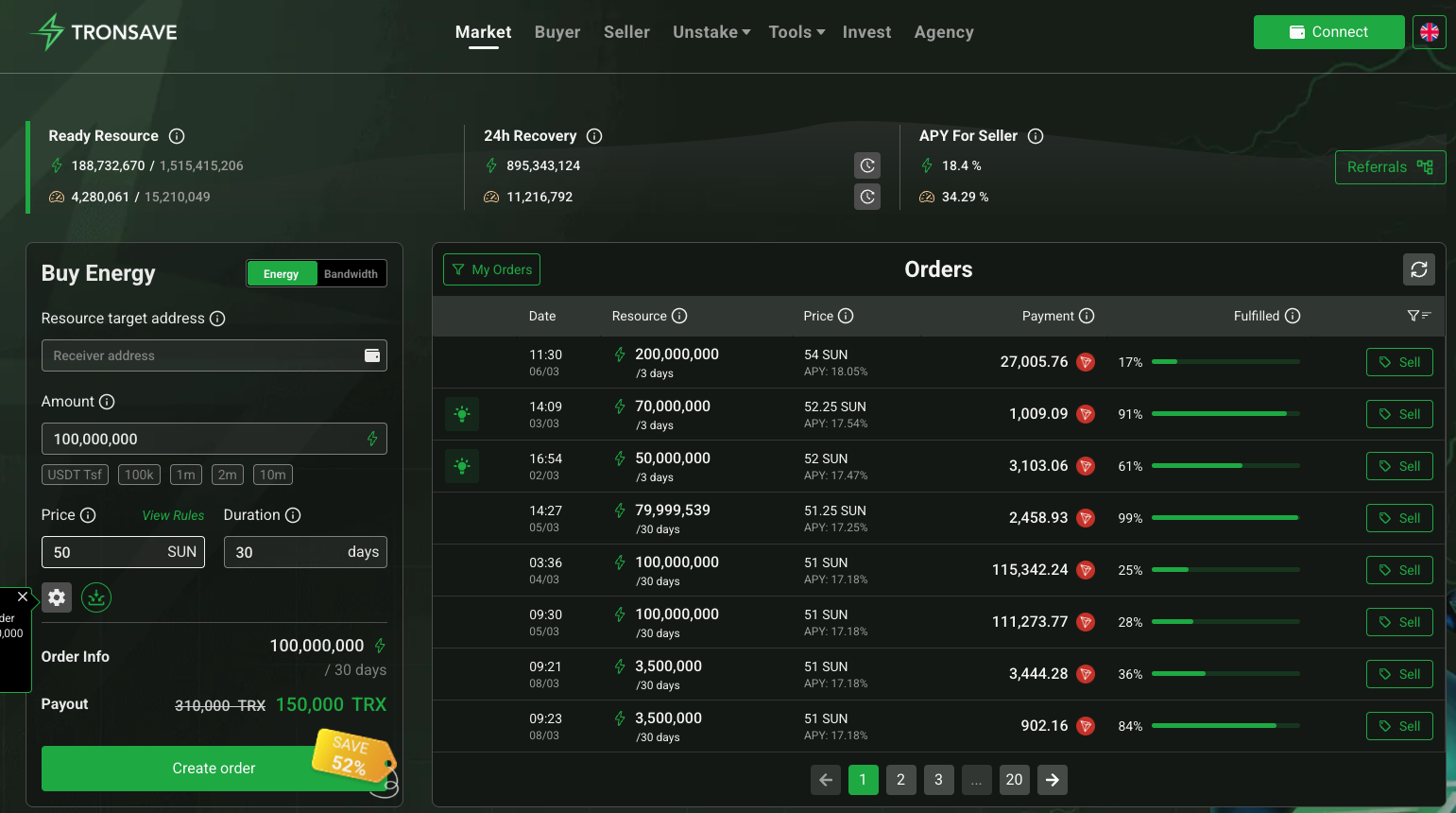
Think of it like leasing unused computing capacity. You remain the owner; the renter pays for temporary access. Automated marketplaces match energy suppliers with users who send frequent USDT transfers and want to avoid high burn costs. To understand the underlying resource first, see this primer on how to get TRON energy and save on fees.
Why Lend Energy Instead of Burning or Renting It?
Every approach to TRON fees has trade-offs. Burning TRX is simple but the most expensive per transaction. Renting energy cuts costs sharply for senders. Lending flips the equation: you become the supplier and earn from demand.
| Approach | Who it suits | Cost / benefit (approximate; verify) |
|---|---|---|
| Burn TRX | Rare, one-off transfers | Highest per-transfer cost; no setup |
| Rent energy | Frequent senders | Can reduce transfer cost meaningfully vs. burning |
| Lend energy (this guide) | Holders with idle TRX | Earn base staking yield plus delegation income |
Key reasons holders choose to lend rather than let TRX sit idle:
- Income for lenders: a base staking yield plus additional income from delegating energy.
- Savings for the broader network: renters pay far less than burning, which keeps demand high.
- Flexibility: energy regenerates daily, and you can stop delegating and unstake after the protocol’s waiting period.
Because USDT-TRC20 settlement volume on TRON remains very large (significant but figure unverified; as of 2026, verify against a primary source), demand for rentable energy is persistent — which supports lender returns over time, though it is never guaranteed.
How Do You Lend TRX Energy Step by Step?
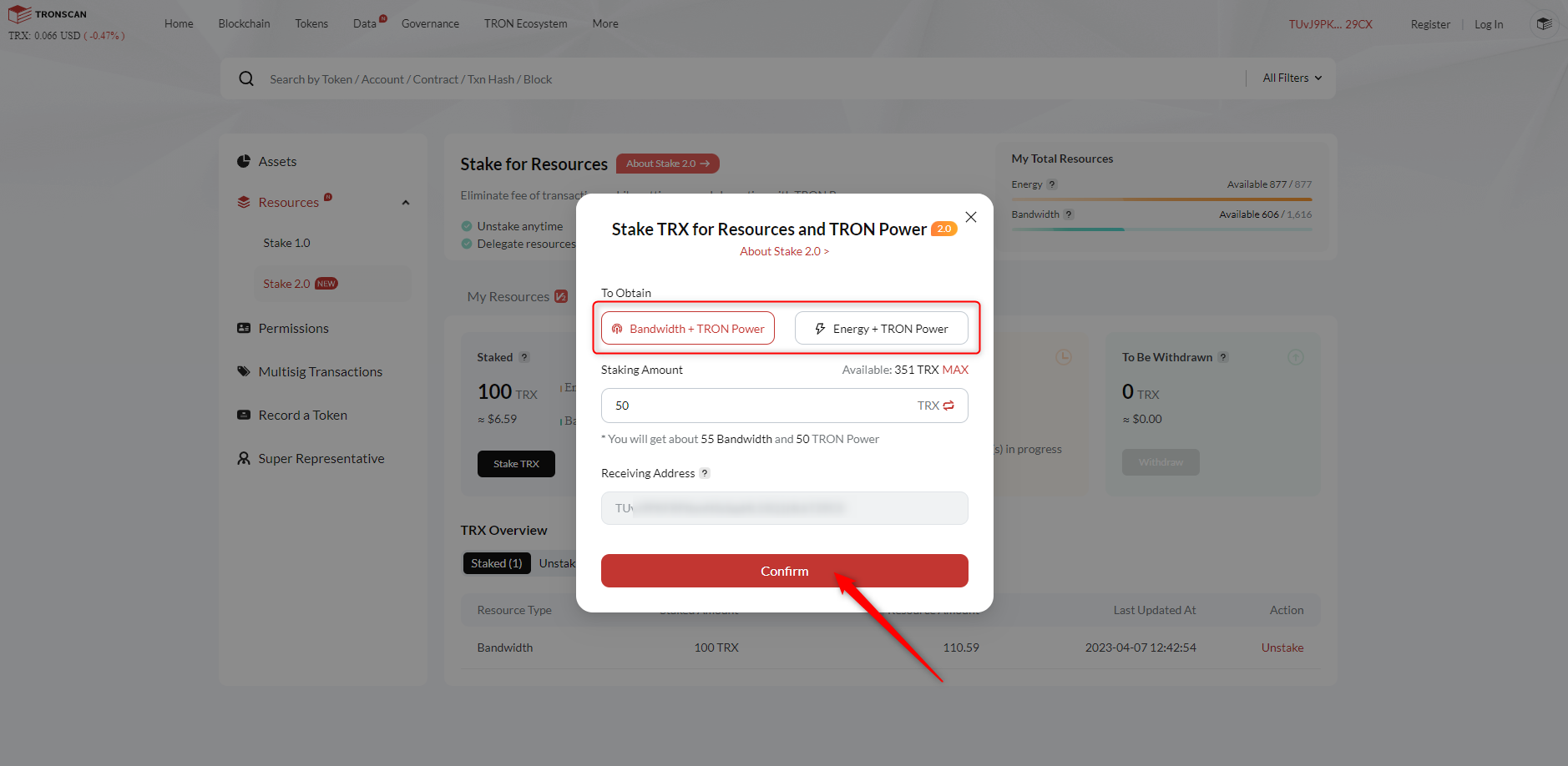
Start small and scale once you are comfortable. A typical workflow looks like this:
- Choose a platform. Options include JustLend DAO, TronSave, and TR.ENERGY. Compare their real, live fees and terms before committing.
- Stake your TRX. In TronLink, go to Resource > Stake and select “Energy” to freeze TRX and start producing energy.
- Delegate the surplus. Enter the recipient address and the amount of energy to delegate through your chosen platform’s interface.
- Set or accept pricing. Use the platform’s market rate or auto-match feature; rates move with on-chain demand, so check current figures.
- Collect and manage. Receive payments as renters use your energy, and unstake your principal after the protocol waiting window if you want to exit.
Keep a small buffer of unstaked TRX (for example, around 100 TRX) on hand to cover ordinary network fees so your account never stalls. For a renter’s-eye view of the same marketplace, read how to rent TRON energy for low-cost transfers.
Which Platforms Let You Lend TRX Energy in 2026?
Several non-custodial services support energy delegation. Treat the figures below as starting points and confirm live numbers in each app before depositing.
JustLend DAO
An on-chain TRON lending protocol. You can stake TRX and route energy through its rental pool, and liquid staking tokens let you trade staked positions. Published APYs change with market conditions — check the live JustLend DAO app and verify the contract on TRONSCAN before use.
TronSave
TronSave offers a one-click staking flow paired with an energy marketplace, and supports accepting renter payments in USDT to reduce exposure to TRX price swings. Advertised yields and minimums vary; confirm the current terms in the app rather than relying on a fixed headline number.
TR.ENERGY
Another marketplace connecting energy suppliers and renters. As with any platform, compare its real fees and payout structure on equal footing with the others.
What Are the Risks and How Do You Avoid Scams?
Native TRON delegation does not transfer ownership of your TRX, so your principal is not handed to a counterparty. The bigger concerns are platform reliability, smart-contract risk, and outright scams.
- Red flags: “guaranteed” APYs above ~30%, any request for your seed phrase, and the absence of verifiable audits or contract addresses.
- Protect yourself:
- Use a reputable wallet such as TronLink, ideally with a Ledger hardware device.
- Verify every contract address on TRONSCAN before interacting.
- Test with a small amount (for example, 1,000 TRX) before scaling up.
For the official mechanics of staking, delegation, and unstake timing, consult the TRON developer documentation on the resource model. Yields and APYs are not guaranteed, and crypto can lose value — do your own research and consider a licensed advisor.
Frequently Asked Questions
How much energy does staking TRX generate?
Output scales roughly linearly with the amount staked and with current network parameters. Because the energy-per-TRX ratio adjusts over time, check the live figure in your wallet or on TRONSCAN rather than assuming a fixed number.
Can I lend bandwidth as well as energy?
Yes, TRON has both resources, but energy is in far higher demand because it powers USDT transfers, so it typically generates better returns than bandwidth.
What happens if energy rental rates fall?
Your income drops accordingly, since payments track live demand. Platforms adjust pricing automatically, but there is no guaranteed floor — returns can vary or decline.
Is TRX lend energy income taxable?
Tax treatment varies by jurisdiction and the rules change. Tracking tools such as Koinly can help you record activity, but you should consult a licensed tax professional for your situation.
How long until I can unstake my TRX?
Under TRON Stake 2.0 there is a fixed unstaking waiting period before frozen TRX becomes withdrawable. Confirm the exact current duration in the official TRON documentation, as protocol parameters can change.
Is lending energy better than just staking TRX?
Lending can add income on top of base staking rewards when demand is strong, but it requires more active management and carries platform risk. Plain staking is simpler; weigh the extra effort against the potential extra yield.
Conclusion
TRX lend energy can turn idle staked resources into a modest, ongoing income stream — roughly 10–18% APY (varies; not guaranteed; verify against a primary source) — while you keep custody of your principal. The realistic path is to start small: stake a test amount, delegate energy on a platform you have vetted, verify contracts on TRONSCAN, and scale only once you understand the fees and risks. Compare JustLend DAO, TronSave, and TR.ENERGY on their live numbers, and remember that none of this is financial advice.
⚠️ Not financial advice. This article is for educational and informational purposes only and reflects the author’s opinion at the time of writing. It is not investment, financial, legal, or tax advice. Cryptocurrency is highly volatile and you can lose your entire principal; prices, APYs, and on-chain fees change constantly and may be out of date. Always do your own research (DYOR) and consult a licensed financial advisor before buying, selling, staking, or lending any digital asset.
Disclosure: This is the official TronSave blog. TronSave sells TRON energy/resource (fee-reduction) services and has a commercial interest in the products and topics covered here.