TRON’s relentless rise reflects steady, data-driven growth in stablecoin transfers, DeFi activity, and $TRX staking rather than hype. As of 2026, rising energy demand and a large share of staked supply point to active, organic usage. Always verify current figures against TronScan before acting.
What is driving TRON’s relentless rise?
TRON is a high-throughput, low-fee blockchain widely used for stablecoin payments, especially USDT (TRC-20). Its growth is largely a function of real transaction demand: every transfer, swap, or smart-contract call consumes network resources (energy and bandwidth), and $TRX sits at the center of that resource model.
The practical drivers behind TRON’s relentless rise include:
- Stablecoin settlement: USDT on TRON is heavily used for cheap, fast transfers across exchanges and wallets.
- DeFi protocols: Platforms such as JustLend and SunSwap generate consistent on-chain activity.
- GameFi and NFTs: Lower fees attract projects that need frequent, low-cost transactions.
- Resource staking: Users stake $TRX to obtain energy/bandwidth, which can reduce or eliminate per-transaction fees.
Key Takeaways
- Usage-led growth: Activity is tied to stablecoin and DeFi demand, not marketing alone.
- $TRX is the fuel: Network operations consume energy obtained via staking or burning $TRX.
- Staking matters: A meaningful share of $TRX is staked for resources and voting rewards (verify the exact figure on TronScan).
- Fees can be optimized: Staking, resource delegation, and tools like TronSave are common ways to lower costs.
- Risk is real: $TRX is volatile, and staking involves lock-up and unbonding periods. This is not financial advice.
How do the on-chain numbers reflect real usage?
Resource consumption is one of the clearest signals of genuine activity. When more people transfer USDT or interact with contracts, network energy usage rises. Industry trackers and TronScan dashboards have shown sustained growth in daily energy demand and staked supply over recent years, though precise percentages change constantly.
Rather than cite unverified totals, treat these as directional indicators and confirm them yourself:
- Daily energy consumption trend (rising with stablecoin and DeFi demand).
- Share of circulating $TRX that is staked for energy, bandwidth, or voting.
- Daily transaction counts and active addresses.
For current data, the primary source is the official explorer, TronScan, alongside the TRON network site. Figures quoted anywhere should carry an “as-of” date and a link.
How does $TRX staking power the network?
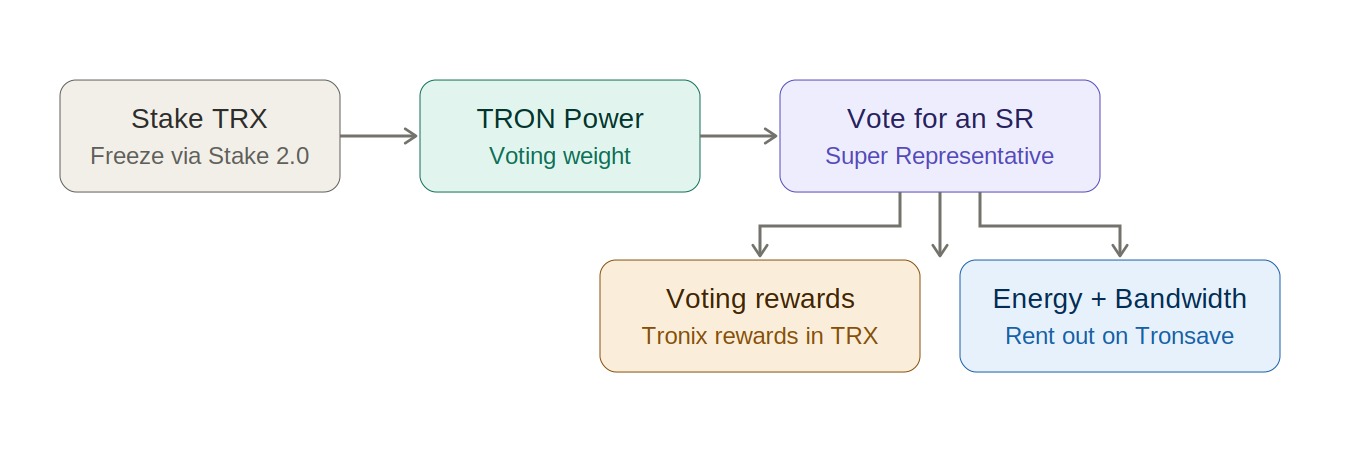
Staking $TRX (often called freezing or staking 2.0) lets you obtain energy and bandwidth without paying $TRX per transaction. This is the mechanism behind much of TRON’s relentless rise: more staking supports more resource availability, which supports more low-cost activity.
Staking generally provides two benefits:
- Resources: Energy (for smart contracts, including USDT transfers) and bandwidth (for basic transactions).
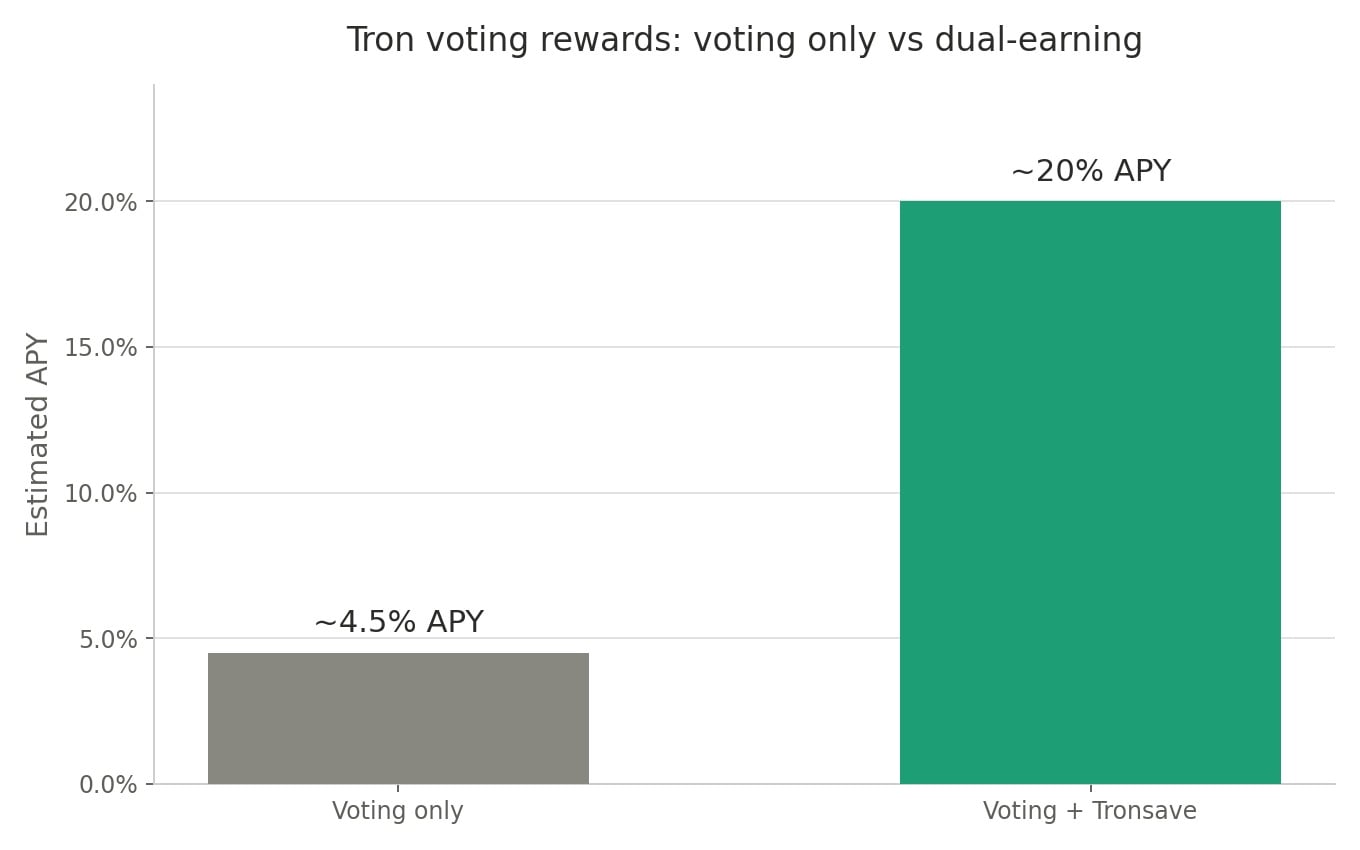
- Voting rewards: Staked $TRX can vote for Super Representatives and earn rewards.
To understand whether you receive energy or bandwidth, see our guide on whether staking TRX provides energy or bandwidth. If you want to maximize returns, review TRON staking APY strategies.
What does this mean for fees, and where does TronSave fit?
Because energy can be obtained by staking $TRX, you do not have to burn $TRX on every USDT transfer. There are several ways to lower costs:
| Method | How it works | Trade-off |
|---|---|---|
| Stake your own $TRX | Freeze TRX to get energy/bandwidth | Capital is locked; unbonding period applies |
| Burn $TRX per transaction | Pay the fee directly in TRX | Simple but can be more costly at scale |
| Rent/delegate energy | Buy energy short-term from a marketplace | Depends on market pricing and availability |
| Tools like TronSave | Energy marketplace and fee-saving utilities | One option among several; compare costs |
Energy marketplaces such as TronSave let users rent energy instead of staking large amounts of $TRX, which can reduce USDT transfer costs. Reported savings vary by transaction and market conditions, so treat any specific percentage as an estimate and confirm current pricing before relying on it. Staking directly or using other providers are equally valid approaches depending on your needs.
What are the risks behind the growth story?
A balanced view of TRON’s relentless rise must include risks:
- Price volatility: $TRX can lose value quickly; staking does not protect principal.
- Lock-up and unbonding: Staked $TRX is illiquid for a set period before you can withdraw.
- Smart-contract risk: DeFi protocols can have bugs or exploits.
- Regulatory uncertainty: Stablecoin and crypto rules continue to evolve.
Compared with alternatives, TRON tends to offer lower fees for USDT transfers than some networks, while others may offer different trade-offs in decentralization, tooling, or liquidity. For more, see our comparison of TRON vs Aptos for USDT.
Frequently Asked Questions
Is TRON’s relentless rise driven by real usage or hype?
Available on-chain data points to genuine demand from stablecoin transfers and DeFi, but you should verify current metrics on TronScan rather than rely on promotional claims.
How much $TRX is staked?
A significant share of circulating $TRX is staked for resources and voting, but the exact percentage changes daily. Check TronScan for the current figure as of 2026.
Does staking $TRX give energy or bandwidth?
Staking can provide either, depending on what you select. Energy powers smart-contract calls like USDT transfers; bandwidth covers basic transactions.
Can I lower USDT transfer fees on TRON?
Yes. Common methods include staking your own $TRX, renting energy from a marketplace, or using fee-saving tools. Compare options and current prices before choosing.
Is staking $TRX safe?
Staking secures the network and can earn rewards, but it carries lock-up periods and price risk. It is not guaranteed income and is not financial advice.
Where can I verify TRON statistics?
Use primary sources such as TronScan and the official TRON network site, and always note the date of any figure.
⚠️ Not financial advice. This article is for educational and informational purposes only and reflects the author’s opinion at the time of writing. It is not investment, financial, legal, or tax advice. Cryptocurrency is highly volatile and you can lose your entire principal; prices, APYs, and on-chain fees change constantly and may be out of date. Always do your own research (DYOR) and consult a licensed financial advisor before buying, selling, staking, or lending any digital asset.
Disclosure: This is the official TronSave blog. TronSave sells TRON energy/resource (fee-reduction) services and has a commercial interest in the products and topics covered here.