Tron Vs Aptos USDT comes down to scale versus cost: Tron hosts the largest USDT supply and the deepest exchange liquidity, while Aptos offers near-zero fees and sub-second finality. Choose Tron for high-volume transfers and remittances, and Aptos for micropayments and DeFi.
Key Takeaways
- Liquidity: Tron carries an approximately $77B+ USDT supply (as of 2026; verify against a primary source), far larger than Aptos’s roughly $900M.
- Fees: Aptos transfers can cost a fraction of a cent; Tron TRC-20 fees vary by wallet state but can be reduced with energy rental or staking.
- Speed: Tron confirms in about 3 seconds; Aptos targets sub-second latency via parallel execution.
- Best use: Tron suits OTC trading and cross-border payments; Aptos suits high-frequency, low-value transactions.
- Both support genuine, audited USDT issued by Tether — always confirm the network before sending.
Why compare Tron and Aptos for USDT transactions?
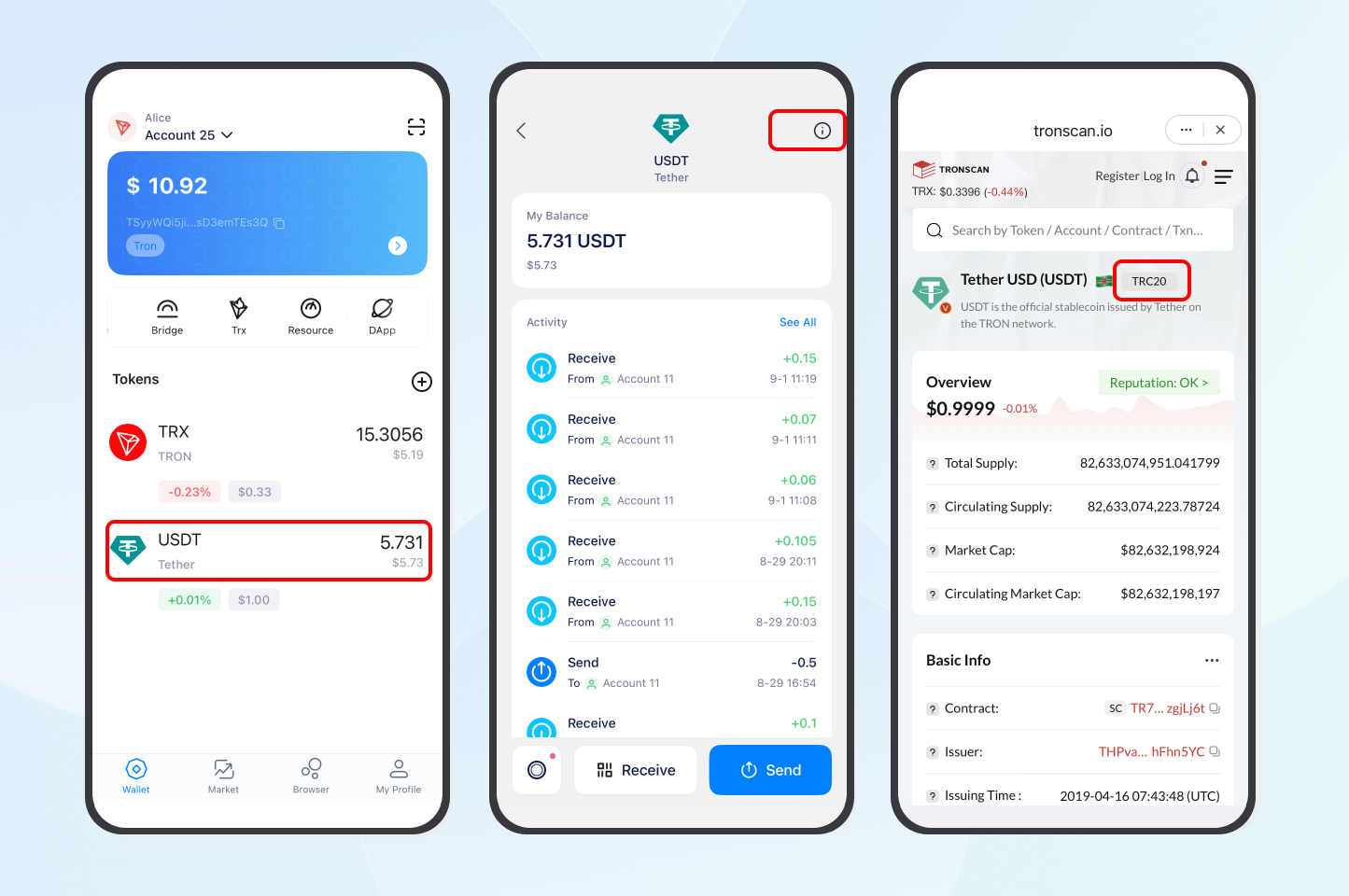
Tether (USDT) is the most widely used stablecoin, and the network you send it on shapes your cost, speed, and counterparty reach. Tron leads global USDT volume, while Aptos has emerged as a fast, low-fee alternative ranking among the top chains for native USDT.
Picking the right rail matters whether you are moving funds between exchanges, paying a contractor abroad, or building a payment dApp. The sections below break down fees, speed, liquidity, and security so you can match the chain to your real use case.
What are the transaction fees on Tron Vs Aptos USDT?
Fees are the clearest difference. Aptos uses a parallel-execution design (Block-STM) that keeps gas costs extremely low — often well under one cent per transfer. Tron’s TRC-20 fees depend on whether the receiving wallet already holds USDT and on current energy prices.
On Tron, transfers are priced in energy and bandwidth rather than a flat fee, so the dollar cost moves with network demand. Users can lower it by staking TRX for energy or renting energy through services such as TronSave, though direct staking and other providers achieve the same goal.
How do TRC-20 USDT fees break down?
- Receiver already holds USDT: lower energy cost, since no new token account is created.
- Receiver wallet empty: higher cost, because activating a fresh USDT balance consumes more energy.
- With staked energy or rental: cost can fall sharply versus paying with burned TRX (varies; as of 2026, verify against a primary source).
Why are Aptos fees so low?
Aptos processes independent transactions in parallel, so it rarely congests and gas stays minimal. That makes it well suited to retail payments and dApp interactions where each transfer is small and frequency is high.
How do Tron and Aptos compare on speed and scalability?
Speed determines how quickly a recipient can rely on funds. Tron confirms transactions in roughly 3 seconds with high throughput, which is dependable for remittances and merchant settlement. Aptos targets sub-second latency and is engineered for very high transaction volumes through its parallel-execution engine.
Both chains are fast enough for everyday stablecoin use. Tron’s track record at scale gives it an edge for predictable, time-sensitive payments, while Aptos’s architecture appeals to developers expecting bursty, high-frequency loads.
Which chain has more USDT liquidity and adoption?
Liquidity decides how easily you can move size without slippage. Tron dominates here, with the largest USDT supply of any chain and deep support across major exchanges, especially in Asian OTC markets. Aptos is smaller but growing, with native USDT and listings on several global exchanges.
| Feature | Tron (TRC-20) | Aptos |
| USDT supply | ~$77B+ (as of 2026; verify) | ~$900M (verify) |
| Confirmation time | ~3 seconds | Sub-second (target) |
| Typical fee | Variable energy cost | Fraction of a cent |
| Exchange support | Binance, Bybit, OKX (Asia-strong) | Several global exchanges |
| Consensus | Delegated proof-of-stake | Proof-of-stake |
| Best for | OTC trading, remittances | Micropayments, DeFi dApps |
You can verify live supply figures on TronScan for Tron and on Aptos’s official explorer before relying on any number quoted here.
How do security and decentralization differ?
Tron uses delegated proof-of-stake, which prioritizes speed with a smaller set of block producers — efficient, but more centralized. Aptos uses a proof-of-stake model with a broader validator set distributed worldwide, which adds decentralization. For routine retail transfers both are reliable; for very large transfers, a wider validator base is a reasonable preference.
- Tron: fast and battle-tested, with concentration in fewer block producers.
- Aptos: newer architecture with a globally distributed validator network.
When should you choose Tron or Aptos for USDT?
Your decision in the Tron Vs Aptos USDT question should follow your priorities:
- Choose Tron for remittances, OTC trading, and high-volume transfers where liquidity and exchange reach matter most. Reduce fees with staking or energy rental.
- Choose Aptos for micropayments, DeFi, and dApps where per-transaction cost and speed dominate.
Many users hold USDT on both networks and bridge or swap through a reputable exchange when needed. Always confirm wallet and network compatibility before sending, because cross-network mistakes can be irreversible.
FAQ: Common questions about Tron Vs Aptos USDT
How do I tell a TRC-20 address from an Aptos address?
TRC-20 addresses begin with “T” (for example, TAbc123…), while Aptos addresses are long hexadecimal strings. Always confirm the network in your wallet before sending.
Can I send TRC-20 USDT directly to an Aptos address?
No. They are separate blockchains, and sending to the wrong network can permanently lose funds. Use a reputable exchange or bridge to convert between them.
How can I lower Tron USDT fees?
Stake TRX to obtain energy for regular transfers, or rent energy from a provider such as TronSave for occasional use. Both approaches cut the cost of burning TRX directly.
Is Aptos USDT as secure as Tron’s?
Both host genuine Tether-issued USDT. Aptos’s broader validator set adds decentralization, while Tron’s DPoS is fast and well established. Each is suitable for everyday use.
Which chain is better for DeFi?
Aptos’s growing DeFi ecosystem suits new dApps and micropayments, while Tron supports large, established platforms with deep liquidity.
Where can I verify the figures in this article?
Check on-chain supply on TronScan and the Aptos explorer, and confirm exchange volumes on each exchange’s own data page before acting on any number.
⚠️ Not financial advice. This article is for educational and informational purposes only and reflects the author’s opinion at the time of writing. It is not investment, financial, legal, or tax advice. Cryptocurrency is highly volatile and you can lose your entire principal; prices, APYs, and on-chain fees change constantly and may be out of date. Always do your own research (DYOR) and consult a licensed financial advisor before buying, selling, staking, or lending any digital asset.
Disclosure: This is the official TronSave blog. TronSave sells TRON energy/resource (fee-reduction) services and has a commercial interest in the products and topics covered here.