To swap TRON to USDT, send your TRX to an exchange or swap service, select the TRX-to-USDT (TRC-20) pair, confirm the rate and recipient address, and receive Tether in your wallet. The trade usually settles in 5–30 minutes, and choosing the TRC-20 network keeps fees low.
This guide explains what the swap involves, how to do it step by step, where to do it safely, the risks to watch for, and how TRON’s energy model affects the fees you pay afterward.
Key takeaways
- A swap converts volatile TRX into USDT, a stablecoin pegged 1:1 to the US dollar.
- Always select the TRC-20 network for USDT — it settles in seconds and costs far less than Ethereum’s ERC-20.
- No-account swap services (SimpleSwap, ChangeNOW, RocketX) are fast; regulated exchanges (Kraken, Paybis) require KYC.
- Blockchain transfers are irreversible — verify the network and address before confirming.
- Pre-loading TRON energy (by staking your own TRX or renting it) reduces the TRX burned on later USDT transfers.
What is a TRON to USDT swap?
A swap exchanges one asset for another. TRON (TRX) is the native token of the TRON blockchain, a Layer-1 network built for fast, low-cost transfers. Tether (USDT) is a stablecoin designed to hold a steady value of one US dollar. When you swap TRON to USDT, you move out of a price-volatile token and into a dollar-stable one.
A large share of all circulating USDT lives on TRON’s TRC-20 standard — reported at over half of supply on Tether’s own transparency page (as of 2026; verify against Tether’s transparency report). TRON’s public activity dashboards likewise list tens of millions of daily transactions (see TronScan for current figures). Those numbers explain why TRC-20 USDT is so widely used for remittances and trading.
People typically swap for three reasons: to lock in gains when TRX rises, to hold stable value during market volatility, or to prepare for trades on USDT-denominated pairs. For a deeper primer on the stablecoin itself, see our explainer on USDT on TRON.
How do you swap TRON to USDT step by step?
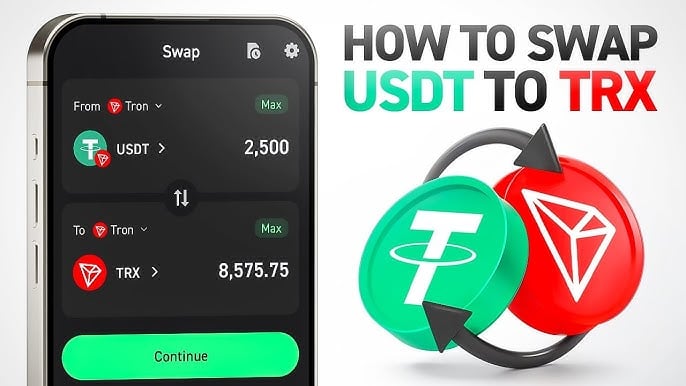
The process is similar across most platforms. Here is the general flow:
- Step 1 — Choose your platform. Options include SimpleSwap, ChangeNOW, Kraken, RocketX, and Paybis. For quick, no-registration swaps, SimpleSwap or ChangeNOW are common starting points.
- Step 2 — Set up a compatible wallet. Use a TRON-compatible wallet such as TronLink, Trust Wallet, or Ledger. Make sure your receiving address supports TRC-20 USDT.
- Step 3 — Select the trading pair. Set TRX as the “send” currency and USDT (TRC-20) as the “receive” currency. Confirm the network is TRC-20, not ERC-20.
- Step 4 — Enter amount and recipient address. Paste your USDT address and double-check it character by character.
- Step 5 — Review the rate and fees. Check whether the platform uses a fixed rate (locks the price) or a floating rate (adjusts during processing).
- Step 6 — Send your TRX. Transfer TRX to the deposit address; on TRON this usually confirms within seconds.
- Step 7 — Receive USDT. The swap typically completes in 5–30 minutes, and a tracker link lets you monitor status.
Which platform is best for swapping TRX to USDT?
Not all platforms are equal. The table below compares widely used options. Fees and limits change often, so confirm current terms on each provider’s site before swapping.
| Platform | Typical fees | Speed | KYC | Key feature |
|---|---|---|---|---|
| SimpleSwap | Network fees + spread | 5–30 min | Usually none | No registration required |
| ChangeNOW | Low network fees + spread | 2–20 min | None for most amounts | Fast, account-free swaps |
| Kraken | ~0.1–0.2% trading fee | 5–15 min | Required | Regulated, high-security |
| RocketX | Network fees + spread | 5–20 min | Tiered | Aggregates rates across chains |
| Paybis | Service + network fees | 5–20 min | Required | 24/7 support, beginner-friendly |
For a quick, occasional swap, SimpleSwap or ChangeNOW offer the least friction. For a regulated environment, Kraken’s compliance credentials make it a safer choice for larger amounts. Whichever you pick, always select TRC-20 as the USDT network: ERC-20 transfers on Ethereum can run several dollars to tens of dollars depending on gas, versus well under a dollar on TRON (fees vary with demand; as of 2026, verify against a primary source).
What are the risks when you swap TRON to USDT?
Swapping is generally safe on reputable platforms, but a few risks deserve attention:
- Irreversibility. Blockchain transactions cannot be undone. A wrong address or wrong network can mean permanent loss.
- Slippage and floating rates. With a floating rate, the amount you receive can move between quote and settlement, especially in volatile markets.
- Phishing and fake platforms. Scam sites mimic real swap services. Bookmark official URLs and check them carefully.
- KYC and custody. Centralized exchanges like Kraken and Paybis require identity verification and hold funds during processing.
Reduce these risks by enabling two-factor authentication, sending a small test amount first, and confirming the recipient network is TRC-20. You can verify any completed transfer on a block explorer such as TronScan.
How do TRC-20 fees work after the swap?
Once you hold USDT, sending it on TRON consumes two resources: bandwidth for basic data and energy for smart-contract execution. Because every USDT transfer is a contract call, energy is always required. You can read the official mechanics on the TRON developer documentation.
Paying fees without energy
If your wallet holds no pre-loaded energy, TRON burns TRX to cover the transfer. A transfer to a wallet that already holds USDT costs roughly 13 TRX, while a transfer to a brand-new wallet costs more — around 27 TRX — because the recipient’s token account must be initialized. The exact amounts depend on current network parameters (verify against a primary source).
Paying less with staked or rented energy
TRON lets you obtain energy in two ways: stake (freeze) your own TRX to generate energy for free over time, or rent energy from a delegation provider for a one-off transfer. Both reduce the TRX burned per transfer. Staking suits frequent users who can lock capital; renting suits occasional transfers without tying up funds.
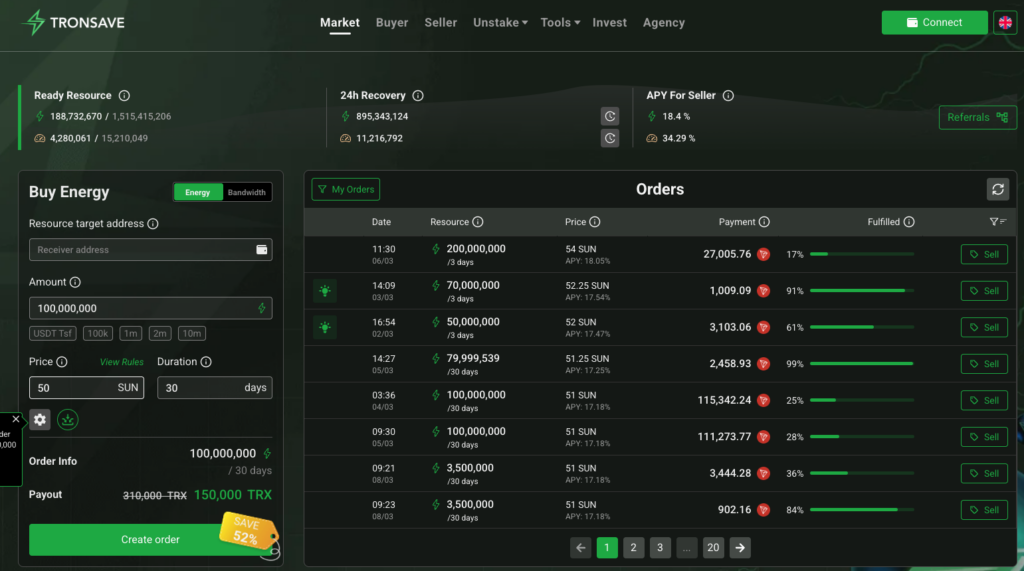
Energy-rental providers include TronSave among others; renting energy can lower the cost of a standard USDT transfer compared with burning TRX directly (exact savings vary with market rates — verify before relying on a figure). As TRX appreciates, the dollar cost of not using energy grows, so it is worth comparing staking versus renting for your usage pattern.
Frequently asked questions
Can I swap TRX to USDT without creating an account? Sometimes. SimpleSwap and ChangeNOW allow swaps without registration for most transaction sizes. You only need a sending wallet for TRX and a destination address for USDT. Exchanges such as Kraken and Paybis are KYC-gated and require a verified account.
How long does a TRX to USDT swap take? Most swaps complete in 5–30 minutes. TRON confirms in seconds, so the main variable is the platform’s processing and order matching.
What is the minimum amount to swap? Minimums vary by platform, often in the range of 10–50 TRX. Check the specific provider before initiating.
Is it safe to swap TRON to USDT? Yes, on reputable platforms. Use services with a track record, enable two-factor authentication, send a test amount first, and verify the recipient address and network before confirming.
Why does USDT on TRON (TRC-20) cost less than on Ethereum (ERC-20)? TRON’s resource model (energy and bandwidth) is built for high-volume, low-cost transfers, while Ethereum uses gas that fluctuates with demand. For stablecoin movement, TRC-20 is consistently cheaper and faster.
What if I send TRC-20 USDT to an ERC-20 address? The funds may be permanently lost. Always confirm the network your receiving wallet supports before sending.
Final thoughts
Learning to swap TRON to USDT is one of the most practical skills in the TRON ecosystem, whether you are locking in gains, hedging volatility, or preparing to trade. The swap itself is simple on platforms like SimpleSwap, Kraken, or RocketX. Just as important is managing the fees on later transfers — by choosing TRC-20 and deciding whether staking or renting energy fits your usage. For more on cutting costs, see our guide to renting TRON energy for low-cost transfers, and always do your own research before moving funds.
⚠️ Not financial advice. This article is for educational and informational purposes only and reflects the author’s opinion at the time of writing. It is not investment, financial, legal, or tax advice. Cryptocurrency is highly volatile and you can lose your entire principal; prices, APYs, and on-chain fees change constantly and may be out of date. Always do your own research (DYOR) and consult a licensed financial advisor before buying, selling, staking, or lending any digital asset.
Disclosure: This is the official TronSave blog. TronSave sells TRON energy/resource (fee-reduction) services and has a commercial interest in the products and topics covered here.