USDT TRON (USDT TRC-20) is Tether’s US-dollar stablecoin issued natively on the TRON blockchain. It holds the same 1:1 dollar peg as other USDT versions but settles in seconds for a fraction of a cent, which is why it now carries the majority of all Tether in circulation.
As of 2026, the dollar-pegged token remains the most-used version of the world’s largest stablecoin for everyday transfers, payments, and remittances. This guide explains what it is, how it works, how fees compare, and how to avoid the costly mistakes that catch new users.
Key Takeaways
- USDT TRON = Tether (USDT) running on TRON under the TRC-20 token standard.
- Transfers usually settle in 3–10 seconds and cost roughly $0.01–$1, far less than Ethereum at peak times.
- TRON addresses always start with the letter T; Ethereum (ERC-20) addresses start with 0x.
- A large share of all circulating USDT lives on TRON (approximately a majority as of 2026; verify against a primary source).
- It is a stablecoin, not a risk-free asset — stablecoins can depeg, and Tether reserves carry counterparty and regulatory risk.
👉 Try it free: use the USDT Fee Savings Calculator to see exactly how much you’d save by renting TRON energy instead of burning TRX.
What is USDT TRON and how does it work?
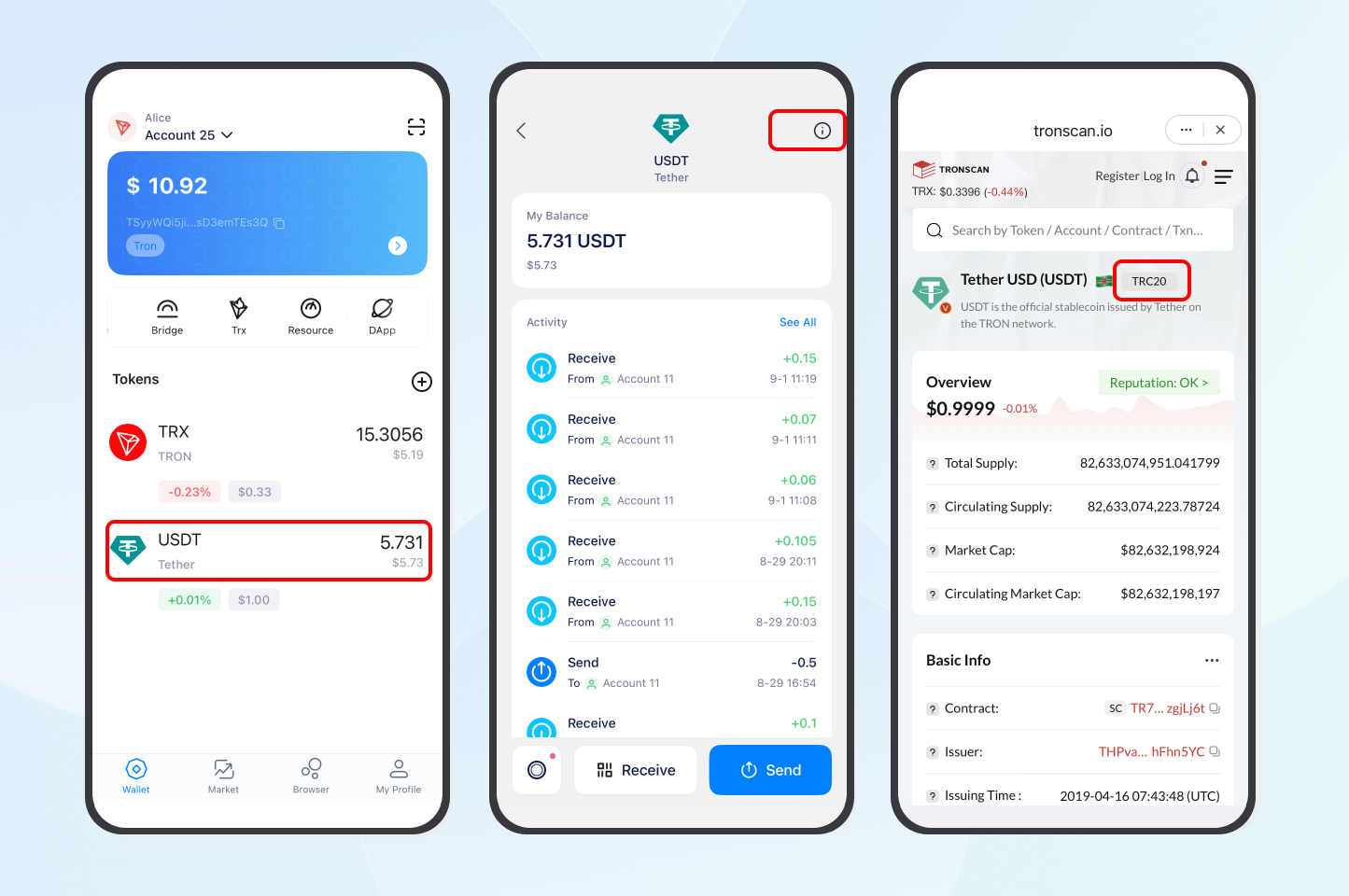
Tether Limited issues the same USDT token on multiple blockchains. On TRON it follows the TRC-20 standard (TRON’s equivalent of Ethereum’s ERC-20). Each unit is intended to be redeemable 1:1 for one US dollar, backed by Tether’s reserves.
What sets the TRON version apart is speed and cost. Transactions confirm in about 3–10 seconds and typically cost a cent or less. When a sender has staked (frozen) TRX to obtain Energy and Bandwidth, a transfer can even be effectively free. You can review the live token and its holders directly on TronScan, TRON’s official block explorer.
The official contract address is TR7NHqjeKQxGTCi8q8ZY4pL8otSzgjLj6t. Always confirm this yourself on TronScan before adding the token to any wallet — never trust an address from a screenshot or chat message.
Why did USDT TRON become the king of stablecoins?
The practical difference shows up the moment Ethereum gas fees climb. For anyone moving small-to-mid sums repeatedly — traders, freelancers, and people sending remittances — the math heavily favors TRON. Here is how the main USDT networks compare:
| Network | Avg. Transfer Fee | Confirmation Time | Typical Use Case |
| TRON (TRC-20) | $0.01 – $1 (free with staked TRX) | 3–10 seconds | Daily payments, P2P, remittances |
| Ethereum (ERC-20) | $1 – $30+ (spikes) | 15 sec – minutes | Large holdings, institutional |
| Solana (SPL) | $0.0001 – $0.01 | <1 second | High-frequency DeFi |
| BSC (BEP-20) | $0.10 – $0.50 | ~3 seconds | Binance ecosystem |
Fee ranges above are typical observed values and fluctuate with network demand; check current rates before relying on them. For someone moving $50–$5,000 several times a day, the TRON version is often the only one that makes economic sense.
How can you reduce USDT TRON transfer fees?
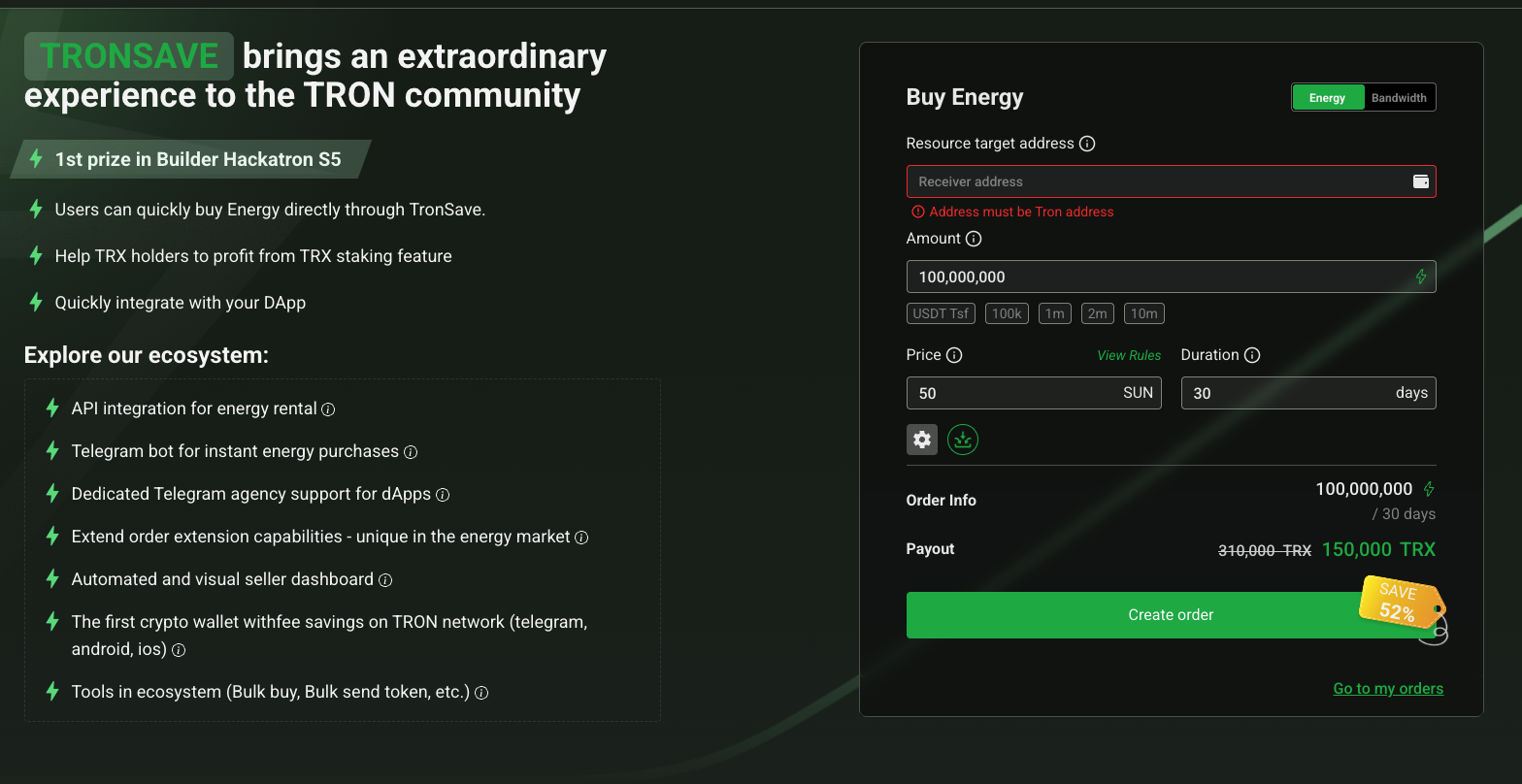
On TRON, transaction costs are paid in Energy and Bandwidth rather than a floating gas market. There are two common ways to cover them:
- Burn TRX per transaction — simplest, but you pay a small fee every time.
- Stake (freeze) TRX — lock TRX to receive recurring Energy and Bandwidth, lowering or eliminating per-transfer costs. You can read more in this guide to how TRC-20 USDT works on TRON.
- Rent resources — services such as TronSave let you rent Energy short-term instead of staking long-term. Renting and self-staking are alternatives; which is cheaper depends on how often you transact.
For occasional senders, simply burning TRX is fine. For frequent senders, staking or renting Energy can meaningfully cut costs — compare both against your own transfer volume rather than assuming a fixed savings percentage.
What mistakes cost people money with USDT TRON?
The single biggest source of lost funds is sending USDT to the wrong network. Because TRC-20 and ERC-20 USDT are technically different tokens, a mismatched address can mean permanent loss. Quick rules that prevent costly errors:
- Address starts with T → TRC-20 (TRON).
- Address starts with 0x → ERC-20 (Ethereum) — do not mix them.
- Always send a small test transaction first.
- Copy-paste addresses; never retype or trust a screenshot.
- Verify the contract address on TronScan when adding the token manually.
Frequently asked questions about USDT TRON
Is USDT on TRON as safe as on Ethereum?
The USDT token is backed by the same Tether reserves on both chains. TRON is more centralized (its consensus relies on 27 Super Representatives), but for everyday transfers and holding, the practical difference is small for most users. The broader risk is to the stablecoin itself, not the chain.
How do you buy USDT TRON directly?
Major exchanges such as Binance, OKX, Bybit, KuCoin, and Gate.io support direct USDT TRC-20 deposits and withdrawals. When sending or receiving, select the TRON (TRC-20) network.
Can USDT TRON be swapped to ERC-20 or other chains?
Yes. You can convert through a centralized exchange’s withdrawal network selector, or use a cross-chain bridge or DEX such as SunSwap. Confirm fees and the destination network before swapping.
Why do some wallets show two separate USDT balances?
The wallet is treating TRC-20 USDT and ERC-20 USDT as different tokens — which they technically are — even though each represents one US dollar.
Can USDT TRON transfers be completely free?
They can be very cheap or effectively free when you stake TRX for Energy and Bandwidth, or rent Energy. Costs still depend on network conditions, so treat “free” as best-case rather than guaranteed.
Is the TRON version of USDT a safe investment?
USDT is designed to hold a stable dollar value, not to appreciate. It is not risk-free: stablecoins can temporarily depeg, and Tether’s reserves carry regulatory and counterparty risk. This article is informational, not financial advice — always do your own research.
Conclusion
USDT TRON has become the everyday dollar of crypto: stable, fast, and cheap to move. Whether you are trading, sending remittances, or simply moving funds between exchanges, it remains the most widely used version of Tether. Just verify addresses and contract details on TronScan, keep network risks in mind, and choose the fee approach — burning, staking, or renting Energy — that fits how often you transact.
⚠️ Not financial advice. This article is for educational and informational purposes only and reflects the author’s opinion at the time of writing. It is not investment, financial, legal, or tax advice. Cryptocurrency is highly volatile and you can lose your entire principal; prices, APYs, and on-chain fees change constantly and may be out of date. Always do your own research (DYOR) and consult a licensed financial advisor before buying, selling, staking, or lending any digital asset.
Disclosure: This is the official TronSave blog. TronSave sells TRON energy/resource (fee-reduction) services and has a commercial interest in the products and topics covered here.