Does Coinbase support the Tron network? As of 2026, Coinbase’s main exchange does not list TRX or process Tron (TRC-20) deposits, but Coinbase Wallet does support USDT TRC-20 for transfers and conversions. Verify the latest status on Coinbase’s official supported-assets list before sending anything.
Key takeaways
- Coinbase’s main exchange does not support the Tron network for TRX buying, selling, or TRC-20 deposits as of 2026 (verify before transferring).
- Coinbase Wallet (the self-custody app) does support USDT on TRC-20, enabling stablecoin transfers and in-app swaps.
- Sending TRX or non-USDT TRC-20 tokens to a Coinbase exchange deposit address risks permanent loss.
- For full TRX trading, exchanges such as Binance, Kraken, and KuCoin remain the common alternatives.
Does Coinbase support the Tron network for TRX and TRC-20?
Coinbase is one of the largest regulated U.S. cryptocurrency exchanges, known for a user-friendly interface and strict compliance. Its trading platform focuses on Bitcoin, Ethereum, Solana, and EVM-compatible chains such as Base, Polygon, Arbitrum, Avalanche C-Chain, and Optimism. The Tron network sits outside that set: the main exchange does not let you buy, sell, or deposit TRX, and it does not process native TRC-20 deposits.
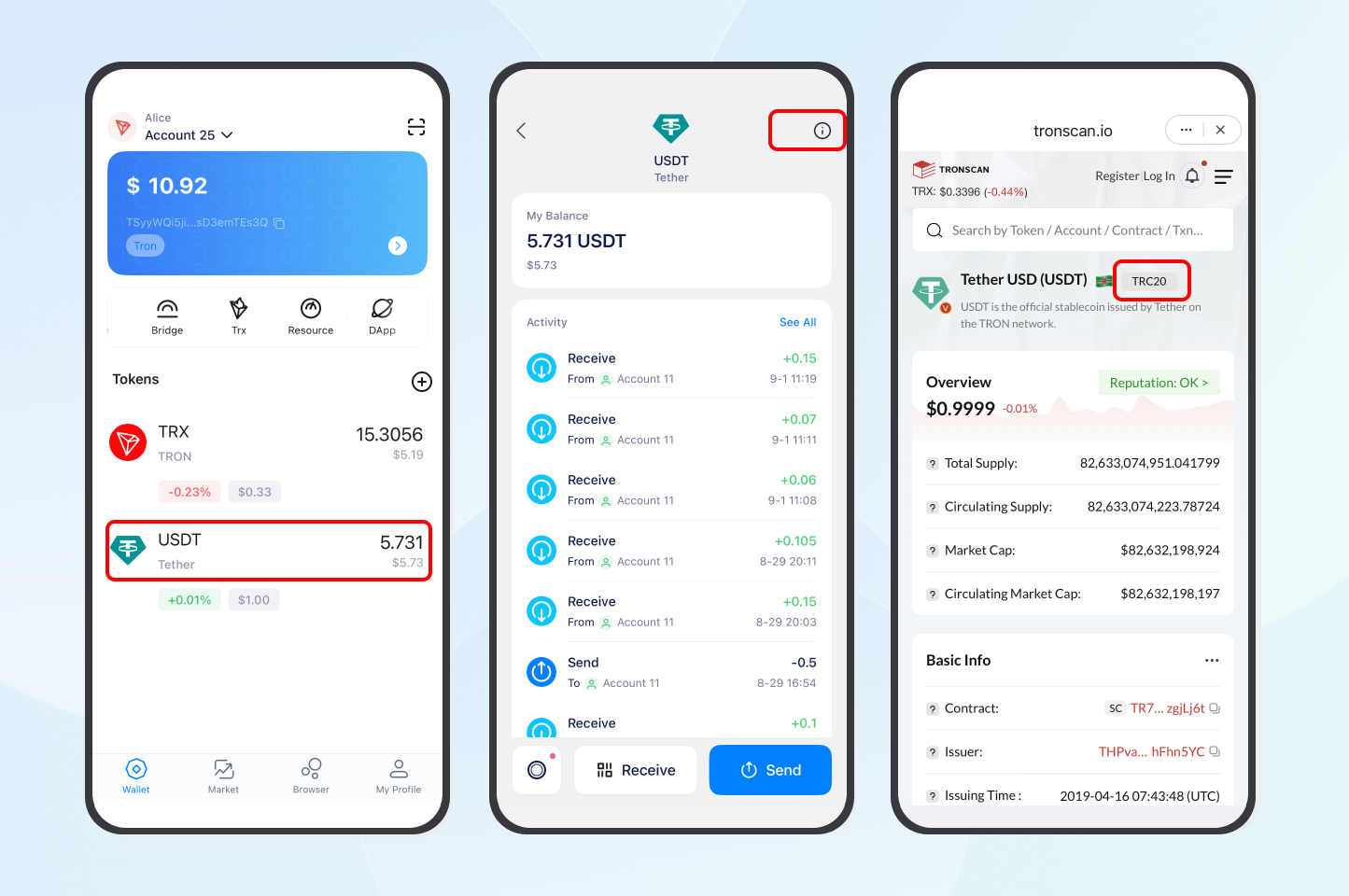
It helps to separate two different products. The Coinbase exchange (Coinbase.com and the standard app) is custodial and does not support the Tron network for trading. Coinbase Wallet is a separate self-custody app, and it added USDT TRC-20 support, so you can receive, hold, and swap that one Tron-based stablecoin. Tron remains a major blockchain — it carries a large share of global USDT in circulation and is widely used for low-cost stablecoin transfers (figures change daily; verify the live numbers on CoinMarketCap and TronScan).
Quick tip: Coinbase’s selective network support reflects its focus on compliance and EVM-compatible chains, which is why non-EVM networks like Tron are treated differently.
Why doesn’t Coinbase support TRX trading?
Several overlapping factors explain why Coinbase’s main platform does not support the Tron network for TRX, and they are worth understanding before you choose where to trade.
Regulatory caution
U.S. regulatory pressure on Tron has made Coinbase cautious. In a 2023 U.S. Securities and Exchange Commission action, the regulator named TRX among tokens it alleged were unregistered securities, and Coinbase has generally avoided listing assets carrying that kind of uncertainty. Asset support changes over time, so always check Coinbase’s current supported-assets list rather than relying on older articles.
Technical focus on EVM networks
Coinbase’s infrastructure is optimized for the Ethereum Virtual Machine (EVM) and compatible chains, which share standardized smart-contract tooling and deep liquidity. Tron’s TRC-20 protocol is efficient for stablecoins but operates outside the EVM ecosystem, and full integration of a non-EVM chain takes meaningful engineering resources that Coinbase has not prioritized for the trading platform.
Listing strategy and demand
Coinbase curates listings around liquidity, user demand, market stability, and regulatory comfort. Even with Tron’s heavy stablecoin usage and very low transfer fees, the perceived regulatory risk has outweighed the upside for the main exchange. The result is the limited, wallet-only relationship users see today.
How do you manage USDT TRC-20 with Coinbase Wallet?
Coinbase Wallet’s USDT TRC-20 support is the one place Coinbase products touch the Tron network directly. Here is how to use it safely.
Steps to receive USDT TRC-20
- Download Coinbase Wallet from Coinbase’s official site (it is separate from the main Coinbase app).
- Open the “Receive” flow and select USDT on Tron (TRC-20) as the network.
- Copy the generated TRC-20 address (it starts with “T”).
- Send USDT TRC-20 from an external wallet such as TronLink or Trust Wallet to that address.
- Confirm the transaction on TronScan, the standard Tron block explorer.
Pro tip: Always match the network (TRC-20) on both the sending and receiving side before you transfer — a network mismatch is the most common cause of lost funds.
Converting and limitations
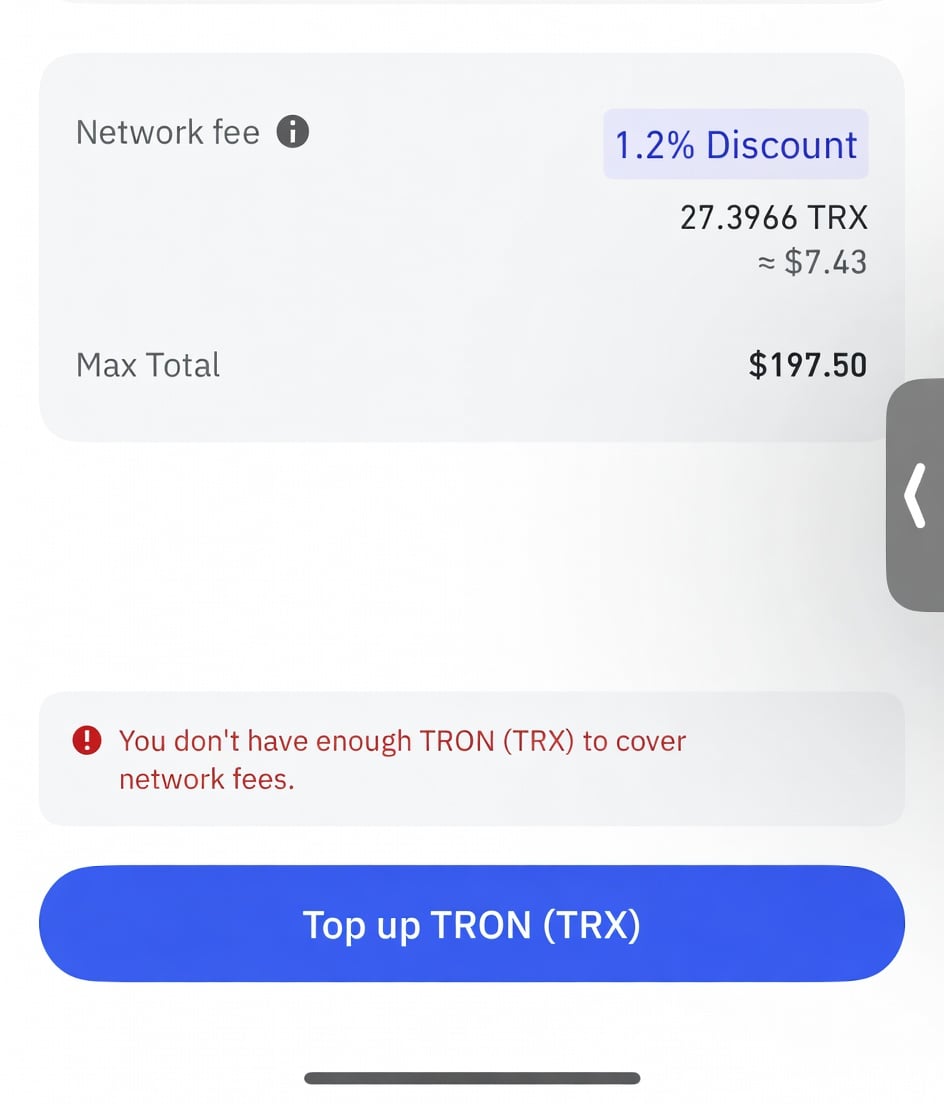
Coinbase Wallet includes an integrated DEX, so you can swap USDT TRC-20 into assets like USDC or ETH across supported networks such as Base, Ethereum, Polygon, and Arbitrum. Be aware of the limits: the wallet supports USDT TRC-20 but not TRX itself or other TRC-20 tokens. For broader Tron compatibility — TRX, staking, or TRC-20 NFTs — a dedicated Tron wallet such as TronLink is the better fit. Tron network fees for transfers are typically a small amount of energy and bandwidth; see our guide on how to rent Tron energy for low-cost transfers to keep those costs down.
What are the alternatives for full Tron support?
If you need to buy or trade TRX directly, several exchanges offer full Tron network support that Coinbase’s main platform lacks. Self-custody and staking are also options worth weighing alongside any exchange.
Platform comparison
| Platform | TRX trading | USDT TRC-20 | Notes |
| Coinbase (exchange) | No | No (deposits) | Wallet app supports USDT TRC-20 only |
| Binance | Yes | Yes | High liquidity; availability varies by region |
| Kraken | Yes | Yes | U.S.-friendly, security focus |
| KuCoin | Yes | Yes | Wide altcoin and TRC-20 selection, staking |
Beyond exchanges, you can hold TRX in self-custody and put it to work: TRX staking earns voting rewards and frees up energy and bandwidth, while resource platforms like TronSave let you rent energy directly instead of burning TRX on fees. Each route trades off custody, cost, and convenience differently, so pick the one that matches your goals. Exchange availability also varies by country — confirm support in your region before signing up.
Choosing the right option
- Active trading: Binance for liquidity and pairs.
- U.S. compliance: Kraken for a regulated, security-first venue.
- Altcoins and staking: KuCoin for broad TRC-20 coverage.
- Low-fee transfers: self-custody plus energy rental over repeated on-chain fees.
Common misconceptions about Coinbase and Tron
- “Coinbase trades TRX because it shows a price.” Coinbase may display TRX price data for reference, but displaying a price is not the same as offering trading.
- “Coinbase Wallet supports all of Tron.” It supports USDT TRC-20 only — not TRX or other TRC-20 tokens.
- “Sending TRX to my Coinbase address is fine.” It is not. Sending TRX or unsupported TRC-20 tokens to a Coinbase exchange deposit address can mean permanent loss.
For background on the network itself, see our explainer on what Tron crypto is, and weigh the bigger picture in our overview of whether Tron is a good investment.
FAQ: Does Coinbase support the Tron network?
Can I buy or trade TRX on Coinbase?
No. TRX is not buyable, sellable, or tradable on Coinbase’s main exchange as of 2026. Use an exchange like Binance, Kraken, or KuCoin instead, and verify regional availability.
Does Coinbase Wallet support USDT TRC-20?
Yes. Coinbase Wallet, the self-custody app, supports USDT on the Tron TRC-20 network for receiving, holding, and swapping.
Why doesn’t Coinbase fully support the Tron network?
A mix of U.S. regulatory caution toward TRX and Coinbase’s technical focus on EVM-compatible chains keeps the main platform from integrating Tron for trading.
Where can I trade TRX instead?
Binance, Kraken, and KuCoin support TRX trading and USDT TRC-20. Self-custody with TronLink plus staking is another path if you prefer not to use a custodial exchange.
How do I verify a TRC-20 transfer?
Paste your transaction hash or address into TronScan to confirm the status and details on-chain.
What happens if I sent TRX to Coinbase by mistake?
Recovery is usually not possible. If you control the recovery phrase, importing it into a Tron-compatible wallet such as TronLink may help; otherwise contact support without high expectations.
Conclusion
So, does Coinbase support the Tron network? The main exchange does not handle TRX or TRC-20 deposits, while Coinbase Wallet supports USDT TRC-20 only. For full Tron access, exchanges like Binance and Kraken or a self-custody wallet are the practical routes — and always confirm the network before you transfer to avoid losing funds. Verify current support against Coinbase’s official documentation, since listings change over time.
⚠️ Not financial advice. This article is for educational and informational purposes only and reflects the author’s opinion at the time of writing. It is not investment, financial, legal, or tax advice. Cryptocurrency is highly volatile and you can lose your entire principal; prices, APYs, and on-chain fees change constantly and may be out of date. Always do your own research (DYOR) and consult a licensed financial advisor before buying, selling, staking, or lending any digital asset.
Disclosure: This is the official TronSave blog. TronSave sells TRON energy/resource (fee-reduction) services and has a commercial interest in the products and topics covered here.