What is a tron wallet private key generator?
A tron wallet private key generator is a tool that produces the cryptographic private key controlling a TRON (TRX) wallet and its public address. The safest options run fully offline, so the key never touches the internet. For most people, an audited wallet or hardware device is a safer default than a do-it-yourself generator.
⚠️ Security warning (please read first): Your private key and seed phrase are the only things that control your funds. If they are exposed, your TRX and TRC-20 tokens can be drained instantly, and blockchain transactions are irreversible. Never paste a real mnemonic or seed phrase into any online website. If you are not comfortable running code offline, use a hardware wallet (such as Ledger) or an audited app wallet (such as TronLink) instead of a manual generator.
Key Takeaways
- What it does: The tool turns random entropy or a mnemonic into a private key and a matching TRX address.
- Offline first: Generate keys on an air-gapped or offline device; avoid websites that ask for your seed.
- Safer defaults: For everyday use, a hardware wallet or audited wallet beats a DIY generator for most users.
- Verify on-chain: Always confirm a freshly created address exists and works using a public explorer like TronScan.
- Test small: Send a tiny TRX amount first before moving any meaningful balance.
How does a tron wallet private key generator work?
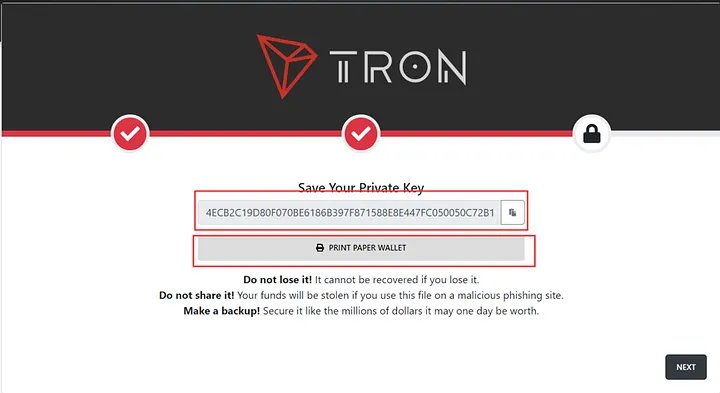
Under the hood, a TRON key generator creates a 256-bit random number (the private key), derives a public key using elliptic-curve cryptography (secp256k1), and encodes the resulting TRON address in Base58Check, which starts with the letter “T”. Reputable libraries handle this math for you so you do not implement cryptography by hand.
The single most important factor is the quality of randomness (entropy). Weak or predictable randomness can produce guessable keys, so trusted tools rely on the operating system’s secure random source. That is why open-source, audited libraries are preferred over unknown websites.
Offline example with TronPy (advanced users)
The open-source TronPy library can create a key offline in a few lines. Note that os and secrets are part of the Python standard library and do not need to be installed with pip:
pip install tronpy

from tronpy.keys import PrivateKey
import os

# 32 bytes of OS-grade randomness
priv = PrivateKey(os.urandom(32))
print("Private key:", priv.hex())
print("TRON address:", priv.public_key.to_base58check_address())
Run this on an offline machine, then look up the printed address on a public explorer to confirm it is valid before funding it. Keep the printed private key off any networked device.
Which tron wallet private key generator tools are most reliable?
Several tools can generate TRON keys, each suited to different skill levels. Stick to open-source or well-documented options and verify the source repository before trusting any download.
| Tool | Type | Offline support | Best for |
| TronPy | Open-source Python library | Yes | Developers, scripting |
| Tatum SDK/API | Developer SDK/API | Partial (SDK local) | App integration |
| TronLink | Audited browser/mobile wallet | Keys stay on device | Everyday users |
| Ledger (hardware) | Hardware wallet | Yes (air-gapped) | Long-term storage |
For developers, the official TRON developer documentation and the TronWeb library document the exact address-derivation steps. For non-developers, an audited wallet removes the chance of a mistake. Before trusting any third-party “finder” script or online converter, check that its code is public and reviewed; avoid obscure tools you cannot verify.
Why offline generation matters
- No interception: An offline key is never transmitted, so it cannot be sniffed in transit.
- No malicious server: Online generators could log or pre-seed keys; offline code you can read cannot.
- Reproducible trust: Open-source tools let the community audit the randomness and derivation.
Self-generation vs. hardware vs. custodial: what should you choose?
Generating your own key is not the only path, and it is not always the best one. Each approach trades convenience against responsibility. There is no single “best” answer; it depends on how much value you store and how comfortable you are managing secrets.
| Approach | Who holds keys | Pros | Trade-offs |
| DIY generator (e.g. TronPy) | You | Full control, free, transparent | You bear all backup/security risk |
| Hardware wallet (Ledger) | You | Keys never leave the device | Upfront cost; learning curve |
| Audited app wallet (TronLink) | You | Easy, audited, widely used | Device hygiene still matters |
| Custodial exchange | The platform | No key management for you | Not your keys; counterparty risk |
For deeper reading, see our guide to top TRON hardware wallets for secure TRX storage and our breakdown of whether the TronLink wallet is safe. Whichever route you pick, the wallet you fund will still pay network resource costs; you can read how to cut TRC-20 fees with the TRON energy market, where services like TronSave, native staking, and other rental platforms all help lower transaction costs.
How do you store a TRON private key securely?
Creating the key is only half the job; protecting it is the rest. Follow these practices to keep your TRX safe:
- Keep it offline: Store the key on paper, a metal backup, or an encrypted USB kept disconnected.
- Never share it: No legitimate service, support agent, or airdrop will ask for your private key.
- Make redundant backups: Keep at least two copies in separate secure locations to survive fire or loss.
- Beware phishing: Bookmark official sites and ignore links that “verify” or “import” your wallet.
- Test before funding: Send a small TRX amount and confirm receipt on TronScan before larger transfers.
Pro tip: If a private key has ever been typed into a web form or an online generator, treat it as compromised and move funds to a freshly generated offline key.
FAQ: TRON private key questions
Q: Is it safe to use an online TRON private key generator?
A: Generally no. Online generators can log keys or serve malicious code. Generate offline with an audited open-source tool, or use a hardware/audited wallet for the strongest protection.
Q: How do I convert a mnemonic phrase to a TRON private key?
A: Use a BIP-39/BIP-44 compatible tool offline, or import the mnemonic directly into a hardware wallet. Never paste a real seed phrase into a live website; run any converter air-gapped.
Q: Can I recover my TRON wallet without the private key?
A: No. The private key (or its seed phrase) is the only way to access funds. If both are lost, the wallet cannot be recovered, which is why redundant offline backups are essential.
Q: How can I verify a generated TRON address is valid?
A: Look it up on TronScan. A valid address starts with “T” and resolves on the explorer; you can also send a tiny test amount and confirm it arrives.
Q: Are hardware wallets better than a DIY generator?
A: For most users, yes. A hardware wallet keeps the key isolated from your computer, reducing malware risk. A DIY generator gives full control but puts all backup and security responsibility on you.
Q: Does a private key generator cost anything?
A: Open-source libraries like TronPy are free. Some developer APIs are subscription-based, and hardware wallets have a one-time hardware cost.
Conclusion
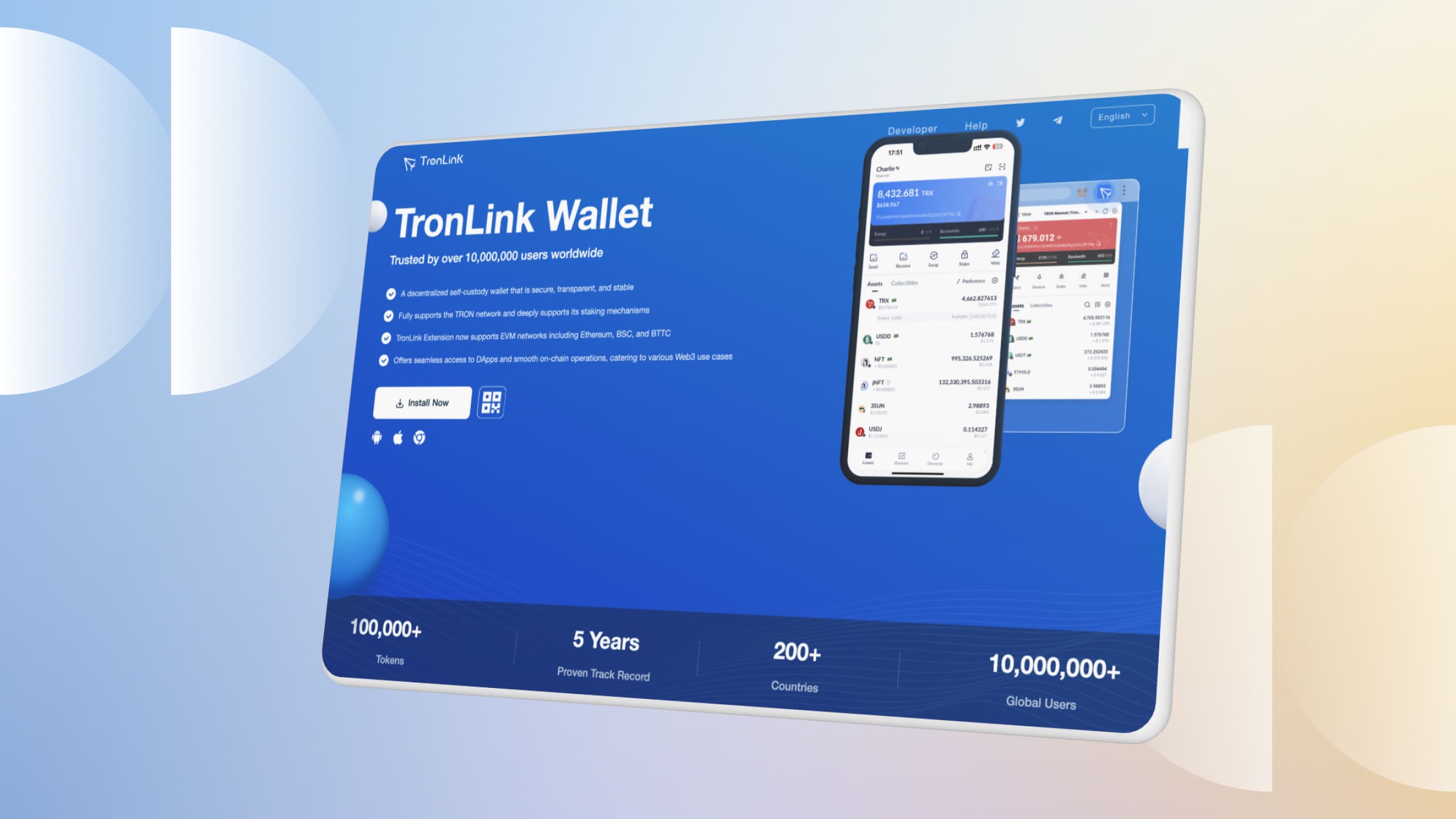
A tron wallet private key generator gives you direct control of your TRX, but with that control comes full responsibility for security. Generate keys offline with audited tools, verify the address on TronScan, and for most users consider a hardware or audited wallet as a safer default. Whatever you choose, never expose your seed phrase and always back it up.
⚠️ Not financial advice. This article is for educational and informational purposes only and reflects the author’s opinion at the time of writing. It is not investment, financial, legal, or tax advice. Cryptocurrency is highly volatile and you can lose your entire principal; prices, APYs, and on-chain fees change constantly and may be out of date. Always do your own research (DYOR) and consult a licensed financial advisor before buying, selling, staking, or lending any digital asset.
Disclosure: This is the official TronSave blog. TronSave sells TRON energy/resource (fee-reduction) services and has a commercial interest in the products and topics covered here.