On October 27, 2025, the TRON network recorded more than 11.9 million transactions in a single day — reported as its busiest 24-hour period in roughly the prior 90 days. The bulk of that activity came from low-cost USDT stablecoin transfers between everyday wallets. (Verify against a primary source.)
- TRON processed an estimated 11.9 million+ transactions on October 27, 2025 (verify against TronScan).
- That equals roughly 139 transactions per second as a 24-hour average — not a sustained peak rate.
- A large share of daily volume is reportedly wallet-to-wallet USDT transfers, common for retail payments.
- Average network fees stayed low, but high tx counts mostly reflect small stablecoin moves, not unique users.
- This is a dated 2025 news event; figures below should be checked against primary on-chain data before reuse.
What happened when TRON hit 11.9M transactions in a single day?
According to reporting circulated in late 2025, TRON logged more than 11.9 million transactions on October 27, 2025 — described as its highest single-day total in approximately the previous 90 days. For comparison, the network’s Q3 2025 daily average was reported near 8.9 million, which would make the October figure a clear short-term spike rather than a routine day.
It helps to put the headline number in context:
- Throughput: 11.9M transactions over 24 hours is about 139 transactions per second on average. Real traffic ebbs and flows, so peak-minute throughput is higher and quiet hours are lower.
- Composition: A reported majority of daily activity is USDT (Tether) transfers. High counts therefore reflect payment and transfer volume more than complex smart-contract use.
- Cost: TRON’s design keeps per-transfer costs low, which is a major reason stablecoin users favor it for small, frequent payments.
You can confirm daily transaction counts yourself on the TronScan block explorer, which publishes the public daily-transaction chart for the network.
Why does TRON process so many transactions in a single day?
TRON’s volume is driven less by speculation and more by stablecoin payments. The network has become one of the most-used rails for USDT, particularly in regions where people send cross-border value or hold dollars digitally. That demand shows up directly in daily transaction counts.
Several design choices reinforce this pattern:
- Low, predictable fees: Most transfers cost a fraction of a cent when resources are available, which suits high-frequency, low-value payments.
- Fast confirmation: TRON uses roughly 3-second block times, so transfers settle quickly.
- Resource model: Energy and bandwidth can be staked or rented instead of paid per transaction, lowering effective costs for active users.
- Stablecoin concentration: Heavy USDT usage means consistent baseline demand, with spikes on volatile market days.
For a broader explainer on how the chain is structured, see our overview of the TRON network, and for the stablecoin angle, our look at how TRON came to dominate USDT transfers.
How does TRON compare on key network metrics?
The table below summarizes the figures cited around the October 2025 record. Treat each as reported and approximate — confirm against a primary source such as TronScan, the issuer, or a public analytics dashboard before citing.
| Metric | Reported value (verify against primary source) |
|---|---|
| Transactions on Oct 27, 2025 | ~11.9 million in a single day |
| 24-hour average throughput | ~139 transactions per second |
| Q3 2025 daily average | ~8.9 million transactions/day |
| Lifetime transactions | 11+ billion (cumulative) |
| USDT supply on TRON | ~$77B (as of late 2025; verify) |
| Total value locked (TVL) | ~$27B (as of late 2025; verify) |
| Daily active addresses | ~5–6 million (routine range) |
A reported figure also claimed active addresses jumped roughly 69% week-on-week to about 11.1 million in the days after the record. That number is unusually high relative to the routine 5–6 million range, so treat it with caution and verify before reuse.
What are the risks and limitations behind the record?
A record transaction count is a real signal of usage, but it should be read carefully rather than as proof of broad decentralized adoption. Key caveats:
- Volume is not users: One active wallet can generate many transactions. High counts do not equal a proportional rise in unique people.
- Stablecoin concentration: Heavy dependence on USDT ties TRON’s activity to one issuer and to stablecoin regulation, which is evolving in many jurisdictions.
- Centralization concerns: Delegated-proof-of-stake networks rely on a limited set of validators, a common critique of high-throughput chains.
- Unverified figures: Several numbers in circulation (TVL, supply, the 69% address jump) come from secondary reporting and need primary-source confirmation.
None of this is investment advice. If you transact on TRON, you can manage costs through staking your own resources, renting energy from various providers, or services like TronSave — compare options rather than assuming one is always cheapest.
How can you verify the transaction record yourself?
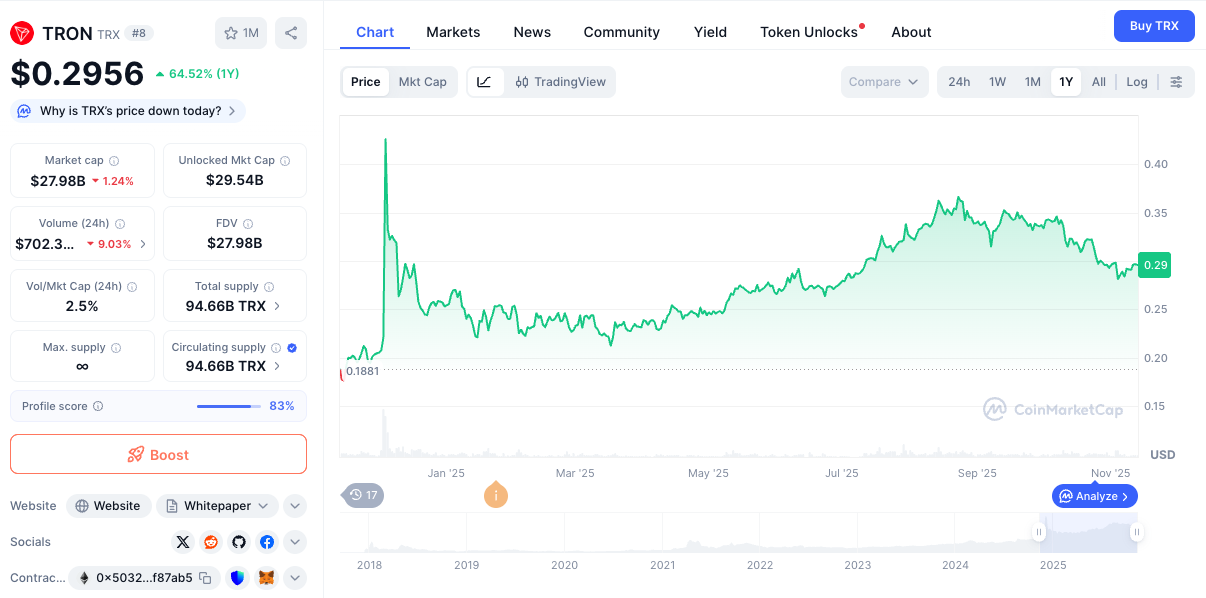
You do not have to take any single article at face value. To independently check a daily-transaction claim:
- Open the public daily-transaction chart on TronScan and locate October 27, 2025.
- Cross-check active-address and USDT-transfer counts on the same explorer or a public analytics dashboard.
- Note that explorers may revise historical figures, so a value seen in late 2025 can differ slightly today.
This kind of methodology — citing a block range, an explorer query, or a sample transaction hash — is what separates a verifiable record from a headline.
Frequently Asked Questions
How many transactions in a single day did TRON process on October 27, 2025?
Reporting cited more than 11.9 million, described as TRON’s highest 24-hour total in roughly 90 days. Confirm the exact figure on TronScan’s daily-transaction chart.
Does 11.9 million transactions mean 11.9 million users?
No. A single wallet can send many transactions. The count reflects total transfers — largely USDT payments — not unique individuals.
Why are most TRON transactions USDT transfers?
TRON offers low fees and fast settlement, making it popular for moving stablecoins. As a result, USDT transfers make up a large share of daily volume.
How fast is 139 transactions per second?
It is a 24-hour average derived from the daily total, not a sustained peak. Actual throughput rises and falls throughout the day.
Are the TVL and supply figures reliable?
They come from secondary reporting and should be treated as approximate. Verify USDT supply with the issuer and TVL with a public analytics dashboard.
How can I reduce my own TRON transaction costs?
You can stake TRX for energy and bandwidth, rent energy from a provider, or use a fee-reduction service like TronSave. Compare costs before choosing.
⚠️ Not financial advice. This article is for educational and informational purposes only and reflects the author’s opinion at the time of writing. It is not investment, financial, legal, or tax advice. Cryptocurrency is highly volatile and you can lose your entire principal; prices, APYs, and on-chain fees change constantly and may be out of date. Always do your own research (DYOR) and consult a licensed financial advisor before buying, selling, staking, or lending any digital asset.
Disclosure: This is the official TronSave blog. TronSave sells TRON energy/resource (fee-reduction) services and has a commercial interest in the products and topics covered here.