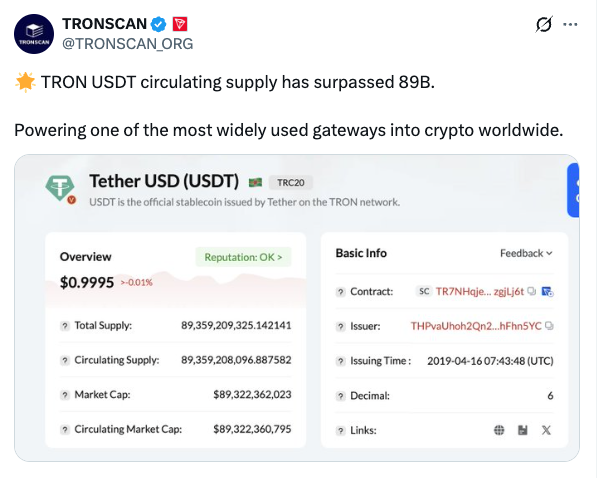
On May 19, 2025, TRON DAO announced that the supply of Tether (USDT) issued on its blockchain passed $75 billion. That milestone cemented TRON as a leading network for stablecoin transactions, carrying a large share of the world’s most-used digital dollar across retail and institutional payments.
Key Takeaways
- TRON crossed $75 billion in USDT supply on May 19, 2025, making it a top chain for stablecoin transactions.
- USDT holds roughly 60% of the global stablecoin market (as of 2026; verify against a primary source such as CoinMarketCap).
- Low fees and fast settlement drive TRON’s high USDT transfer volume, though Ethereum and Solana remain strong alternatives.
- USDT is centralized: Tether can freeze addresses, a real risk users should weigh.
- Tools like staking TRX for energy or services such as TronSave can lower transfer costs.
What Drove TRON’s $75 Billion USDT Milestone?
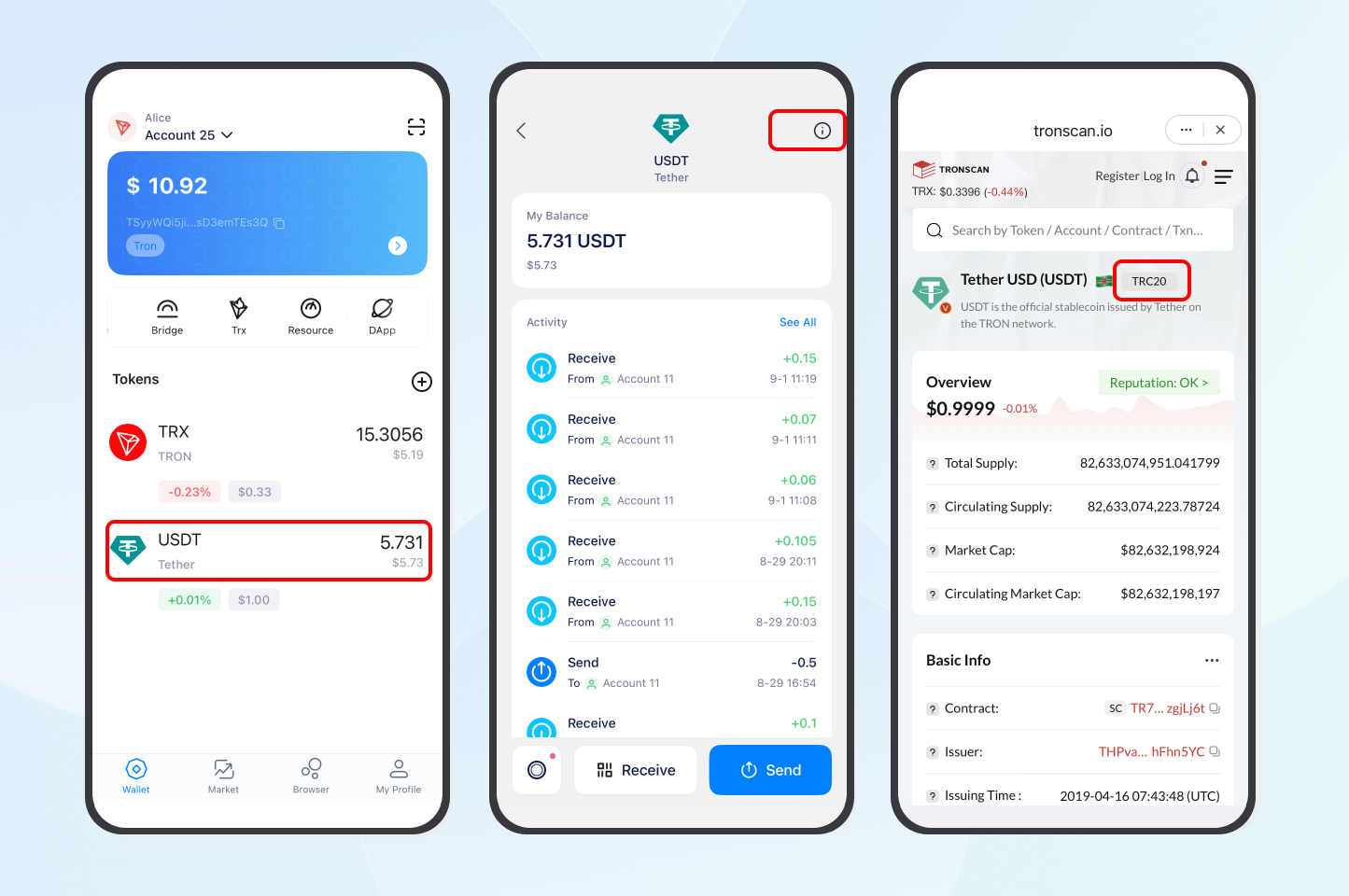
The growth came from demand for a cheap, fast “digital dollar” rail. As of May 2025, TRON reported around 8.3 million daily transactions and more than 306 million total accounts. The network settled billions of dollars in daily USDT transfers, a sizable slice of global stablecoin transactions (figures as of 2025; verify against a primary source).
In Q1 2025, USDT’s TRON supply grew by roughly $7 billion while millions of new wallets came online. Cross-border remittances, peer-to-peer payments, and merchant settlement in emerging markets remain the core use cases, because moving USDT on TRON typically costs cents rather than dollars.
How Do TRON USDT Fees Compare to Other Chains?
Cost and speed are the main reasons many users pick TRON for stablecoin transactions. The table below gives a general comparison; verify live figures against each network’s explorer before relying on them.
| Network | Typical USDT transfer cost | Settlement speed | Notes |
|---|---|---|---|
| TRON (TRC-20) | Low (cents; less if you stake for energy) | ~3 seconds | High retail/P2P usage |
| Ethereum (ERC-20) | Variable, can be high at peak | ~15 seconds+ | Deepest DeFi liquidity |
| Solana (SPL) | Very low | Sub-second | Fast-growing stablecoin use |
On TRON, fees are paid in energy and bandwidth rather than a flat gas price. You can stake TRX to obtain energy or bandwidth for ongoing transfers, or use a third-party service like TronSave to rent energy on demand. Both approaches can meaningfully reduce per-transfer costs compared with burning TRX directly.
Why Is TRON a Leader for Stablecoin Transactions?
- Predictable low cost: the energy/bandwidth model lets frequent senders avoid volatile gas spikes.
- Speed: roughly 3-second block times suit point-of-sale and remittance flows.
- Liquidity and reach: wide exchange and wallet support makes TRC-20 USDT easy to send and receive.
- Ecosystem growth: in April 2025, World Liberty Financial chose TRON to issue its USD1 stablecoin, adding to the network’s stablecoin footprint.
For a deeper background, see our explainer on what TRC-20 USDT is and how it works on TRON.
What Are the Risks Behind These Stablecoin Transactions?
A balanced view matters. USDT is a centralized asset: Tether and partners can freeze addresses linked to illicit activity. Through the T3 Financial Crime Unit, TRON, Tether, and TRM Labs reported freezing more than $160 million in illicit funds. That improves compliance but underscores that USDT is not censorship-resistant.
- Issuer risk: reserves and redemption depend on Tether; review its transparency reports.
- Freeze risk: addresses can be blacklisted by the issuer.
- Competition: Ethereum and Solana also host large USDT and USDC volumes, so TRON’s share can shift.
How Can You Reduce USDT Transfer Costs on TRON?
If you send USDT often, a few practical steps lower your costs for stablecoin transactions:
- Stake TRX for energy: freezing TRX grants energy that offsets transfer fees over time.
- Rent energy when needed: platforms such as TronSave let you rent energy for occasional transfers instead of staking long term.
- Batch and time transfers: consolidating sends reduces the number of fee-bearing transactions.
- Verify on-chain: check any USDT contract and balances directly on TronScan.
Frequently Asked Questions
How much USDT is on TRON?
TRON surpassed $75 billion in USDT supply on May 19, 2025. Supply changes constantly as USDT is minted and redeemed, so confirm the current figure on TronScan or CoinMarketCap before citing it.
Is TRON the biggest network for stablecoin transactions?
TRON is one of the largest by USDT supply and transfer volume, but Ethereum and Solana also carry significant stablecoin activity. Rankings depend on the metric and the date.
Why are USDT transfers cheap on TRON?
TRON uses an energy and bandwidth model. Staking TRX or renting energy can cover transfer costs, so fees are often a few cents instead of a fluctuating gas price.
Can my USDT be frozen on TRON?
Yes. USDT is issued by Tether, which can blacklist addresses tied to illicit activity. This is a property of the token itself, not unique to TRON.
What is the difference between TRC-20 and ERC-20 USDT?
TRC-20 USDT runs on TRON with low fees and fast confirmation; ERC-20 USDT runs on Ethereum with deeper DeFi liquidity but variable gas costs. Always send to a matching network and address format.
How do I cut TRON fees for frequent transfers?
Stake TRX for energy, or rent energy through a service like TronSave for occasional sends. Compare both against simply burning TRX to see which fits your volume.
⚠️ Not financial advice. This article is for educational and informational purposes only and reflects the author’s opinion at the time of writing. It is not investment, financial, legal, or tax advice. Cryptocurrency is highly volatile and you can lose your entire principal; prices, APYs, and on-chain fees change constantly and may be out of date. Always do your own research (DYOR) and consult a licensed financial advisor before buying, selling, staking, or lending any digital asset.
Disclosure: This is the official TronSave blog. TronSave sells TRON energy/resource (fee-reduction) services and has a commercial interest in the products and topics covered here.