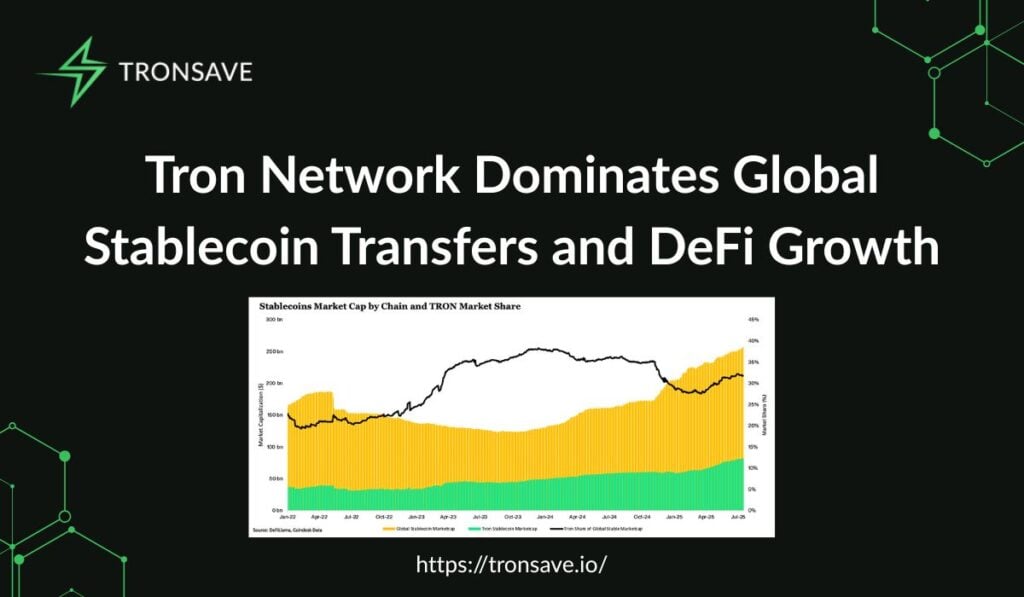
Tron has become the dominant blockchain for global stablecoin transfers, settling the majority of on-chain USDT activity through low fees, fast blocks, and a peer-to-peer payment model. As of 2026, it hosts a large share of circulating USDT and continues to lead high-volume, low-cost stablecoin settlement worldwide.
Key Takeaways
- Global stablecoin transfers are concentrated on Tron because of consistently low fees and 3-second block times.
- Tron uses Delegated Proof-of-Stake (DPoS) with 27 Super Representatives and an energy/bandwidth resource model instead of per-transaction gas in TRX.
- USDT (Tether) is the primary asset driving Tron’s payment volume, especially for remittances.
- DeFi on Tron is led by JustLend and SunSwap, which hold most of the network’s total value locked (TVL).
- Figures below are labeled “as of 2026” and should be verified against primary sources such as TronScan or DefiLlama before you rely on them.
Why does Tron dominate global stablecoin transfers?
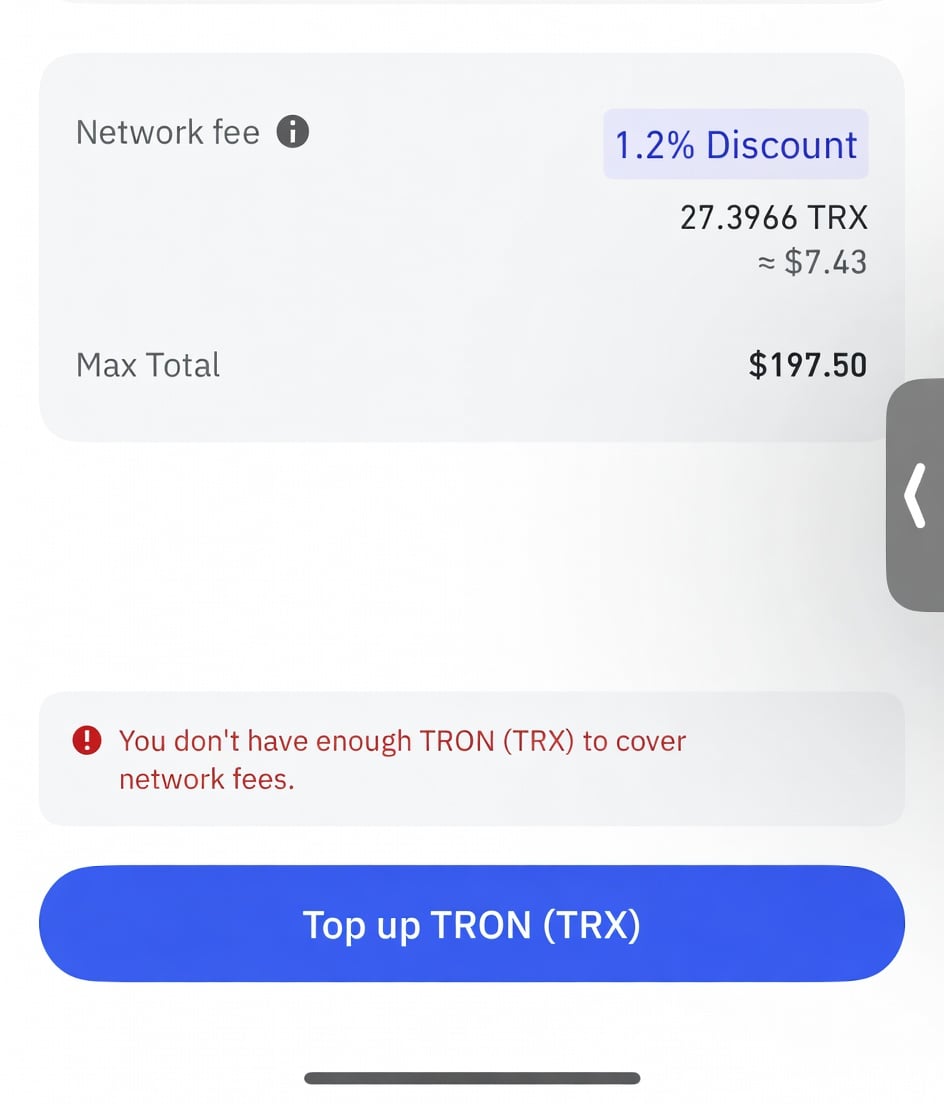
Tron’s lead in global stablecoin transfers comes down to cost and simplicity. Sending USDT on Tron typically costs a fraction of a cent in resource terms when an account has staked energy, versus higher and more variable fees on some other chains. For users moving money across borders, predictable low cost matters more than advanced smart-contract features.
Most activity on Tron is direct, person-to-person value transfer rather than complex DeFi. This makes it a practical settlement rail for remittances in Latin America, Asia, and Africa, where people send small-to-mid sized amounts frequently.
- Low, predictable fees for routine USDT sends.
- 3-second block times for fast confirmation.
- Wide exchange and wallet support for TRC-20 USDT.
- Simple UX focused on transfers rather than yield farming.
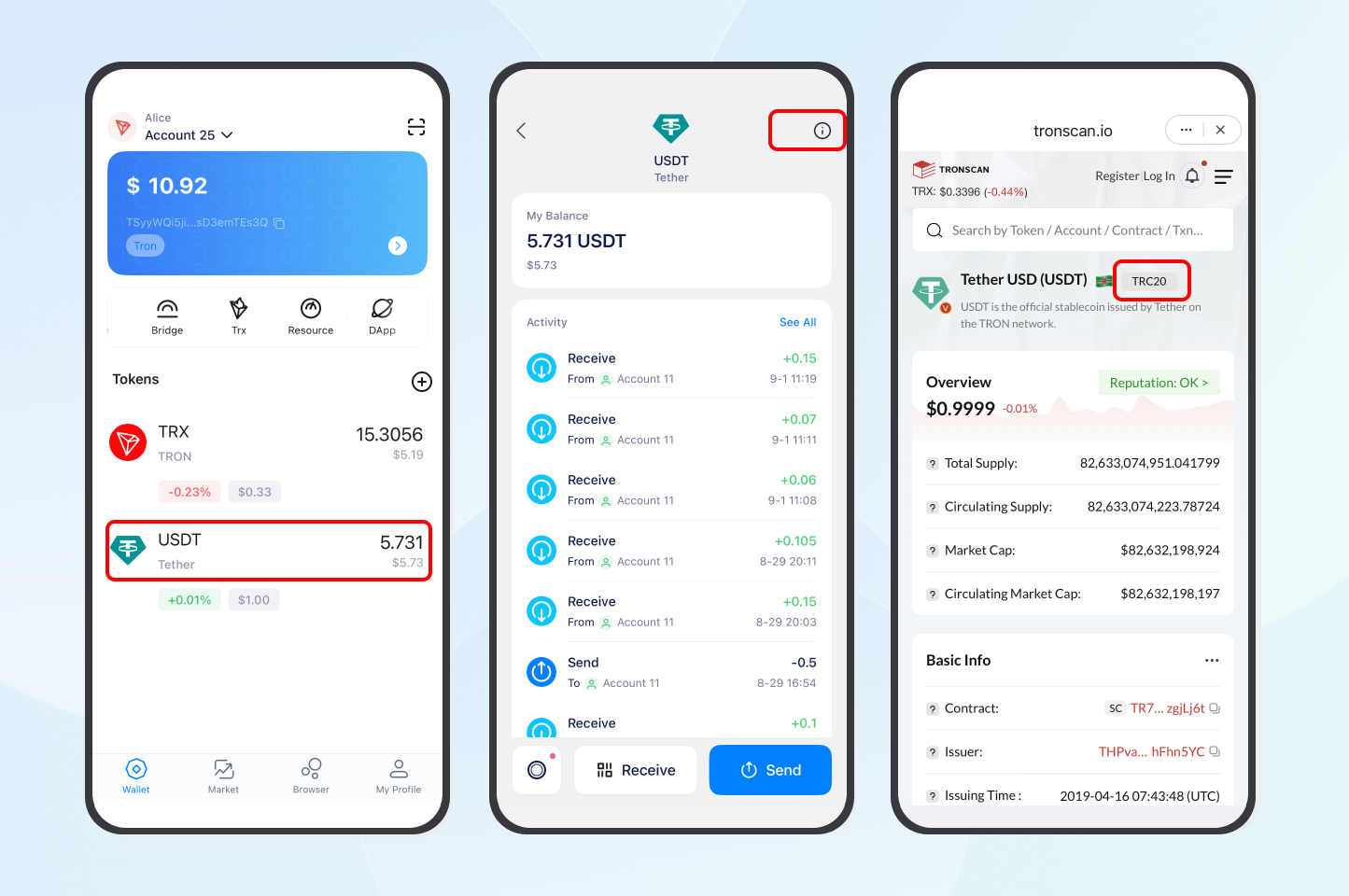
You can verify current network metrics directly on TronScan, the official block explorer, rather than relying on secondhand figures.
How does Tron’s technology keep fees low?
Tron runs on Delegated Proof-of-Stake, where TRX holders vote for 27 Super Representatives that produce blocks. Instead of paying gas per transaction, users consume bandwidth and energy, two resources you obtain by freezing (staking) TRX under the Stake 2.0 model.
This resource design is why a USDT transfer can feel almost free for an account with enough energy. If you do not stake, the network burns TRX to cover the resource cost, which is where fee spikes can appear during congestion. Renting energy is a common way to lower that cost.
For the technical specifics of the resource model, see the official TRON developer documentation.
Tron at a glance (verify before relying on figures)
| Attribute | Detail (as of 2026) |
|---|---|
| Consensus | Delegated Proof-of-Stake (DPoS) |
| Block producers | 27 Super Representatives |
| Block time | ~3 seconds |
| Throughput | Up to ~2,000 TPS (theoretical; verify) |
| Fee model | Bandwidth + energy (Stake 2.0); TRX burn if unstaked |
| Smart contracts | EVM-compatible (TVM) |
| Primary stablecoin | USDT (TRC-20) |
What drives Tron’s DeFi growth?
Beyond payments, Tron supports a DeFi ecosystem dominated by two protocols: JustLend, a lending market, and SunSwap, an automated market maker. Together they account for most of the network’s total value locked. Because much of Tron’s user base is payment-focused, its DeFi TVL is more concentrated than chains built around speculation.
Newer initiatives reported by the TRON DAO include Real-World Asset (RWA) integrations and cross-chain expansion efforts. Treat any specific TVL, fee, or RWA figure as approximate and confirm it on DefiLlama or TronScan, since these numbers move constantly.
How can you reduce Tron transaction fees?
If you send USDT regularly, there are several ways to cut costs, and it is worth comparing them rather than assuming one is best:
- Stake (freeze) TRX yourself to obtain energy and bandwidth directly — no third party, but it locks up capital.
- Rent energy from a marketplace when you only need it occasionally, which avoids locking large amounts of TRX.
- Batch or time transfers to avoid periods of network congestion when TRX burn costs rise.
Energy marketplaces such as TronSave let you rent energy under Stake 2.0 to lower per-transfer costs, and providers can earn yield by renting out energy (returns vary and are not guaranteed). Self-staking and other rental platforms are valid alternatives — choose based on how often you transact and how much TRX you want to commit. None of this is financial advice; resource savings depend on live network energy demand.
What are the risks and challenges for Tron?
A balanced view matters. Tron faces real headwinds alongside its strengths in global stablecoin transfers:
- Regulatory pressure on USDT and on Tron-based activity in some jurisdictions.
- Centralization concerns tied to having only 27 Super Representatives.
- Competition from Solana, Base, and other low-fee chains targeting stablecoin payments.
- Stablecoin dependence, since much of Tron’s value proposition rests on USDT remaining dominant.
Frequently Asked Questions
Is Tron good for global stablecoin transfers?
Yes — Tron is widely used for global stablecoin transfers because TRC-20 USDT sends are fast and cheap, especially when an account has staked or rented energy. Always confirm current fees before sending.
Why is USDT so popular on Tron?
USDT on Tron (TRC-20) combines low transfer costs with broad exchange support, making it convenient for remittances and everyday payments compared with higher-fee networks.
How much does a USDT transfer cost on Tron?
Costs vary with network conditions. With sufficient staked or rented energy a transfer can be near-free; without energy the network burns TRX, which can cost more during congestion. Check live rates on TronScan.
What is energy on the Tron network?
Energy is a resource used to run smart-contract operations, including USDT transfers. You get it by staking TRX (Stake 2.0) or by renting it from an energy marketplace.
Is the Tron network decentralized?
Tron uses DPoS with 27 elected Super Representatives. This delivers high throughput but is more centralized than networks with thousands of validators, which is a common critique.
Where can I verify Tron’s on-chain statistics?
Use primary sources: TronScan for transactions and accounts, DefiLlama for TVL, and official TRON documentation for protocol details. Avoid relying on undated or secondhand figures.
Related reading: Tron’s single-day transaction record and how energy renting and provider yield work on Tron.
⚠️ Not financial advice. This article is for educational and informational purposes only and reflects the author’s opinion at the time of writing. It is not investment, financial, legal, or tax advice. Cryptocurrency is highly volatile and you can lose your entire principal; prices, APYs, and on-chain fees change constantly and may be out of date. Always do your own research (DYOR) and consult a licensed financial advisor before buying, selling, staking, or lending any digital asset.
Disclosure: This is the official TronSave blog. TronSave sells TRON energy/resource (fee-reduction) services and has a commercial interest in the products and topics covered here.