The TRON blockchain powerhouse is a high-throughput, low-fee Layer-1 network best known for moving the largest share of Tether (USDT) and for transactions that typically cost a fraction of a cent. It scales payments, stablecoins, and DeFi for a fast-growing global user base.
As a blockchain powerhouse, TRON pairs raw throughput with predictable costs. This explainer is a 2026-current overview that builds on TRON’s 2025 milestones and adds practical context on how the network actually works, how fees are paid, and where it fits among other Layer-1 chains. Figures below are hedged where they cannot be independently verified for 2026.
Key Takeaways
- The TRON blockchain powerhouse specializes in cheap, fast stablecoin transfers and hosts a large portion of circulating USDT.
- Transactions are paid with Energy and Bandwidth, not a per-gas fee like Ethereum, which keeps costs low.
- You can obtain Energy by staking TRX yourself or by renting it from marketplaces such as TronSave and other providers.
- Growth metrics, ETF filings, and partnerships from 2025 carried into 2026; treat exact numbers as approximate and verify on a primary source.
- Crypto is volatile. None of this is financial advice — always do your own research.
What Makes TRON a Blockchain Powerhouse?
TRON earns its reputation as a blockchain powerhouse through engineering choices, not marketing. It is a Delegated Proof-of-Stake (DPoS) Layer-1 chain launched in 2017. Its design prioritizes high transaction throughput and very low cost, which made it a natural settlement layer for stablecoins. The network’s appeal comes from a few concrete strengths:
- Low fees: Simple transfers commonly cost well under a cent when resources are available, versus higher and more variable fees on some other chains.
- Stablecoin dominance: TRON carries a very large share of USDT transfer volume, making it central to global crypto payments.
- Scale: The network reports a large and growing wallet count and steady daily active users (figures approximate as of 2026; verify against a primary source such as TronScan).
- EVM compatibility: Smart contracts can largely be ported from Ethereum, easing developer migration.
How Do Energy and Bandwidth Power TRON Transactions?
Unlike chains that charge a single gas fee, TRON splits transaction cost into two resources. Understanding both is the key to cheap usage on this blockchain powerhouse:
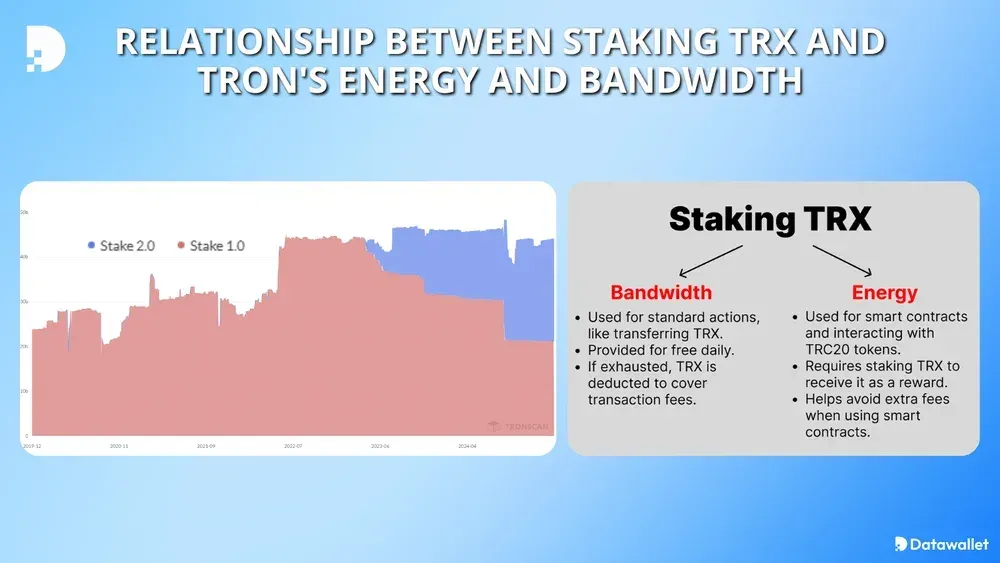
- Bandwidth covers the byte size of a transaction. Each account gets a small free daily allowance, enough for occasional simple transfers.
- Energy covers smart-contract execution, including USDT (TRC-20) transfers. Energy is the resource that most users actually need.
You can either burn TRX to pay for a transaction directly, or obtain resources in advance so the transfer costs little to nothing in TRX. There are two common ways to get Energy:
- Stake (freeze) TRX yourself to receive Energy, which also earns you voting rights. This suits frequent, long-term users.
- Rent Energy from a marketplace such as TronSave, JustLend’s energy market, or other providers — useful for one-off or high-volume transfers without locking up large amounts of TRX.
For the official mechanics, see the TRON resource model documentation.
Energy vs. Bandwidth: Quick Comparison
| Resource | Pays for | Free daily allowance | How to get more |
|---|---|---|---|
| Bandwidth | Transaction byte size (simple transfers) | Small free quota per account | Stake TRX or burn TRX |
| Energy | Smart-contract execution (e.g. USDT TRC-20) | None by default | Stake TRX or rent from a marketplace |
What Were TRON’s Major 2025 Developments — And Where Do They Stand in 2026?
Several headline events from 2025 shaped the blockchain powerhouse‘s trajectory into 2026. These are recorded with their original event years; treat figures as approximate and confirm on primary sources:
- Public-market move: A reverse-merger plan involving SRM Entertainment was reported in 2025, framed around a sizable TRX token treasury. Confirm current status via reputable financial news.
- Deflation adjustment: A TRON DAO governance proposal in 2025 modified block-reward parameters, with proponents arguing it raised TRX’s annualized deflation rate. Governance records are visible on TronScan.
- GreatVoyage-v4.8.0 (Kant) upgrade: A node upgrade improving Ethereum compatibility and validation.
- Stablecoin and payment integrations: Collaborations spanning USDT interoperability, fiat on/off-ramps, and in-store payment pilots in Southeast Asia.
- Regulatory interest: A staked-TRX ETF filing was acknowledged by U.S. regulators, signaling institutional attention. Verify the latest filing status before relying on it.
Security remains a sector-wide concern: exchange and bridge hacks reported in 2025 are a reminder that on-chain activity always carries risk, independent of the underlying chain.
How Is TRON Valued Among Layer-1 Networks?
Research firms increasingly value Layer-1s by real usage rather than narrative alone. Common frameworks include:
- Real Economic Value (REV): fees and protocol revenue the network actually generates.
- Monetary premium: demand for the native asset as a store of value.
- Economic security: the cost to attack or disrupt the network.
By the revenue-and-utility lens, the blockchain powerhouse‘s heavy stablecoin throughput and recurring fee activity are its clearest strengths. For live market data, cross-check CoinMarketCap’s TRON page. Valuation framing is not a price prediction, and past performance does not indicate future results.
How Does TRON Compare for Everyday USDT Transfers?
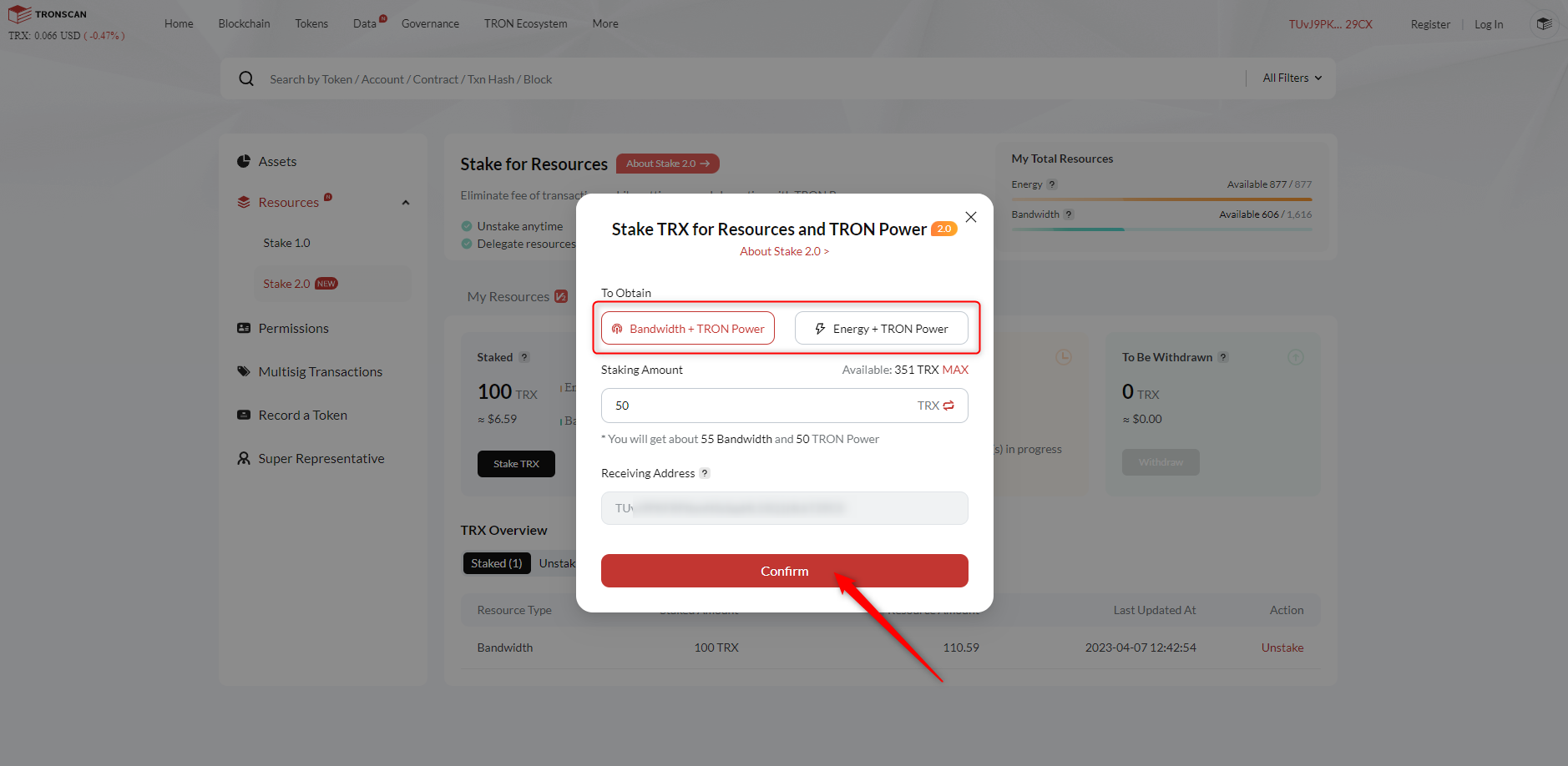
For users whose main goal is moving stablecoins cheaply, the practical question is fee predictability. This is where the blockchain powerhouse shines: TRON’s resource model lets active users pre-fund Energy so transfers stay near-zero in TRX terms. To learn the hands-on steps, see our guides on what TRON Energy is and how to stake TRON. Whether you stake yourself or rent Energy, the underlying goal is the same: avoid burning more TRX than necessary on each transaction.
Frequently Asked Questions
What is the TRON blockchain powerhouse known for?
It is best known as a low-fee, high-throughput Layer-1 that settles a large share of global USDT (Tether) transfers, making it a core rail for stablecoin payments.
Why are TRON fees so low?
TRON uses a resource model based on Energy and Bandwidth instead of a single fluctuating gas fee. Staking TRX or renting Energy lets users cover transactions for very little TRX.
Do I have to stake TRX to use TRON?
No. You can burn TRX directly, stake TRX to earn Energy and voting rights, or rent Energy from a marketplace such as TronSave or other providers for occasional transfers.
Is TRX deflationary?
TRON has implemented governance changes intended to reduce net TRX issuance, but actual supply changes depend on network usage and fee burning. Verify current figures on a primary source like TronScan.
Is TRON a good investment?
This article does not offer investment advice. Crypto assets are volatile and can lose value quickly. Research the project, understand the risks, and consult a licensed advisor before investing.
Where can I verify TRON’s on-chain statistics?
Use primary sources: TronScan for on-chain data and governance, the official TRON developer docs for the resource model, and CoinMarketCap for market figures.
⚠️ Not financial advice. This article is for educational and informational purposes only and reflects the author’s opinion at the time of writing. It is not investment, financial, legal, or tax advice. Cryptocurrency is highly volatile and you can lose your entire principal; prices, APYs, and on-chain fees change constantly and may be out of date. Always do your own research (DYOR) and consult a licensed financial advisor before buying, selling, staking, or lending any digital asset.
Disclosure: This is the official TronSave blog. TronSave sells TRON energy/resource (fee-reduction) services and has a commercial interest in the products and topics covered here.