TRON energy leasing lets you rent the energy a USDT transfer needs instead of burning TRX to pay the fee. Because rented energy usually costs far less than the burn equivalent, frequent senders can cut per-transfer costs substantially while keeping transactions fast and non-custodial. Last updated: June 2026.
Key Takeaways
- Lower fees: Renting energy can cost a fraction of burning TRX for the same USDT transfer (savings vary with network conditions and TRX price).
- Flexibility: Some platforms accept TRX or USDT, so transfers can go through even when your TRX balance is low.
- Two paths: You can rent energy directly, or stake (freeze) TRX yourself to generate energy — each has trade-offs.
- Not a guarantee: Staking yields and fee savings are variable and depend on TRX volatility and on-chain demand.
Ready to rent? See our ranked guide to the best TRON energy rentals in 2026.
What Is TRON Energy Leasing?
Sending USDT (a TRC-20 token) on the TRON blockchain consumes two resources: energy, which powers smart-contract execution, and bandwidth, which covers basic transaction data. A standard USDT transfer needs roughly 65,000 energy (the exact figure depends on whether the recipient already holds USDT). If your account lacks that energy, the network burns TRX to cover it.
TRON energy leasing, made practical by the network’s Stake 2.0 resource model, lets you rent that energy from accounts that have frozen TRX to generate it. You pay a small rental fee, receive the energy for a short window, and complete your transfer without burning TRX. You can review how energy and bandwidth work in the official TRON developer resource-model documentation.
Why Choose Energy Leasing for USDT Transfers?
For anyone moving USDT regularly, the recurring TRX burn adds up. TRON energy leasing addresses that in a few ways:
- Cost reduction: Renting energy is typically cheaper than the TRX burn for an equivalent transfer; reported savings often range from roughly 50% upward, though the exact figure varies (approximately; verify against current market rates).
- Flexible payment: Certain platforms let you pay rental fees in USDT, useful when your wallet holds little or no TRX.
- Non-custodial flow: Reputable rental services credit energy to your address without taking custody of your USDT.
As an illustrative example, a trader sending many USDT payments per day could see daily fee costs fall meaningfully after switching from burning TRX to renting energy. Actual savings depend on volume, the TRX/USD price, and live rental rates — treat any single dollar figure as indicative, not a promise.
How Does Leasing Compare to Burning or Staking?
There are three common ways to cover a USDT transfer’s energy. The table below summarizes the trade-offs.
| Method | Up-front capital | Lock-up | Best for |
|---|---|---|---|
| Burn TRX | None (pay per transfer) | None | Rare, one-off transfers |
| Rent / lease energy | Small rental fee | None (short rental window) | Frequent senders wanting low cost |
| Stake TRX yourself | High (freeze TRX) | 14-day unstake period | High-volume users with spare TRX |
How Do You Lease TRON Energy Step by Step?
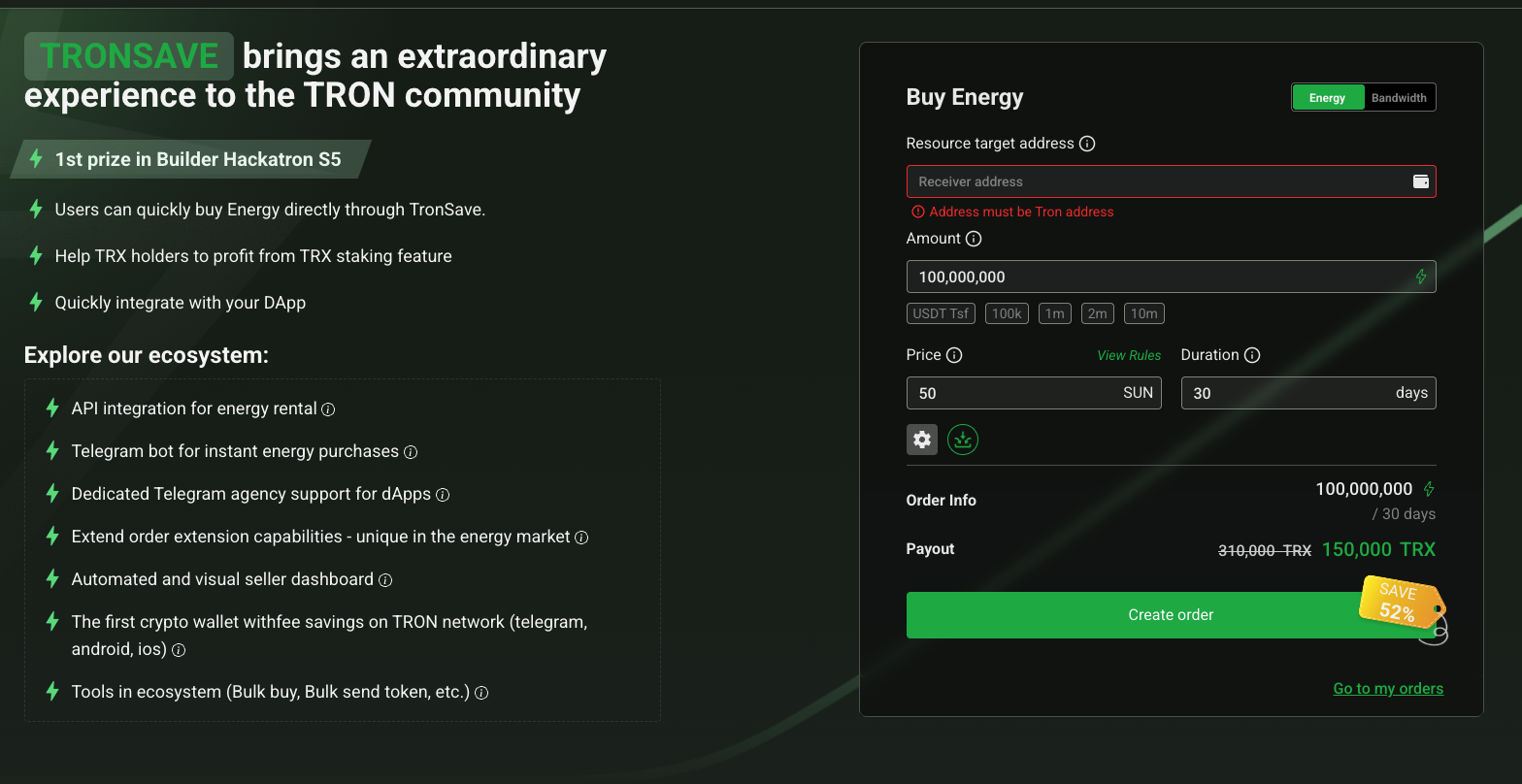
Renting energy is straightforward, even for newcomers to the TRON blockchain. A typical flow looks like this:
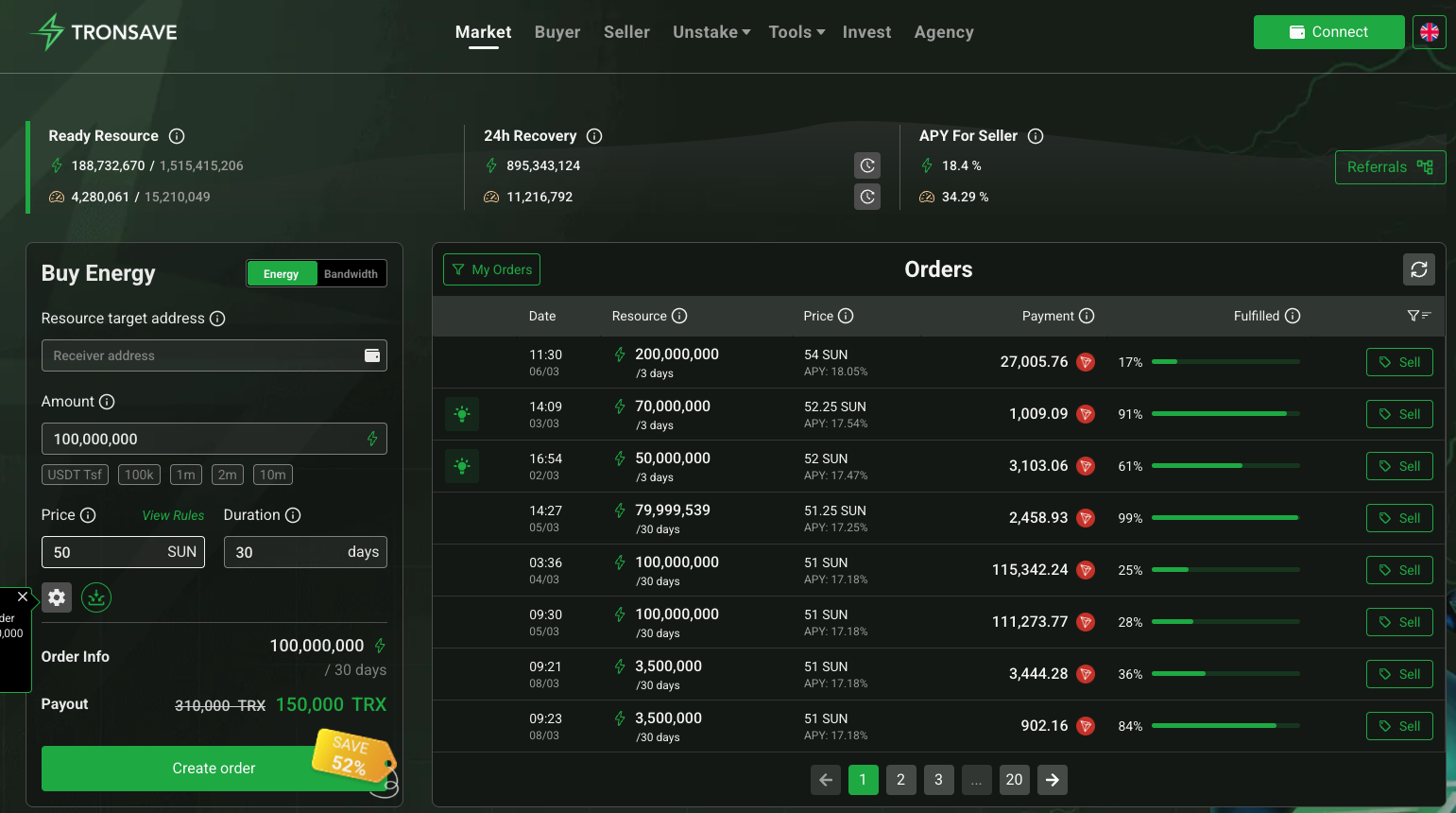
- Choose a platform: Pick a trusted energy-rental marketplace. TronSave is one option; other marketplaces and on-wallet “rent energy” features exist, so compare rates before committing.
- Connect your wallet: On the USDT transfer screen, look for options such as “rent energy” or “pay TRX to burn.”
- Select energy rental: Choose the energy amount needed for one USDT transfer (about 65,000 energy) and review the displayed fee.
- Send the rental payment: Confirm and pay. Keep a small TRX buffer in the wallet to cover bandwidth and avoid a failed transaction.
- Complete the USDT transfer: Once the energy is credited (usually within seconds), send your USDT as normal.
Tips to Avoid Failed Transfers
- Keep a TRX buffer: A small TRX balance covers bandwidth and edge cases even when energy is rented.
- Check the recipient: Transfers to an address that already holds USDT consume less energy than transfers to a brand-new address.
- Watch network demand: When energy is scarce, rentals can be temporarily unavailable — you may need to wait or burn TRX.
- Verify on-chain: You can confirm any transfer’s actual resource use and fee on TronScan by looking up the transaction hash.
Can You Stake TRX and Monetize Energy?
Beyond renting, you can stake (freeze) your own TRX to generate energy for personal transfers — and, if you produce a surplus, lease that energy to others. This turns idle TRX into a resource that offsets your own fees and may earn a small return.
However, the economics are variable. Staking-related yields depend on how much TRX is frozen network-wide, on rental demand, and on the TRX price. Staking returns are variable and not guaranteed; this is not financial advice, and TRX price volatility can reduce real yield. Staked TRX is also locked during a 14-day unstaking period, so funds are not instantly accessible.
- For your own use: Staking can cover routine USDT transfers without repeatedly buying or burning TRX.
- For income: Surplus energy can be leased through marketplaces, but earnings fluctuate and are never assured.
- Risks: 14-day lock-up, price volatility, and the chance of failed transactions if balances run low.
If you are weighing whether holding and staking TRX fits your goals at all, see our broader discussion in our guide to TRON and the energy-market overview in why renting TRON energy reduces USDT fees.
What’s Changing for TRON Energy in 2026?
The TRON ecosystem continues to evolve. Gas-free USDT transfer mechanisms and USDT-denominated fee options have expanded, and a growing number of energy marketplaces has increased competition among providers. These shifts can push rental prices down over time, though specific future fee levels are uncertain and should not be assumed.
For high-volume senders and anyone monetizing surplus energy, leasing remains a practical tool in 2026 — but it sits alongside alternatives like direct staking and newer gas-free flows rather than replacing them. Always compare current options before deciding.
Frequently Asked Questions
How much energy does a USDT transfer need?
Roughly 65,000 energy, depending on whether the recipient already holds USDT (transfers to existing USDT holders use less). Renting that energy is generally cheaper than letting the network burn TRX for it.
What if my wallet has no TRX?
Some rental platforms accept USDT for the fee, letting you complete a transfer without holding TRX. Keeping a small TRX buffer is still wise to cover bandwidth.
Is TRON energy leasing secure?
Reputable, non-custodial platforms credit energy to your address without holding your USDT. Verify any platform’s reputation and confirm transactions on TronScan before relying on it.
How do I prevent failed transactions?
Maintain a small TRX buffer, confirm the recipient’s USDT status, and check network energy availability before sending. If rentals are unavailable, you can wait or burn TRX.
Does sending more USDT cost more energy?
No. A USDT transfer’s energy cost is roughly the same whether you send 1 USDT or 1,000, so it is more efficient to combine payments than to split them.
Is staking TRX guaranteed to be profitable?
No. Staking yields are variable, depend on network demand and TRX price, and funds are locked for 14 days. This is not financial advice — do your own research.
⚠️ Not financial advice. This article is for educational and informational purposes only and reflects the author’s opinion at the time of writing. It is not investment, financial, legal, or tax advice. Cryptocurrency is highly volatile and you can lose your entire principal; prices, APYs, and on-chain fees change constantly and may be out of date. Always do your own research (DYOR) and consult a licensed financial advisor before buying, selling, staking, or lending any digital asset.
Disclosure: This is the official TronSave blog. TronSave sells TRON energy/resource (fee-reduction) services and has a commercial interest in the products and topics covered here.