Cheap TRON energy is not a gimmick — it is basic math. Every USDT (TRC-20) transfer consumes energy, and you can pay for that energy in two ways: let the network burn TRX from your balance at the protocol rate, or rent the energy beforehand at the market rate. The market rate is consistently below the burn rate. This post shows the actual numbers and the ordering tactics that squeeze the cost down further.
👉 Run your own numbers: the USDT Fee Savings Calculator compares burning TRX vs renting energy for your exact transfer volume.
Key takeaways
- The fee math: a USDT transfer needs about 64,000–65,000 energy to a wallet that already holds USDT, or about 130,000 to an empty one.
- Burning is the expensive path: with no energy, the network burns TRX at the protocol rate — approximately 6.4 TRX for a funded-recipient transfer and approximately 13.4 TRX to an empty wallet (verify live).
- Renting costs less because you pay the open-market price for delegated energy, not the protocol burn rate — e.g. about 4.4 TRX rented vs about 6.4 TRX burned for one funded-recipient transfer at recent rates.
- Tactics stack: right-sizing the order, SmartOrder pricing, longer durations, and bulk buying each shave the cost further.
- Prices move with the TRX price and network staking, so always confirm on the live market before you pay.
Why does a USDT transfer cost anything at all?
TRON meters smart-contract work in energy. If your account holds energy, the transfer consumes it and you pay nothing else. If it holds none, the network burns TRX from your balance to cover the shortfall at a fixed protocol rate per unit of energy. That burn — not the USDT contract itself — is the “fee” people complain about. The official TRON resource model docs explain the metering in depth.
The real fee math: burned vs rented
Here is the comparison that matters, using an everyday USDT transfer:
- Energy needed: about 64,000–65,000 (recipient already holds USDT) or about 130,000 (recipient wallet is empty or has never held USDT). The figure is higher than the contract’s base cost because TRON applies a dynamic energy penalty to heavily used contracts like USDT — the penalty varies each maintenance cycle.
- Cost if burned: at TRON’s current burn rate of 100 sun per unit of energy (plus a little bandwidth), a funded-recipient transfer works out to approximately 6.4 TRX and an empty-recipient transfer to approximately 13.4 TRX. These figures drift with network parameters — check any recent transaction on TronScan to see the exact burn.
- Cost if rented: the same energy bought on the open market costs less than the burn — for example, a one-hour rental of ~65,000 energy has recently quoted around 4.4 TRX, vs ~6.4 TRX burned. The exact saving depends on live market rates, order type, and duration — the current quote is on the live order book.
Multiply the difference by ten transfers a day and a month of activity, and cheap TRON energy stops being an optimization and becomes the whole fee strategy.
Why is rented energy cheaper than burning?
Because supply competes for your order. Energy providers stake large TRX positions, generate more energy than they use, and sell the surplus on the market. Competition between them keeps the rental price below the protocol’s burn rate — you are buying at wholesale instead of paying the network’s list price.
How to pay the least for TRON energy
Renting already beats burning. These tactics minimize the rental cost itself:
- Size the order to the recipient. Check whether the destination wallet already holds USDT before renting: about 65k vs about 130k energy is a 2x cost difference on its own. Details in how much energy a USDT transfer needs.
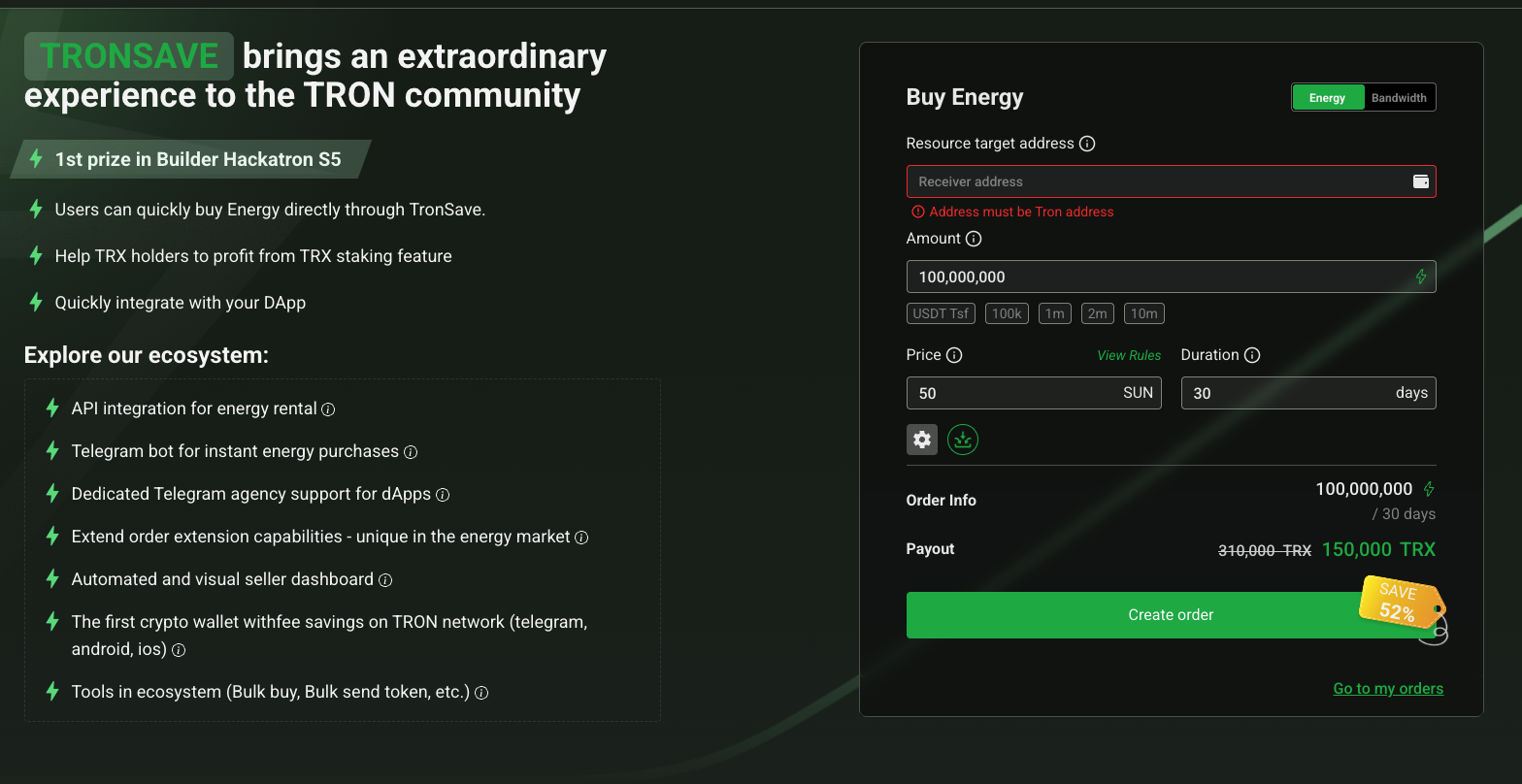
- Let SmartOrder find the price. TronSave’s SmartOrder automatically fills your request at the best available market price, so you do not overpay for speed you do not need. If you have time, a manual limit-style order can fill even cheaper — see TronSave order types explained.
- Rent longer durations for regular use. Per-day pricing drops as the duration grows: a 30-day delegation for your daily transfer volume costs far less than thirty separate one-hour rentals.
- Buy in bulk for high volume. Payroll runs, exchange payouts, and merchant batches should use BulkBuy — one order covering many transfers at better unit pricing. See buying TRON energy in bulk for high-volume USDT sending.
- Extend instead of re-ordering. If a delegation is running out mid-workload, ExtendOrder tops up the existing delegation rather than paying to open a new one.
- Automate to avoid accidental burns. One forgotten top-up can cost more in burned TRX than a week of rentals. Auto-Buy watches your balance and re-orders before you run dry.
Step by step: the cheapest possible USDT transfer
- Check the recipient wallet on TronScan. Already holds USDT? Budget about 65k energy. Empty? Budget about 130k.
- Open the TronSave energy market and connect your wallet (public address only — never a seed phrase).
- Order with SmartOrder: enter the energy amount and the shortest duration that covers the send, and let SmartOrder fill at the best market price.
- Confirm and wait a few seconds for the delegation to land in your wallet’s resource balance.
- Send the USDT. The rented energy is consumed and little to no TRX is burned. Compare the receipt on TronScan with what a burn would have cost.
Developers can automate this whole loop — quote, order, transfer — against the TronSave API; our Python guide shows a working integration.
FAQ: cheap TRON energy
How much cheaper is renting energy than burning TRX?
At recent rates, renting ~65,000 energy for an hour costs about 4.4 TRX versus about 6.4 TRX burned for the same funded-recipient transfer. The exact gap moves with live market rates, order type, and duration — compare the live rental quote against a recent burn on TronScan, or use the fee savings calculator above.
Why does the same USDT transfer sometimes cost double?
The recipient wallet is the difference: sending to an address that has never held USDT consumes about 130,000 energy versus about 64,000–65,000 for a funded one, because the contract must initialize the new balance record.
What is the cheapest way to get energy for one transfer?
A short-duration rental sized to the transfer — about an hour of ~65k or ~130k energy. It costs a small amount of TRX (recently around 4.4 TRX for 65k) and is reclaimed automatically afterwards.
Is staking TRX myself cheaper than renting?
Only at scale. Generating meaningful daily energy requires freezing a large TRX balance, and Stake 2.0 unstaking takes 14 days. For most users, renting exactly what they need is cheaper than the capital cost of staking.
Do energy prices change?
Yes — both the protocol burn rate outcome and market rental rates shift with network staking levels and demand. Check current figures each time rather than assuming last week’s price.
Conclusion
The path to cheap TRON energy is simple: never let the network burn TRX on your behalf. Rent the energy first, size the order to the recipient, use SmartOrder to fill at the best price, and move to longer durations or bulk orders as your volume grows. Verify every number on the live market and TronScan — the math does the rest.
⚠️ Not financial advice. This article is for educational and informational purposes only and reflects the author’s opinion at the time of writing. It is not investment, financial, legal, or tax advice. Cryptocurrency is highly volatile and you can lose your entire principal; prices, APYs, and on-chain fees change constantly and may be out of date. Always do your own research (DYOR) and consult a licensed financial advisor before buying, selling, staking, or lending any digital asset.
Disclosure: This is the official TronSave blog. TronSave sells TRON energy/resource (fee-reduction) services and has a commercial interest in the products and topics covered here.
Related guides: How to rent TRON energy step by step · All the ways to get TRON energy · Check live prices on the energy market