Consensus Hong Kong 2026 was the second edition of CoinDesk’s flagship Asian crypto conference, held February 10–12, 2026. It gathered 100+ speakers from firms including Binance, the Solana Foundation, Grayscale, J.P. Morgan and TRON across six stages, spotlighting institutional adoption, stablecoins and AI.
This recap looks back at the lineup, the sessions that mattered, and why the program was relevant to TRON and stablecoin users. Ticket sales, discount codes and registration deadlines referenced during the run-up have now expired, so treat any pricing details below as historical.
Key Takeaways
- The 2026 event ran February 10–12, 2026, the follow-up to a sold-out 2025 debut.
- The organizer projected roughly 15,000 attendees, up from an estimated 10,000 in 2025 (organizer figures; verify against a primary source).
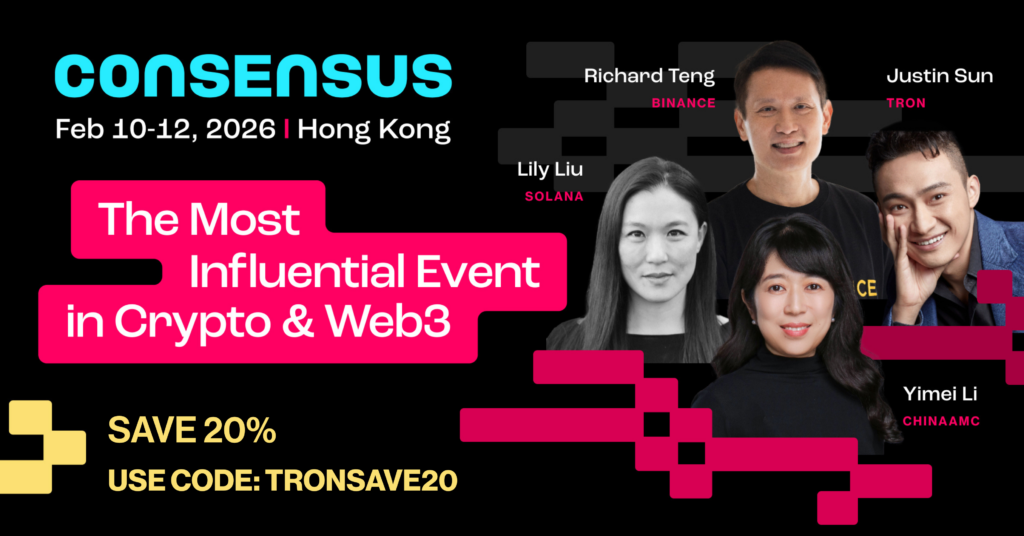
- Headline speakers included Richard Teng (Binance), Lily Liu (Solana Foundation), Justin Sun (TRON), Peter Mintzberg (Grayscale) and Naveen Mallela (J.P. Morgan).
- Stablecoins and tokenization were central themes — topics directly tied to the TRON network, which carries a large share of global USDT transfers.
- All promo codes and “register now” offers from the pre-event period have expired.
What Was Consensus Hong Kong?
Consensus Hong Kong is a three-day industry conference curated by CoinDesk. The 2026 edition built on a 2025 debut that the organizer said welcomed around 10,000 participants from over 100 countries. Per organizer press materials, that first edition contributed an estimated HK$275 million to Hong Kong’s economy — a figure to treat as an organizer projection rather than an audited statistic.
The 2026 program spanned six stages and explored institutional adoption, DeFi, stablecoins, robotics, and the convergence of AI agents with on-chain technology. The organizer projected roughly 15,000 attendees for the second edition.
Who Were the Top Speakers at Consensus Hong Kong?
The agenda featured more than 100 speakers from across the crypto and traditional-finance worlds. Confirmed highlights included:
- Richard Teng — Binance
- Lily Liu — Solana Foundation
- Justin Sun — TRON
- Peter Mintzberg — Grayscale Investments
- Naveen Mallela — J.P. Morgan
- Ella Zhang — YZI Labs
- Mo Shaikh — Maximum Frequency Ventures
- Austin Federa — DoubleZero
- Annabelle Huang — Altius Labs
The presence of TRON founder Justin Sun alongside Binance, Solana and major asset managers underlined how far the TRON ecosystem has moved into mainstream institutional conversations. For more on his trajectory, see our profile of the TRON crypto owner, Justin Sun.
Which Sessions Mattered Most for TRON and Stablecoin Users?
If you use the TRON network for low-cost USDT transfers, several sessions were especially relevant:
- Tokenizing the Planet — with Carlos Domingo (Securitize), Ian De Bode (Ondo) and Naveen Mallela (J.P. Morgan), covering real-world-asset tokenization.
- Securing the Multi-Chain Future — on Bitcoin restaking, featuring David Tse (Babylon) and Evan Cheng (Mysten Labs).
- AI is Unseating Mining in the US — examining hashrate shifts with Asher Genoot, Mike Ho (American Bitcoin) and Irene Gao (Bitmain).
- Ethereum Next Steps — on scaling and user experience with Hsiao-Wei Wang (Ethereum Foundation) and Sandy Peng (Scroll).
The stablecoin and tokenization tracks carry the most direct TRON relevance. TRON is one of the primary networks for Tether’s USDT, and discussions about institutional stablecoin rails affect anyone moving value on-chain. To understand why TRON dominates here, read how TRON leads global stablecoin transfers.
A Practical TRON Angle: Energy and Fees
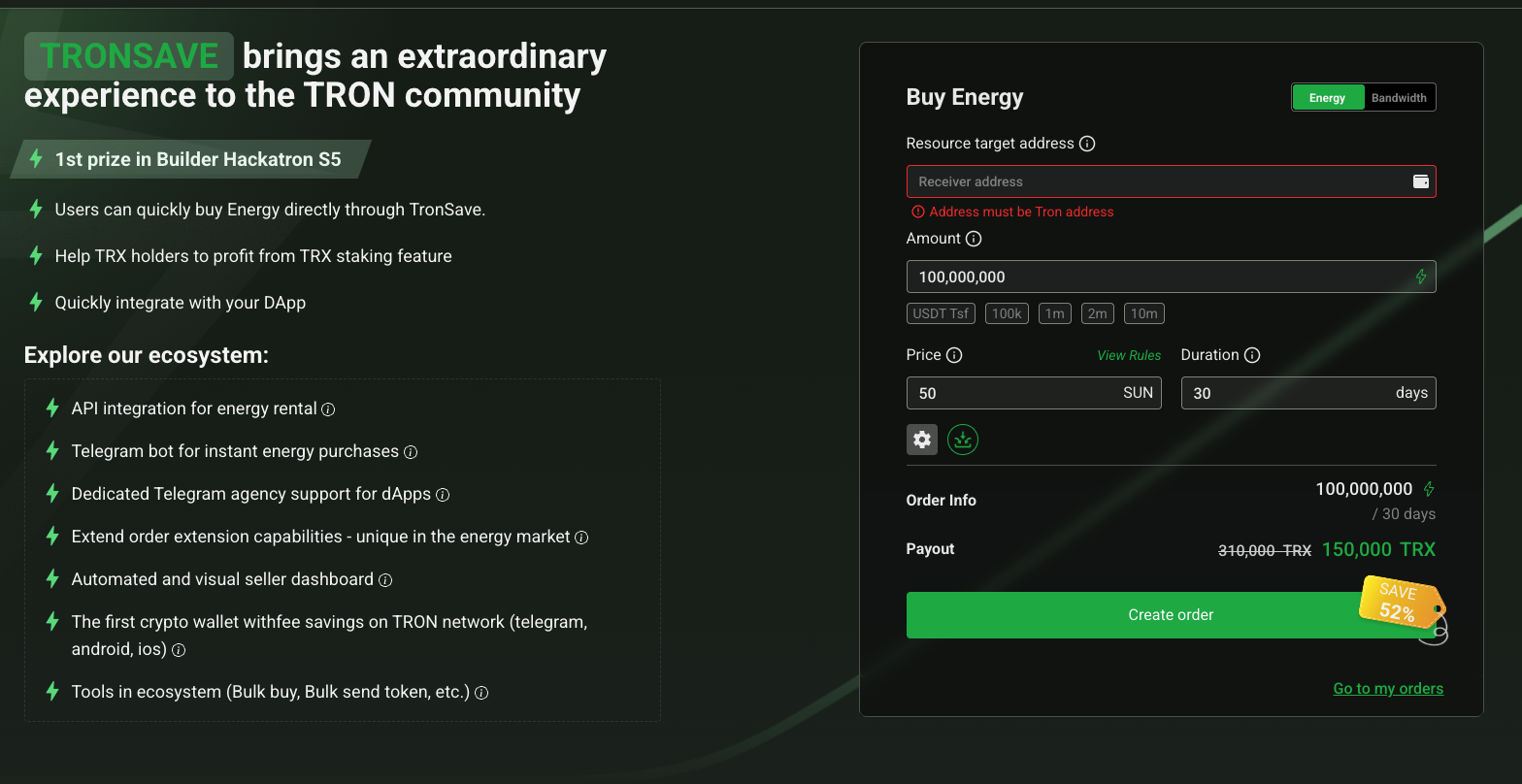
Institutional themes are exciting, but everyday TRON users care about transaction cost. Sending USDT (TRC-20) on TRON consumes energy and bandwidth; if your account lacks enough energy, the network burns TRX to cover the gap, which can make a single transfer cost several dollars.
There are a few ways to reduce that cost, and it is worth comparing them objectively rather than defaulting to any single provider:
| Method | How it works | Best for |
|---|---|---|
| Staking (freezing) TRX | Lock your own TRX to generate energy/bandwidth for free over time | Frequent senders holding TRX long-term |
| Energy rental marketplaces (e.g. TronSave and other platforms) | Rent energy on demand for a short window, paying a fraction of the burn cost | Occasional or one-off transfers |
| Paying the TRX burn | Let the network burn TRX automatically with no setup | Rare transfers where convenience beats cost |
If you want to dig into the mechanics, our guide on whether staking TRX provides energy or bandwidth breaks down the trade-offs. Energy rental platforms such as TronSave and competing marketplaces let you avoid locking capital, while staking suits holders who transact often.
Experiences Beyond the Main Stages
The conference offered more than panels:
- EasyA Hackathon & PitchFest — connecting developers and startups with venture capitalists.
- Cultural programming — VIP gatherings in Central, guided tech tours to Shenzhen, and access to Happy Valley Racecourse for “The Consensus Cup.”
- City-wide activation — the organizer anticipated roughly 350 side events across Hong Kong.
The event also hosted Solana Accelerate APAC, which the organizer said added 2,000+ builders and policymakers, alongside showcases from fintech firms and crypto startups focused on capital markets and infrastructure.
Frequently Asked Questions
When was the 2026 edition held?
It took place February 10–12, 2026, in Hong Kong. The event has now concluded.
Who organizes Consensus Hong Kong?
The conference is produced by CoinDesk. The 2026 edition was the second after a 2025 debut.
Did Justin Sun speak at the event?
Yes. TRON founder Justin Sun was listed among the confirmed speakers, alongside leaders from Binance, the Solana Foundation, Grayscale and J.P. Morgan.
Why is Consensus Hong Kong relevant to TRON users?
Its stablecoin and tokenization tracks tie directly to TRON’s role in global USDT transfers, an area that shapes on-chain payment costs and adoption.
Are the discount codes or ticket offers still valid?
No. Any promo codes, deadlines or “register now” offers shared before the event have expired. Treat them as historical.
How can I cut my TRON transaction fees today?
You can stake TRX to earn energy, rent energy from marketplaces like TronSave or its alternatives, or simply pay the TRX burn. The right choice depends on how often you transact.