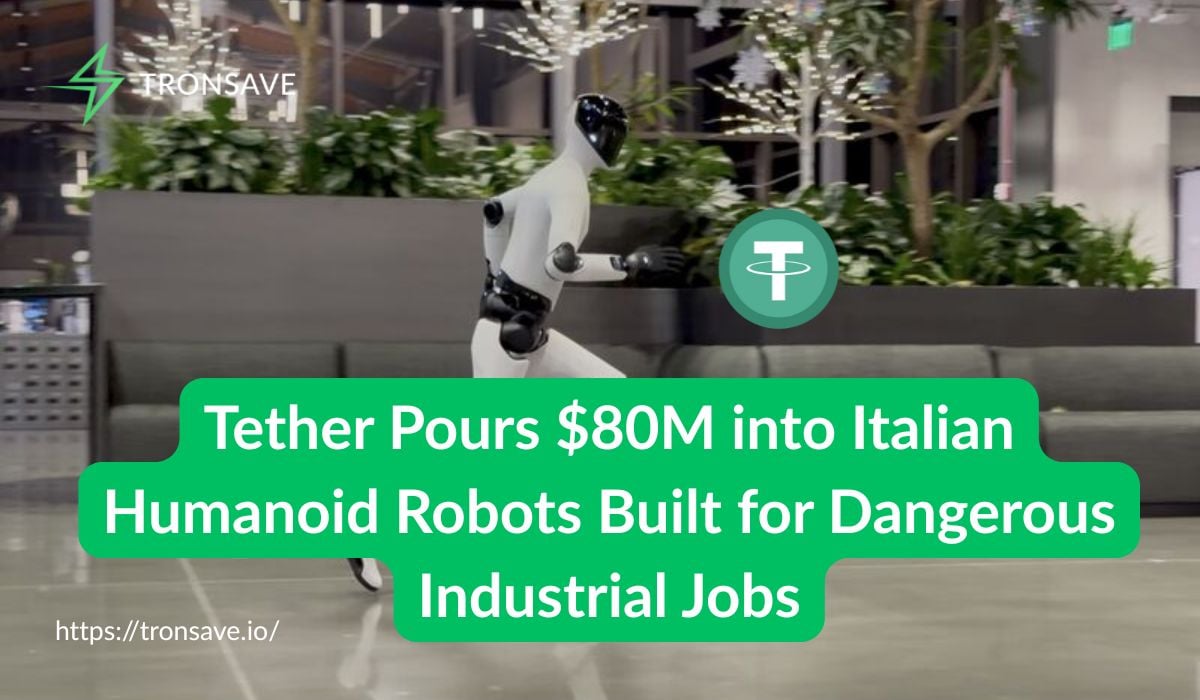
Tether, the company behind the world’s largest stablecoin USDT, has joined an $80 million (about €70 million) funding round for Generative Bionics, a spin-off from the Italian Institute of Technology (IIT) building Italian humanoid robots designed for dangerous, physically demanding industrial jobs. The deal signals Tether’s deepening move into “physical AI.”
Key Takeaways
- The deal: Tether participated in a reported $80 million (~€70 million) round for Generative Bionics, an IIT spin-off developing Italian humanoid robots (figures as of mid-2026; verify against a primary source).
- The target: Robots aimed at heavy lifting, repetitive assembly, and hazardous material handling in factories, warehouses, logistics, healthcare, and retail.
- Co-investors: The round reportedly included AMD Ventures and Italy’s state-backed Artificial Intelligence Fund.
- The strategy: CEO Paolo Ardoino frames it as a shift toward “digital and physical infrastructure” beyond stablecoins.
- The caveat: This is a high-risk, early-stage bet; commercial deployment timelines and valuations remain unverified.
What Are Italian Humanoid Robots and Who Is Building Them?

Generative Bionics is a robotics venture spun out of the Italian Institute of Technology (IIT), a publicly funded research center in Genoa known for decades of work on legged and humanoid machines. The company is developing Italian humanoid robots intended to operate in human-centric environments, the same spaces, doorways, shelves, and workstations that people use, rather than fixed cages on a factory floor.
Unlike traditional industrial robots, which are usually bolted in place and repeat one motion, humanoid robots are designed to be general-purpose. The pitch is that a single robot body could move between tasks: lifting a load in the morning, sorting parts in the afternoon, and handling hazardous material when a human would be at risk.
According to public reporting, the first production-ready units were targeted for deployment starting around early 2026, with an initial focus on manufacturing, logistics, healthcare, and retail. As of mid-2026, whether that early-2026 rollout actually happened on schedule is unconfirmed; treat the timeline as a stated goal and verify against a primary source.
What Is “Physical AI” and Why Does It Matter?
“Physical AI” refers to artificial intelligence that perceives and acts in the real, physical world, rather than only generating text or images on a screen. A humanoid robot is a textbook example: it combines computer vision, motion planning, and machine learning to walk, grasp objects, and adapt to a messy environment.
The idea behind backing Italian humanoid robots is that the next wave of AI value may come from machines that do physical labor, not just digital tasks. Supporters argue this could address labor shortages in dangerous or repetitive roles. Skeptics counter that general-purpose humanoids remain expensive, slow, and unproven outside controlled demos.
- Digital AI: chatbots, code generation, image models, software that stays on a server.
- Physical AI: robots, drones, and autonomous machines that sense and manipulate the real world.
- The hard part: reliability, safety, and cost, real factories cannot tolerate a robot that fails 1 in 20 times.
Why Is a Stablecoin Issuer Like Tether Funding Robots?
On the surface, a stablecoin company funding humanoid robots looks odd. Tether’s core business is issuing USDT, a token pegged to the US dollar and widely used on networks like TRON and Ethereum. You can review USDT’s circulating supply and on-chain activity through public dashboards such as CoinMarketCap and Tether’s own transparency page at tether.to.
Tether has been deploying large profits from its reserves into a broad set of ventures. The Generative Bionics investment is part of an expansion into AI and robotics that has reportedly included brain-computer interface projects, large GPU compute clusters, and talks to invest in robotics firms at high valuations. CEO Paolo Ardoino has described the goal as building “digital and physical infrastructure” that reduces reliance on systems dominated by a handful of Big Tech firms.
A more skeptical reading is that a private, profit-rich issuer is diversifying into trophy, high-risk technology bets. Both readings can be true at once. For context on why USDT itself is so dominant, see our explainer on TRC-20 USDT on TRON.
Who Else Invested in the $80M Round?
Tether was not the only backer. Public reporting describes a syndicate of strategic investors joining the round, which spreads risk and signals broader institutional interest in physical AI.
Reported Investors and Roles (as of mid-2026)
| Investor | Type | Reported role in the round |
|---|---|---|
| Tether | Stablecoin issuer | Strategic investor; part of its physical-AI push |
| AMD Ventures | Corporate VC (chipmaker) | Participant; aligns with AI compute hardware |
| Italy’s AI Fund | State-backed fund | Government-supported participant |
| Other strategic investors | Various | Additional undisclosed participants |
Note: round size (~$80M / €70M) and the participant list reflect public reporting; confirm exact figures and named entities against primary sources before acting.
What Are the Risks and Open Questions?
Big funding headlines are not the same as working products. Several questions remain genuinely unanswered, and readers should keep them in mind before treating this as a finished success story.
- Deployment reality: Did the targeted early-2026 rollout actually ship at scale, or slip? Unverified as of mid-2026.
- Unit economics: Humanoid robots are costly to build and maintain; the payback period for industrial buyers is unclear.
- Safety and regulation: Robots working alongside humans face strict safety standards, especially in healthcare.
- Valuation hype: Reported multi-billion-dollar valuations for related robotics firms should be treated cautiously, not as established fact.
- Concentration risk: A stablecoin issuer placing large bets on speculative hardware adds a new dimension to questions about how its reserves and profits are deployed.
How Does This Connect to Crypto Users on TRON?
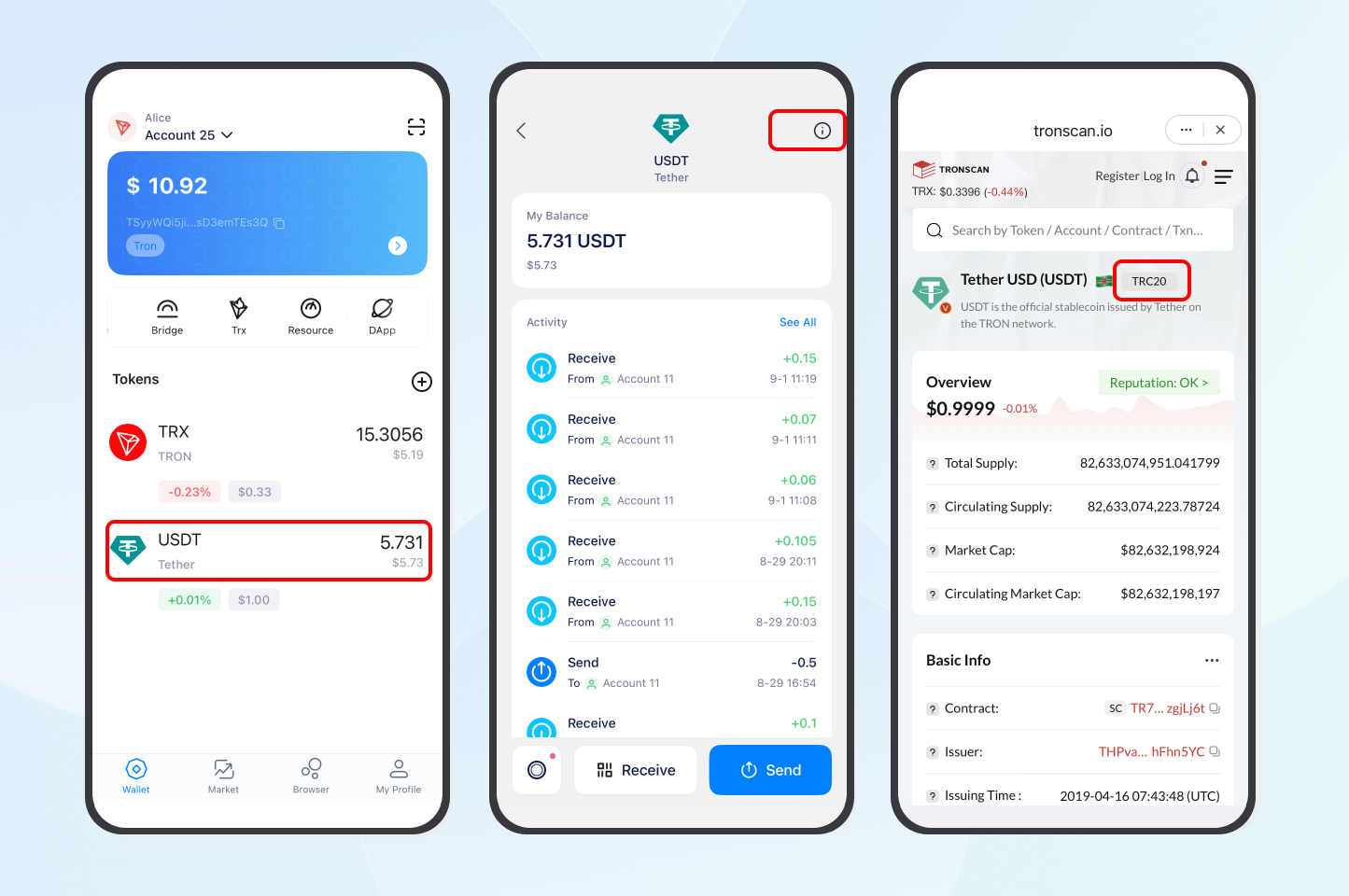
For everyday crypto users, this news is mostly about the issuer behind a token you may already hold, not about TRON’s day-to-day fees. USDT remains one of the most transferred assets on the TRON network, and transfer costs depend on TRON’s energy and bandwidth model, not on Tether’s robotics bets.
If you move USDT often, the practical way to manage costs is to understand TRON’s resource system. You can stake TRX yourself to obtain resources, or use a resource provider. Learn the basics in our guide to TRON energy and bandwidth, and compare approaches like staking versus renting energy. Services such as TronSave are one option among several for reducing fees; staking and other providers are valid alternatives depending on how frequently you transact.
Frequently Asked Questions
What are Italian humanoid robots in this story?
They are general-purpose robots being developed by Generative Bionics, a spin-off from the Italian Institute of Technology (IIT), designed to handle heavy, repetitive, or hazardous industrial tasks alongside humans.
How much did Tether invest?
Tether joined a reported $80 million (about €70 million) funding round; the exact size of Tether’s individual stake was not disclosed. Treat these figures as reported, not confirmed, and verify against primary sources.
Why is a stablecoin company funding robotics?
Tether has been expanding profits into AI, compute, and robotics under what CEO Paolo Ardoino calls a “digital and physical infrastructure” strategy. Critics view it as diversification into high-risk technology bets.
Who else invested in the round?
Public reporting names AMD Ventures and Italy’s state-backed Artificial Intelligence Fund, plus other strategic investors. The full list was not fully disclosed.
Does this affect USDT or TRON transfer fees?
No. This investment does not change how USDT works or how TRON charges for transfers. Fees still depend on TRON’s energy and bandwidth system, which you manage by staking TRX or using a resource provider.
Are the robots actually deployed yet?
The first units were targeted for deployment around early 2026, but as of mid-2026 it is unconfirmed whether that rollout happened on schedule. Verify against a primary source before assuming the robots are in commercial use.