Swapping TRON to USDT converts TRX — a volatile, utility-driven token — into Tether, the world’s most used stablecoin. The process itself takes minutes on any major exchange. The real difference-maker is how much you pay in the process, and most users are unknowingly overpaying on every single transfer.
This guide covers what the swap actually involves, how to do it step by step, where to do it safely, and — the part most articles skip — how to dramatically cut the TRC-20 fees that quietly eat into your holdings.
What you need to know before the swap
Before jumping into steps and platforms, it helps to understand the two assets involved and why swapping between them is so common in the TRON ecosystem.
TRON (TRX) is a Layer-1 blockchain built for speed and low-cost transactions. Its native token, TRX, powers the network — paying for bandwidth, governance, and energy. With over 373 million user accounts and 11 million daily transactions, TRON is one of the most active blockchains in the world, not because of hype, but because it genuinely moves stablecoins cheaply and fast.
Tether (USDT) is the stablecoin pegged 1:1 to the US dollar. It exists on multiple blockchains, but over 51% of all circulating USDT lives on TRON’s TRC-20 network. That number isn’t accidental. TRC-20 USDT settles in roughly 3 seconds and costs a fraction of what Ethereum-based (ERC-20) USDT transfers cost. For traders locking in profits, remittance users, or anyone moving value quickly, swap tron to usdt is one of the most practical moves in crypto.
Why do people make this swap? Three main reasons: to lock in gains when TRX rises, to hold stable value during market volatility, or to prepare for trades on USDT-denominated pairs across exchanges.
How to swap TRON to USDT: step by step
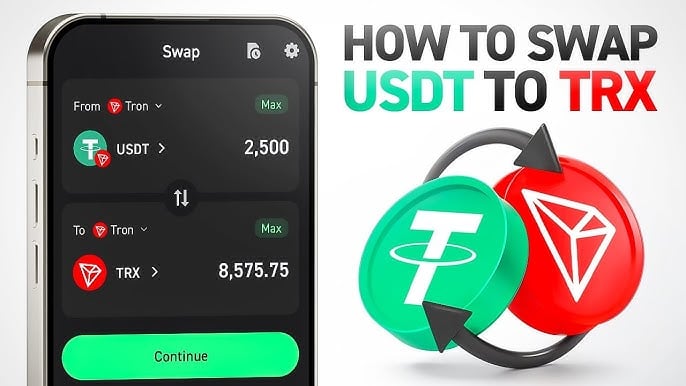
The actual swap is straightforward. Here’s how it works across most platforms:
Step 1 — Choose your exchange. Options include SimpleSwap, ChangeNOW, Kraken, and RocketX. Each has different trade-offs (covered below). For quick, no-registration swaps, SimpleSwap or ChangeNOW are common starting points.

Step 2 — Set up a compatible wallet. You’ll need a TRON-compatible wallet to hold TRX before the swap, and a destination wallet for your USDT. TronLink, Trust Wallet, and Ledger are the most commonly used. Make sure your receiving address supports TRC-20 USDT specifically — sending TRC-20 USDT to an ERC-20-only address results in lost funds.
Step 3 — Select the trading pair. On the exchange, set TRX as the “send” currency and USDT (TRC-20) as the “receive” currency. Always confirm the network — TRC-20, not ERC-20. The fees are dramatically different.
Step 4 — Enter amount and recipient address. Specify how much TRX you’re swapping and paste your USDT wallet address. Double-check the address character by character. Blockchain transactions are irreversible.
Step 5 — Review the rate and fees. Most platforms show you the exchange rate and estimated output before you confirm. Check whether the platform uses a fixed or floating rate — fixed rates lock in the price, while floating rates adjust to market movement during processing.
Step 6 — Send your TRX. Transfer TRX to the exchange’s deposit address. On TRON’s network, this typically confirms within seconds.
Step 7 — Receive USDT. Once the swap is processed (usually 5–30 minutes depending on the platform and network congestion), USDT appears in your wallet. Most platforms provide a tracker link so you can monitor the status.
Pro tip: Before you send any USDT after receiving it, rent energy first. A standard TRC-20 USDT transfer without energy burns ~13 TRX. With rented energy from TRONSAVE, that drops to ~4 TRX. On 10 transfers a day, that’s 90 TRX saved — over $28 at current prices.
Best platforms for swapping TRX to USDT
Not all exchanges are equal. Here’s a practical comparison of the most trusted platforms for this swap:
| Platform | Fees | Speed | Key Feature |
|---|---|---|---|
| SimpleSwap | Network fees only | 5–30 min | No registration required |
| ChangeNOW | Low network fees | 2–20 min | Privacy-first, no KYC for most |
| Kraken | 0.1–0.2% trading fee | 5–15 min | Regulated, high-security |
| RocketX | Network fees only | 5–20 min | Aggregates best rates across chains |
| Paybis | Network fees only | 5–20 min | 24/7 support, beginner-friendly |
For most users doing a one-time or occasional swap tron to usdt, SimpleSwap or ChangeNOW offer the fastest path with no sign-up friction. For high-volume traders who want a regulated environment, Kraken’s compliance credentials make it the safer choice. RocketX is worth bookmarking if you’re comparing rates, since it aggregates across multiple liquidity sources automatically.
One consistent recommendation regardless of platform: always select TRC-20 as the USDT network. ERC-20 fees can run $5–$50 per transfer on Ethereum, compared to under $1 on TRON.
How TRC-20 fees actually work — and how to pay less
This is the section most guides skip, and it’s where users leave the most money behind.
When you send USDT on the TRON network, the transaction consumes two types of resources: bandwidth (for basic transaction data) and energy (for smart contract execution). Every USDT transfer is a smart contract call — so energy is always required.
What happens without energy
If your wallet has no pre-loaded energy, TRON automatically burns TRX to cover the cost. A standard transfer to a wallet that already holds USDT costs around 13 TRX. A transfer to a new wallet — one that has never received USDT before — costs roughly 27 TRX, because the network must initialize the recipient’s token account.
At $0.32 per TRX, that’s $4.16 or $8.64 per transfer respectively. Not devastating on a single transaction. But for anyone doing frequent swaps or USDT transfers, the total adds up fast.
What happens with rented energy
TRON’s energy delegation model allows users to rent energy from providers rather than burning TRX directly. The mechanics: a provider stakes a large amount of TRX, generating energy that gets delegated to your address temporarily. You use that energy for your transfer, and the cost drops to around 4 TRX for a standard transaction.
That’s a saving of 9 TRX per transfer — roughly 69% — without changing anything about how you send USDT.
How to use TRONSAVE to cut your fees
TRONSAVE makes energy rental instant and straightforward:
- Visit tronsave.io before your next USDT transfer
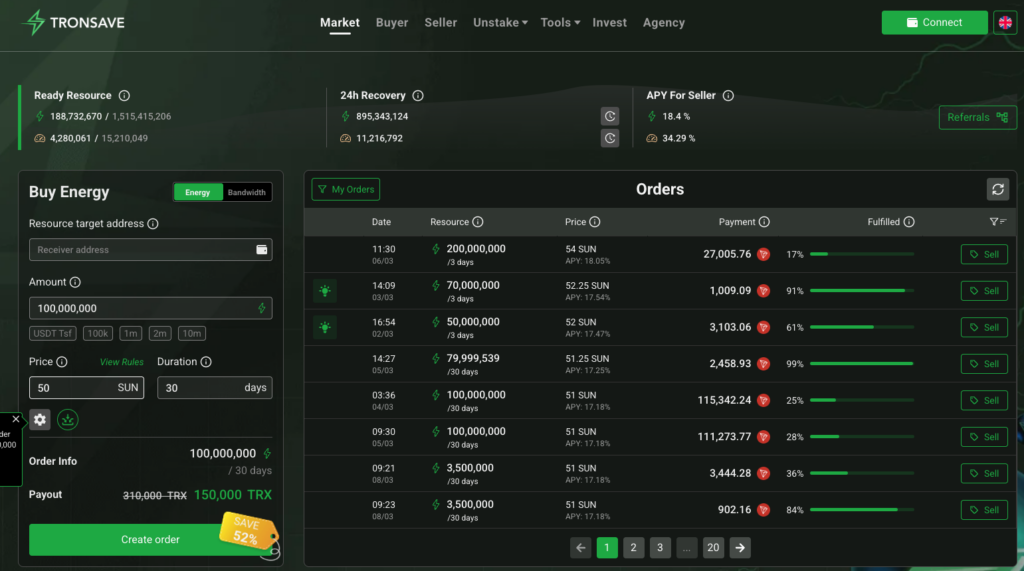
- Enter your TRON wallet address
- Select the energy amount you need (the platform guides you)
- Energy is delegated to your address in seconds — no lock-up, no KYC
- Complete your USDT transfer at the reduced cost
The habit is especially important as TRX price rises. The network always charges the same amount in TRX terms — so as TRX appreciates in dollar value, the dollar cost of not using energy grows alongside it. Setting up energy delegation now locks in savings that compound over time.
Frequently asked questions
Can I swap TRX to USDT without creating an account? Yes. Platforms like SimpleSwap and ChangeNOW allow swaps without registration for most transaction sizes. You just need a sending wallet for TRX and a destination address for USDT.
How long does a TRX to USDT swap take? Most swaps complete in 5–30 minutes. TRON’s network itself confirms in seconds, so the main variable is the exchange’s processing time and order matching.
What’s the minimum amount to swap? Minimums vary by platform — typically 10–50 TRX. Check the specific exchange before initiating.
Is swapping TRX to USDT safe? Yes, on reputable platforms. Use exchanges with a track record (Kraken, SimpleSwap, ChangeNOW), enable two-factor authentication on any account you create, and always verify your recipient address before confirming.
Why does USDT on TRON (TRC-20) cost less than on Ethereum (ERC-20)? TRON’s resource model (energy + bandwidth) is designed for high-volume, low-cost transfers. Ethereum uses gas, which fluctuates based on network demand and can spike sharply. For stablecoin movement, TRC-20 is consistently cheaper and faster.
What if I send TRC-20 USDT to an ERC-20 address? The funds may be permanently lost. Always confirm the network your receiving wallet supports before sending.
Conclusion
Swapping TRON to USDT is one of the most practical moves in the TRON ecosystem — whether you’re locking in gains, hedging volatility, or preparing for trades. The swap itself is simple on platforms like SimpleSwap, Kraken, or RocketX. What separates smart users from the rest is what happens after the swap: every USDT transfer without energy costs 3x more than it needs to.
Start saving on your next transfer. Visit tronsave.io to rent energy instantly — no registration, no lock-up, no hidden fees. Your TRX works harder when it doesn’t burn unnecessarily.